
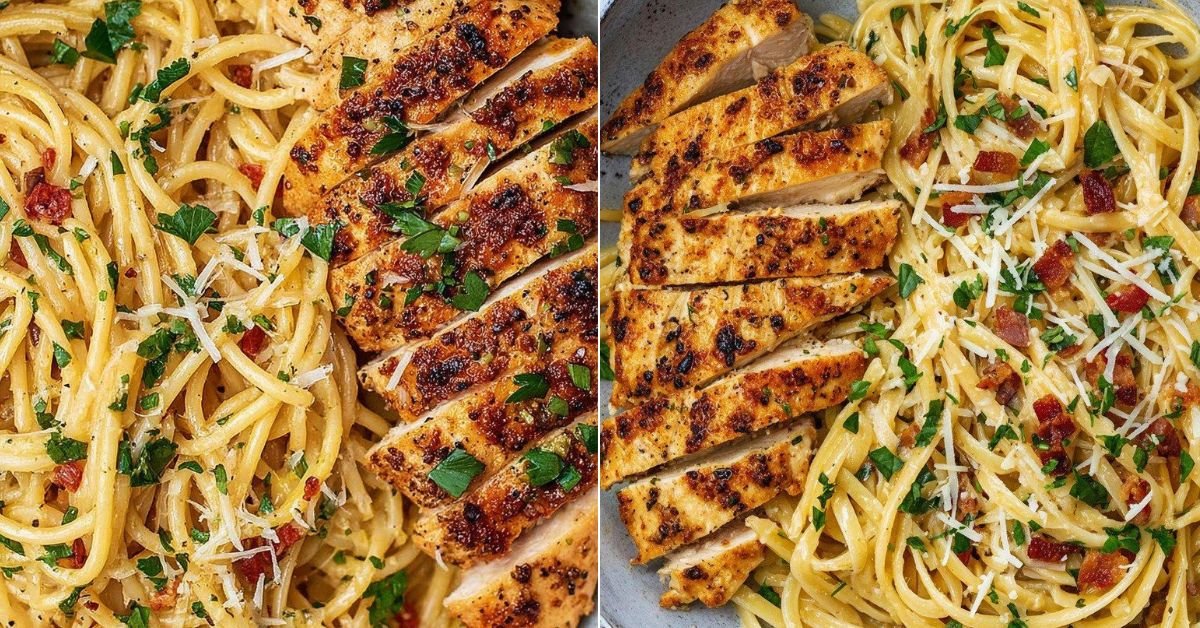
1) What I Learned Testing Garlic Butter Chicken Pasta
Dry chicken and greasy pasta can turn a simple dinner into a fork-twisting disappointment. I’m Angela, and after testing this garlic butter chicken pasta through a few bland, oily, overcooked attempts, I found the fix was not more butter; it was better timing. Thin chicken needs strong seasoning, a hot skillet, and a short rest, while spaghetti needs starchy pasta water to pull the garlic butter and parmesan into a glossy sauce. That discovery made this easy garlic butter chicken pasta feel calm enough for a weeknight but comforting enough for Sunday family dinner.
Table of Contents
- 1) What I Learned Testing Garlic Butter Chicken Pasta
- 2) Key Takeaways
- 3) Easy Garlic Butter Chicken Pasta Recipe
- 4) Why Most Garlic Butter Chicken Pasta Recipes Fail
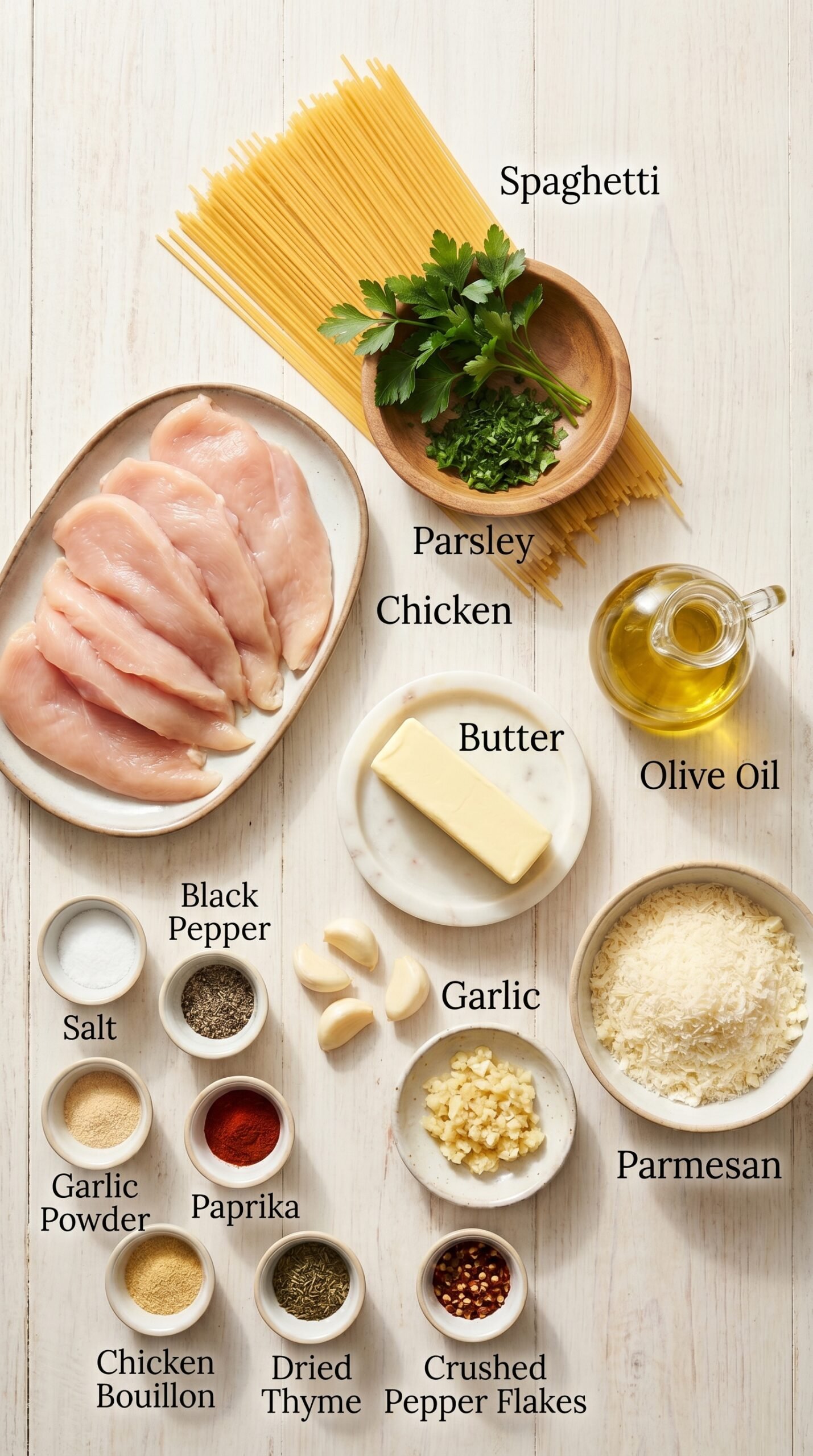
- 5) Ingredients for Garlic Butter Chicken Pasta
- 6) How to Make Garlic Butter Chicken Pasta
- 7) Recipe Card: Garlic Butter Chicken Pasta
- 8) Tips for Making Garlic Butter Chicken Pasta
- 9) Common Mistakes & Fixes
- 10) How to Tell Garlic Butter Chicken Pasta Has the Right Texture
- 11) Professional Secrets Behind Better Garlic Butter Chicken Pasta
- 12) Best Dishes or Pairings to Serve With Garlic Butter Chicken Pasta
- 13) Making Garlic Butter Chicken Pasta Ahead of Time
- 14) Storing Leftover Garlic Butter Chicken Pasta
- 15) FAQ (Real Cooking Questions)
- 16) Save This Garlic Butter Chicken Pasta Recipe
- 17) Conclusion
- 18) Nutrition
2) Key Takeaways
- Thin chicken cooks fast, so timing matters: About 3 minutes per side is usually enough when the pieces are thin, but the real checkpoint is 165℉ in the thickest part.
- Reserved pasta water is the sauce insurance: The starch helps butter, garlic, and parmesan cling to the spaghetti instead of sliding to the bottom of the skillet.
- Garlic needs gentle heat: Thirty seconds is enough to wake up minced garlic; pushing it too far gives the sauce a bitter edge.
- Rest before slicing: Covering the chicken briefly after searing keeps the juices from running out the moment the knife hits it.
3) Easy Garlic Butter Chicken Pasta Recipe
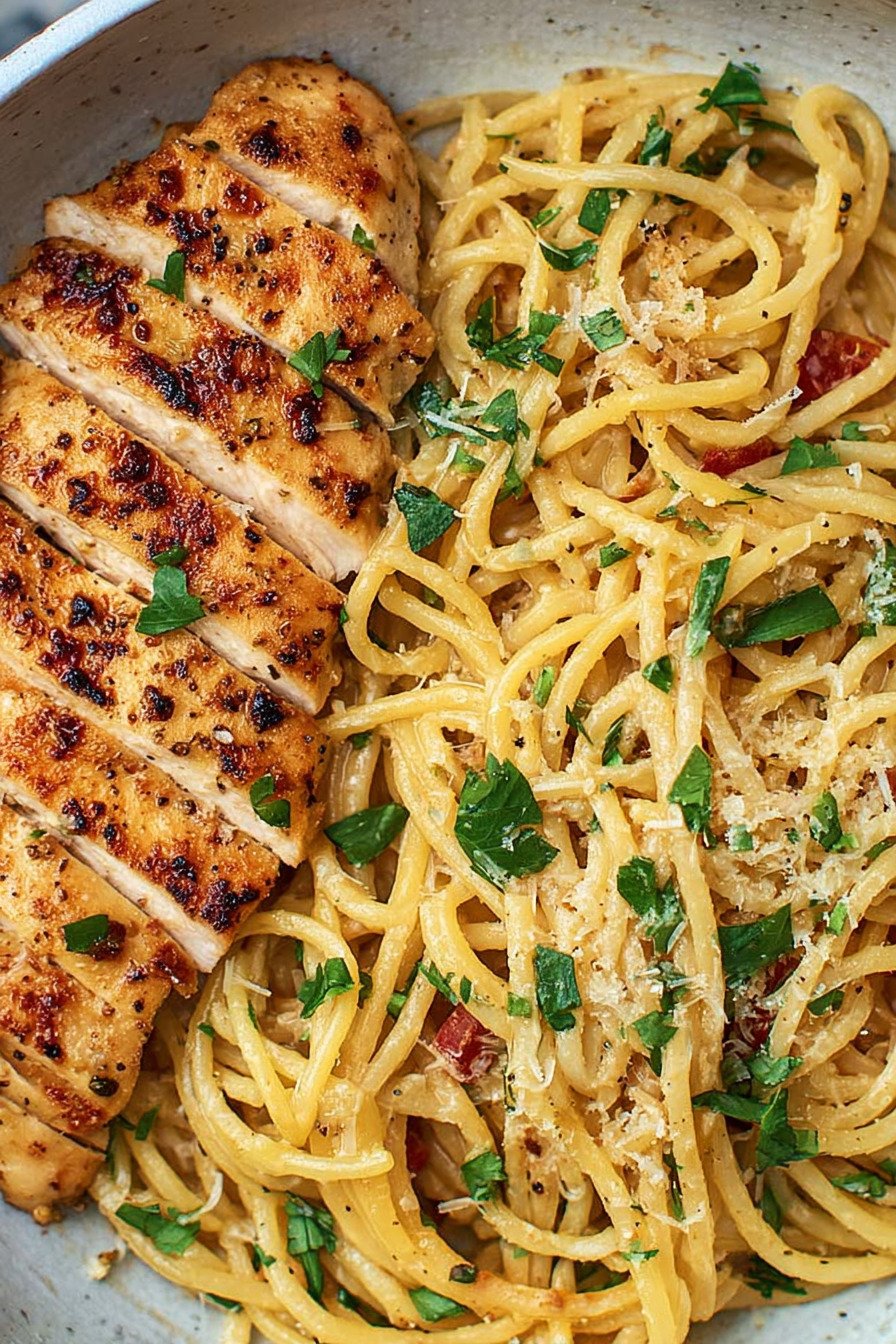
This garlic butter chicken pasta recipe works because it treats the chicken and pasta as two parts of the same skillet meal instead of separate items placed together at the end. The chicken is seasoned before it ever touches the pan, which means the flavor starts at the surface where browning happens. Then the spaghetti is tossed in the same skillet, where the browned bits, butter, garlic, pepper flakes, parmesan, and pasta water create a sauce that tastes built rather than poured on.
The goal is not a heavy cream-style pasta. The sauce should be glossy, buttery, lightly cheesy, and loose enough to coat every strand without feeling watery. The chicken should be sliced and served over the spaghetti while still warm, giving you a chicken breast pasta dinner that feels complete but still practical. This is also why the recipe fits a quick chicken pasta recipe angle: the actual cooking moves fast once the ingredients are ready.
4) Why Most Garlic Butter Chicken Pasta Recipes Fail
Most garlic butter chicken pasta fails for one of five reasons: dry chicken, burnt garlic, loose sauce, clumpy cheese, or bland pasta. Dry chicken usually comes from thick pieces cooked too long or cold chicken thrown straight into the skillet. Thin chicken breasts cook more evenly, and bringing them closer to room temperature helps prevent the outside from overcooking before the center reaches a safe temperature.
Burnt garlic is another common problem. Minced garlic has a lot of exposed surface area, so it can go from fragrant to bitter in seconds. Cooking it briefly in melted butter over medium heat gives you that warm garlic aroma without harshness. If the garlic starts turning dark brown, the sauce will taste sharper than it should.
A loose sauce happens when the pasta is drained without saving water. Pasta water carries starch, and that starch helps the butter and parmesan emulsify into a sauce that holds to spaghetti. Clumpy cheese usually comes from dumping parmesan into a dry or overheated pan. Tossing the spaghetti first, then adding parmesan with enough moisture, gives the cheese somewhere to melt smoothly.
Flat flavor often comes from seasoning only at the end. In this method, the chicken gets salt, black pepper, chicken bouillon, garlic powder, paprika, and thyme before searing. The pasta water is salted too, which seasons the spaghetti from the inside as it cooks. That layered seasoning is what keeps garlic butter pasta with chicken from tasting plain.
5) Ingredients for Garlic Butter Chicken Pasta
Thinly sliced chicken breasts: Thin chicken cooks quickly and evenly, which is important for a skillet pasta. If the chicken is too thick, the outside can brown before the center reaches 165℉. Cutting two medium breasts horizontally gives you flatter pieces that sear better.
Salt and black pepper: Salt seasons the chicken directly, while black pepper adds mild heat. Use the measured amount first because chicken bouillon and parmesan also bring saltiness. Taste the pasta at the end before adding more.
Chicken bouillon: Bouillon gives the chicken a deeper savory flavor, especially because thin chicken breasts cook quickly and do not have much time to develop flavor on their own. If changed or reduced, the final dish may taste lighter and less seasoned.
Garlic powder: Garlic powder seasons the chicken surface evenly. It works differently from fresh garlic because it does not burn as quickly during searing. The fresh garlic comes later in the sauce for aroma.
Paprika and thyme: Paprika gives the chicken warm color and gentle depth, while thyme adds an earthy background note. These seasonings keep the chicken from tasting separate from the pasta.
Olive oil: Olive oil helps the seasoning stick to the chicken and supports browning in the skillet. Use part of it to coat the chicken and the rest in the pan. If the pan looks dry, the chicken may stick instead of sear.
Spaghetti: Spaghetti works well because its long strands catch the garlic butter sauce. Cook it al dente so it stays firm when tossed in the skillet. Overcooked pasta will absorb sauce unevenly and can turn soft.
Butter: Butter forms the base of the garlic sauce and carries the flavor of garlic, pepper flakes, and parmesan. Let it melt gently; browning it too aggressively can make the sauce taste heavier than intended.
Fresh garlic: Minced fresh garlic gives the sauce its main aroma. Add it after the butter melts and stir briefly. If replaced with only garlic powder, the sauce will lose the fresh, fragrant finish that makes garlic butter chicken pasta stand out.
Crushed pepper flakes: Pepper flakes add warmth without making the dish overly spicy. They bloom quickly in the butter, so they should go in with the garlic rather than at the very end.
Freshly grated parmesan: Fresh parmesan melts more smoothly than pre-shredded cheese. It thickens the sauce and adds a salty, nutty finish. Add it while tossing the pasta so it spreads evenly instead of forming clumps.
Salt as needed and parsley: Final salt should be added only after tasting because the bouillon, pasta water, and parmesan already season the dish. Parsley is optional, but it adds color and a fresh contrast to the buttery sauce.
- Thin chicken vs thick chicken: Thin chicken sears quickly and stays juicy when watched closely; thick chicken needs more time and is easier to overcook on the outside.
- Fresh garlic vs garlic powder: Fresh garlic gives the sauce aroma, while garlic powder seasons the chicken evenly. Using both gives better flavor balance.
- Reserved pasta water vs plain water: Pasta water contains starch, which helps the sauce cling. Plain water can loosen the sauce but will not bind it as well.
- Freshly grated parmesan vs pre-shredded parmesan: Freshly grated parmesan melts more smoothly. Pre-shredded cheese can resist melting and create a grainier sauce.
6) How to Make Garlic Butter Chicken Pasta
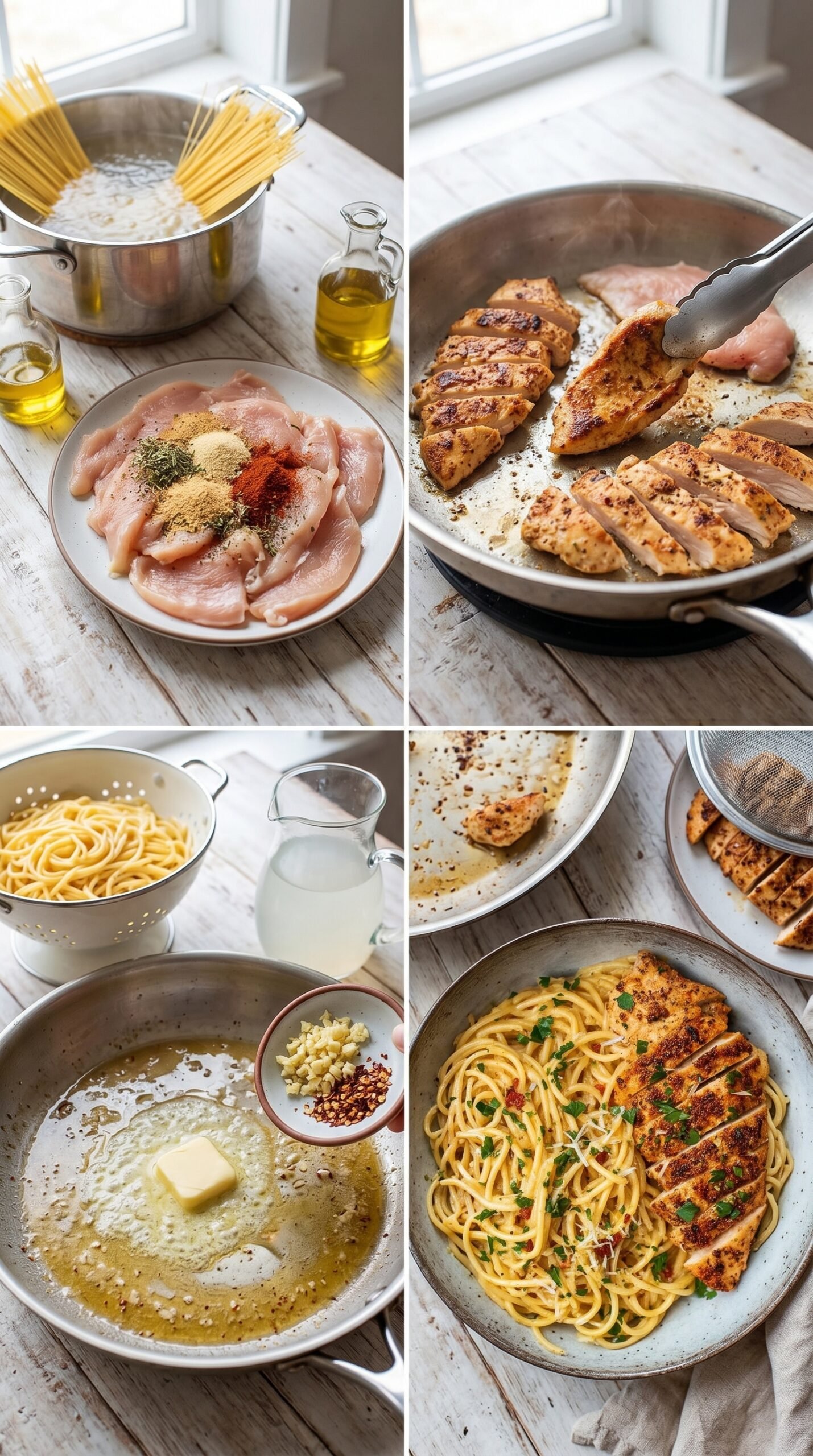
Step 1: Start with the pasta water. Bring a large pot of salted water to a boil, then cook the spaghetti until al dente. Before draining, reserve one cup of the pasta water. That cloudy water is the difference between a sauce that coats the noodles and a sauce that separates.
Step 2: Let the chicken sit at room temperature before cooking so it sears more evenly. Pat it dry very well with paper towels. Moisture on the surface creates steam, and steam blocks browning.
Step 3: Season both sides of the chicken with salt, black pepper, chicken bouillon, garlic powder, thyme, and paprika. Rub one tablespoon of olive oil over the chicken so the seasoning adheres. Heat the remaining olive oil in a large skillet over medium-high heat.
Step 4: Cook the chicken for about 3 minutes per side, or until the surface is browned and the internal temperature reaches 165℉. Move it to a plate and cover it loosely with foil. This rest keeps the chicken juicy while the pasta sauce comes together.
Step 5: Melt the butter in the same skillet over medium heat. Add the minced garlic and crushed pepper flakes, stirring for about 30 seconds until fragrant. Do not let the garlic burn. Add black pepper and half of the reserved pasta water, then bring the mixture to a light simmer.
Step 6: Toss the cooked spaghetti in the garlic butter sauce until coated. Add the parmesan and toss again so it melts through the noodles. If the pasta looks tight or dry, add more reserved pasta water a little at a time. Taste, adjust salt, slice the chicken, and serve it over the spaghetti with extra parmesan and parsley if desired.
7) Recipe Card: Garlic Butter Chicken Pasta
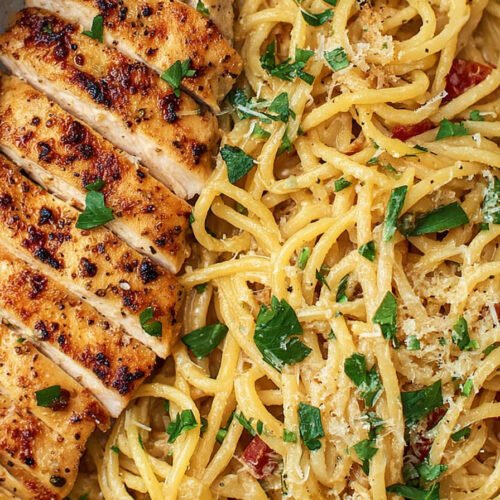
Garlic Butter Chicken Pasta for a Juicy, Savory Chicken Dinner
Ingredients
For The Chicken
- 1 pound thinly sliced chicken breasts, about 2 medium breasts cut horizontally in half, for fast, even cooking
- ¼ teaspoon salt, to season the chicken directly before searing
- ¼ teaspoon black pepper, for mild heat and savory depth
- 1 teaspoon chicken bouillon, to boost the chicken flavor without adding extra liquid
- 1 teaspoon garlic powder, for even garlic flavor on the chicken surface
- ½ teaspoon paprika, for color and gentle warmth
- ½ teaspoon thyme, for an earthy note that balances the butter sauce
- 3 Tablespoons olive oil, divided for coating and searing the chicken
For The Pasta and Garlic Butter Sauce
- 16 ounces spaghetti, cooked al dente so it can hold the sauce
- 5 Tablespoons butter, for the base of the garlic butter sauce
- 8 cloves garlic, peeled and minced, for fresh aromatic flavor
- ½ teaspoon crushed pepper flakes, for a gentle kick in the sauce
- ¼ teaspoon black pepper, to season the garlic butter
- ⅔ cup freshly grated parmesan, plus more for serving, so the sauce melts smoothly
- Salt as needed, added after tasting because parmesan and bouillon already bring saltiness
- Fresh minced parsley for garnish optional, for color and a clean finish
Instructions
Pasta
- Bring a large pot of salted water to a rolling boil. Add the spaghetti and cook according to the package directions until al dente, usually about 8 minutes, so the noodles stay firm enough to toss with the sauce. Before draining, reserve 1 cup of the starchy pasta cooking water, then drain the spaghetti in a colander.
Chicken
- Let the thinly sliced chicken breasts sit at room temperature for about 1 hour before cooking so they sear more evenly and do not stay cold in the center.
- Pat the chicken dry with paper towels. Season both sides with the salt, black pepper, chicken bouillon, garlic powder, thyme, and paprika. Drizzle 1 tablespoon of the olive oil over the chicken and rub it over both sides so the seasoning sticks and the surface browns well.
- Place a large skillet over medium-high heat and add the remaining 2 tablespoons olive oil. Add the chicken in a single layer and cook for about 3 minutes per side, or until browned and the thickest part reaches 165℉ on an instant-read thermometer.
- Transfer the cooked chicken to a large plate and loosely cover with aluminum foil to keep it warm while you make the sauce. Letting it rest also helps the juices stay in the meat when sliced.
Garlic Butter Pasta
- Add the butter to the same skillet used for the chicken and melt it over medium heat, scraping up the flavorful browned bits from the pan. Add the minced garlic and crushed pepper flakes and stir for about 30 seconds, just until fragrant; do not let the garlic brown hard or it can taste bitter. Stir in the black pepper and ½ cup of the reserved pasta water, then bring it to a light simmer.
- Add the cooked spaghetti to the skillet and toss until the noodles are coated in the garlic butter sauce. Add the freshly grated parmesan and toss again until it melts into the pasta. Add more reserved pasta water a splash at a time if the sauce needs loosening. Taste and add salt only as needed.
- Slice the rested chicken and serve it over the garlic butter spaghetti. Finish with extra grated parmesan and fresh minced parsley if desired.
8) Tips for Making Garlic Butter Chicken Pasta
The biggest timing tip is to prepare the garlic and parmesan before the chicken goes into the skillet. Once the butter melts, the sauce moves quickly, and stopping to mince garlic can push the chicken past its ideal resting window. Minced garlic only needs about 30 seconds in hot butter, so the skillet should be active but not smoking.
Use the pasta water in stages. Start with about half of the reserved cup, toss the pasta, add parmesan, then decide whether the sauce needs more. This prevents the garlic butter sauce from turning watery. The pasta should look lightly glossy, not soupy.
Do not skip the chicken rest. Even a short rest under foil helps the juices settle. If you slice chicken immediately after searing, the juices run onto the board instead of staying in the meat. For a better family chicken pasta dinner, slice the chicken against the grain so each bite feels tender.
Keep the heat under control when the parmesan goes in. High heat can make cheese tighten or clump. The best moment to add parmesan is after the spaghetti is already in the skillet and there is enough moisture to help it melt.
9) Common Mistakes & Fixes
Problem: The chicken tastes dry. Cause: The pieces were too thick, cooked too long, or sliced immediately after cooking. Fix: Use thinly sliced chicken, check for 165℉, and rest it under foil before slicing.
Problem: The garlic tastes bitter. Cause: Minced garlic cooked too long or the skillet was too hot after searing the chicken. Fix: Lower the heat to medium, stir constantly, and stop once the garlic smells fragrant.
Problem: The sauce slides off the pasta. Cause: The pasta water was not reserved, or too much plain liquid was added. Fix: Save starchy pasta water and add it gradually while tossing the spaghetti.
Problem: The parmesan clumps. Cause: Cheese was added to a dry or overheated pan. Fix: Toss the spaghetti with the butter sauce first, keep the heat moderate, and add parmesan while there is enough pasta water in the skillet.
Problem: The pasta tastes flat. Cause: The cooking water was under-salted or the final seasoning was skipped. Fix: Salt the pasta water, season the chicken well, and taste the finished pasta before serving.
10) How to Tell Garlic Butter Chicken Pasta Has the Right Texture
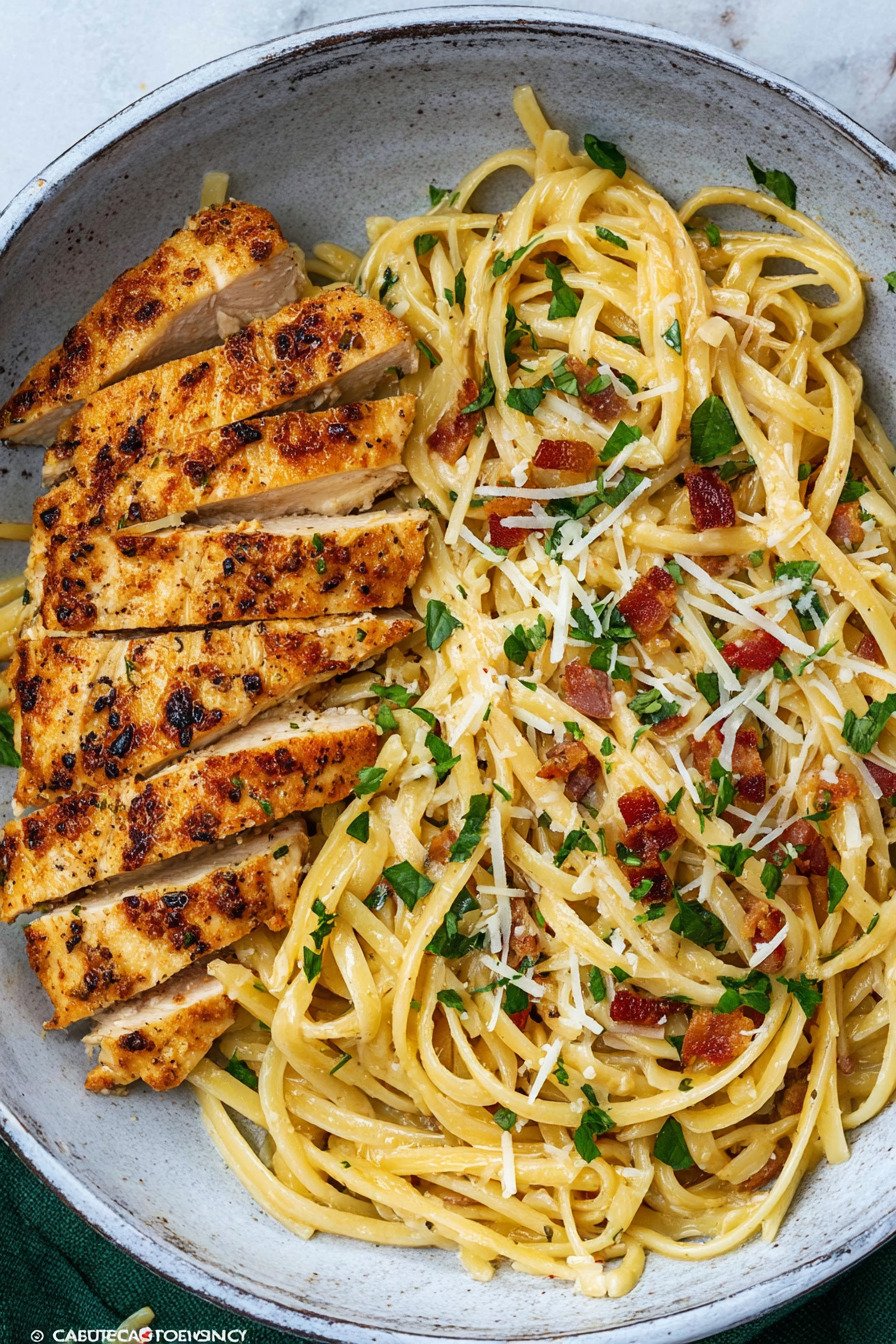
Garlic butter chicken pasta has the right texture when the spaghetti is glossy but not oily, coated but not swimming, and firm enough to twirl without breaking. You should see a light sheen on the noodles from the butter and parmesan, with no puddle of thin sauce at the bottom of the skillet. If the pasta looks dull or sticky, it needs a splash of reserved pasta water and a good toss.
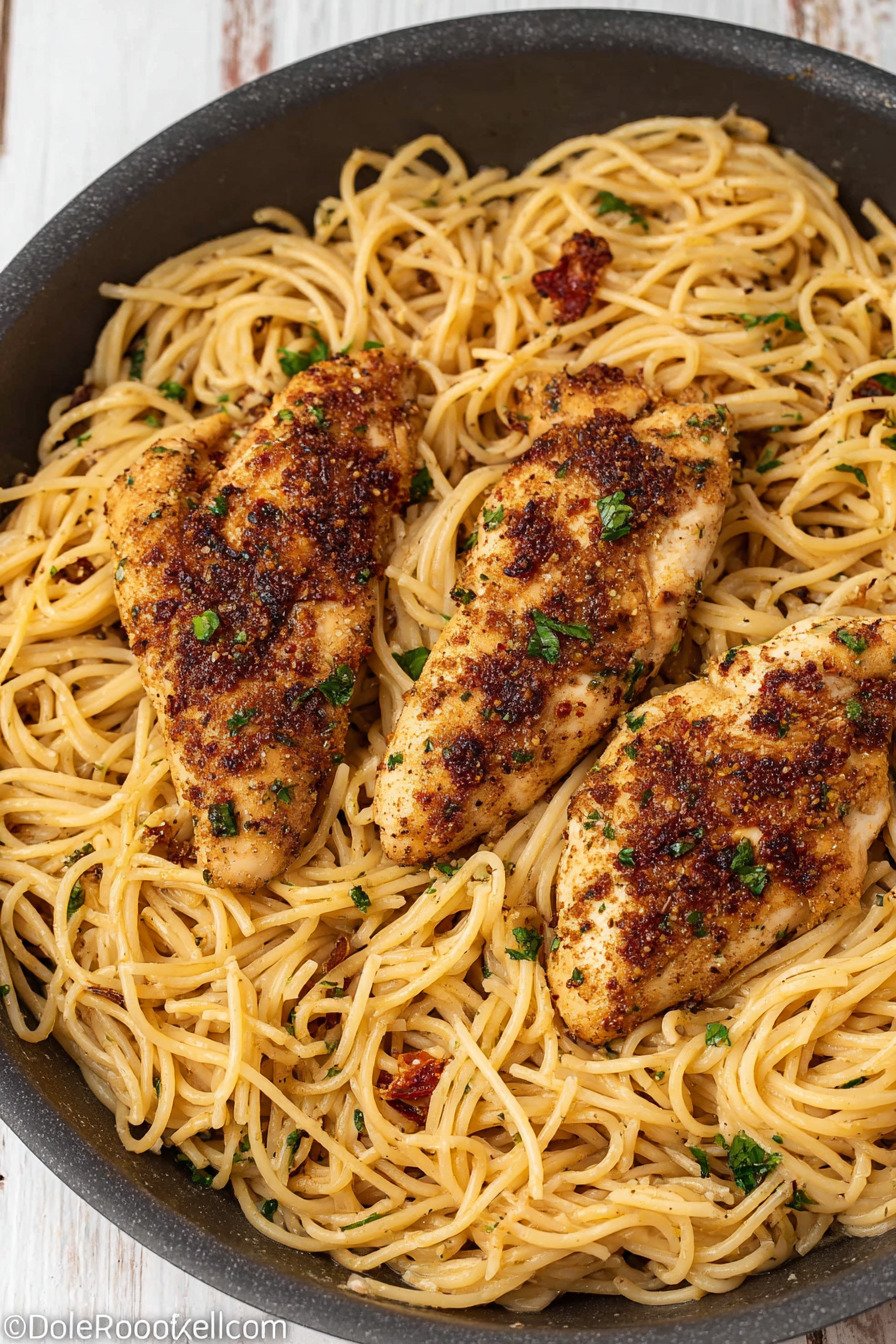
The chicken should be lightly browned on the outside and juicy inside, with no rubbery edge or dry white fibers. When sliced, it should hold moisture rather than leak heavily onto the cutting board. The aroma should be buttery and garlicky, with a mild pepper flake warmth and a savory parmesan finish.
Failure signs are easy to spot: burnt garlic smells sharp, overcooked pasta collapses instead of twirling, and a broken sauce looks greasy with liquid pooling separately. A properly finished garlic butter pasta with chicken should taste balanced: savory chicken, mellow garlic, salty parmesan, and enough black pepper to keep the richness from feeling flat.
11) Professional Secrets Behind Better Garlic Butter Chicken Pasta
Restaurant-style pasta often tastes better because the sauce is finished with the pasta, not poured over it. Tossing spaghetti directly in the skillet lets the noodles absorb flavor from the butter, garlic, browned chicken bits, and parmesan. This small move changes the dish from chicken sitting on pasta to a fully connected skillet dinner.
Another professional habit is controlling moisture. The chicken is dried before searing, while the pasta water is saved before draining. One moisture source is removed to help browning; the other is saved to help sauce texture. That contrast is the heart of a good chicken breast pasta dinner.
The final secret is sequencing. Chicken first, sauce second, pasta third, cheese near the end. This order protects each ingredient: the chicken browns, the garlic stays fragrant, the spaghetti gets coated, and the parmesan melts instead of clumping. It is simple, but the order matters.
12) Best Dishes or Pairings to Serve With Garlic Butter Chicken Pasta
Garlic butter chicken pasta is rich and savory, so it pairs best with sides that add freshness, crunch, or acidity. A crisp green salad with lemony dressing helps cut through the butter and parmesan. Roasted broccoli, asparagus, or green beans also work well because their slight bitterness balances the garlic butter sauce.
For a fuller family chicken pasta dinner, serve it with warm garlic bread, a tomato cucumber salad, or roasted vegetables. If you want a lighter plate, use smaller portions of pasta and add a larger vegetable side. The dish already has chicken, pasta, fat, and cheese, so the best pairings should refresh the meal rather than make it heavier.
13) Making Garlic Butter Chicken Pasta Ahead of Time
This recipe is best right after tossing, but you can prepare parts ahead to make dinner faster. Slice the chicken breasts, measure the seasonings, mince the garlic, and grate the parmesan earlier in the day. Keep the garlic covered in the refrigerator and the parmesan chilled until cooking time.
If you need to cook the full dish ahead, slightly undercook the spaghetti by about 1 minute so it does not become too soft when reheated. Save a little extra pasta water if possible, or use a small splash of water during reheating. Warm the pasta gently so the butter sauce loosens without drying out the chicken.
For the best make-ahead texture, avoid slicing the chicken too early after cooking. Let it rest first, then slice. If the chicken is stored whole or in larger pieces, it usually stays juicier than thin slices exposed to air.
14) Storing Leftover Garlic Butter Chicken Pasta
Store leftover garlic butter chicken pasta in an airtight container in the refrigerator for up to 3 days. The pasta will absorb some of the sauce as it sits, so expect it to thicken. That does not mean it is ruined; it just needs gentle moisture when reheated.
Reheat leftovers in a skillet over low to medium-low heat with a splash of water. Stir slowly until the sauce loosens and coats the pasta again. Avoid high heat, which can dry the chicken and make the parmesan tighten. A microwave works for convenience, but use shorter bursts and stir between each one.
Freezing is not ideal because butter and parmesan sauces can separate after thawing, and spaghetti can soften. If you do freeze it, thaw in the refrigerator and reheat gently with added moisture. Leftovers can also be turned into a quick lunch bowl with steamed vegetables or a handful of fresh spinach stirred in while reheating.
15) FAQ (Real Cooking Questions)
Can I use another pasta shape? Yes, but choose a shape that catches sauce well. Linguine, fettuccine, penne, or rotini can work. Spaghetti gives the classic twirlable texture, while short pasta may hold more bits of garlic and parmesan in each bite.
Can I use chicken thighs instead of chicken breasts? Chicken thighs can work, but the cooking time may change depending on thickness. Cook them until they reach 165℉, and give them enough time to brown. The flavor will be richer than chicken breast.
Why did my sauce turn oily? The sauce may not have enough starch to bind the butter and cheese. Add reserved pasta water gradually and toss well. The motion of tossing helps the sauce cling to the noodles.
Can I make this less spicy? Yes. Reduce the crushed pepper flakes or leave them out. The garlic, butter, parmesan, and seasoned chicken still provide plenty of flavor without the extra heat.
What makes this a quick chicken pasta recipe? The chicken is thin, the spaghetti cooks in about 8 minutes, and the sauce is built in the same skillet used for the chicken. The key is prepping the garlic, parmesan, and seasonings before cooking starts.
16) Save This Garlic Butter Chicken Pasta Recipe
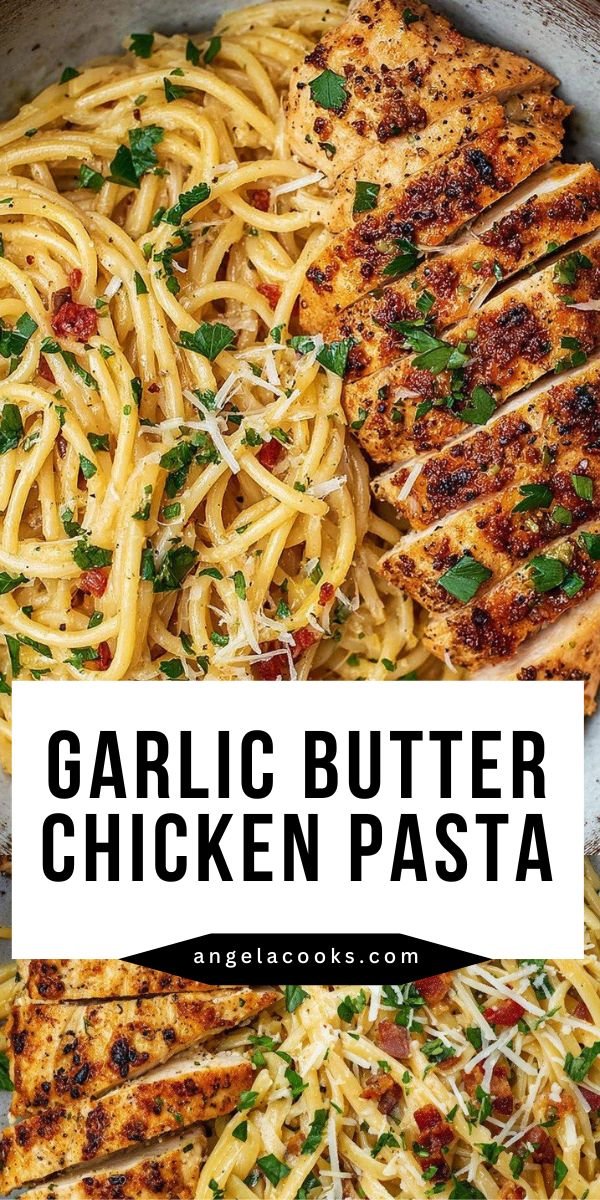
If this Garlic Butter Chicken Pasta helped you solve dry chicken or slippery sauce, save it for busy weeknights, Sunday comfort dinners, or the next time plain pasta will not cut it. The key reminder is: brown the chicken, save the pasta water, and toss the parmesan into a glossy garlic butter sauce.
17) Conclusion
Garlic butter chicken pasta becomes much better when the small details are handled with care. Drying the chicken, seasoning it before searing, cooking it only to 165℉, saving pasta water, and adding parmesan at the right moment all work together. None of those steps are complicated, but each one prevents a common problem.
Once you understand those checkpoints, this dish stops feeling like a gamble. You know what browned chicken should look like, when garlic is fragrant enough, how the sauce should coat the spaghetti, and why the pasta water matters. That is the difference between a rushed skillet dinner and a confident garlic butter chicken pasta that tastes balanced, juicy, and worth repeating.
18) Nutrition
Serving Size 1 portion Calories 690 Sugar 2 g Sodium 720 mg Fat 29 g Saturated Fat 12 g Carbohydrates 68 g Fiber 3 g Protein 39 g Cholesterol 105 mg



Leave a Comment