
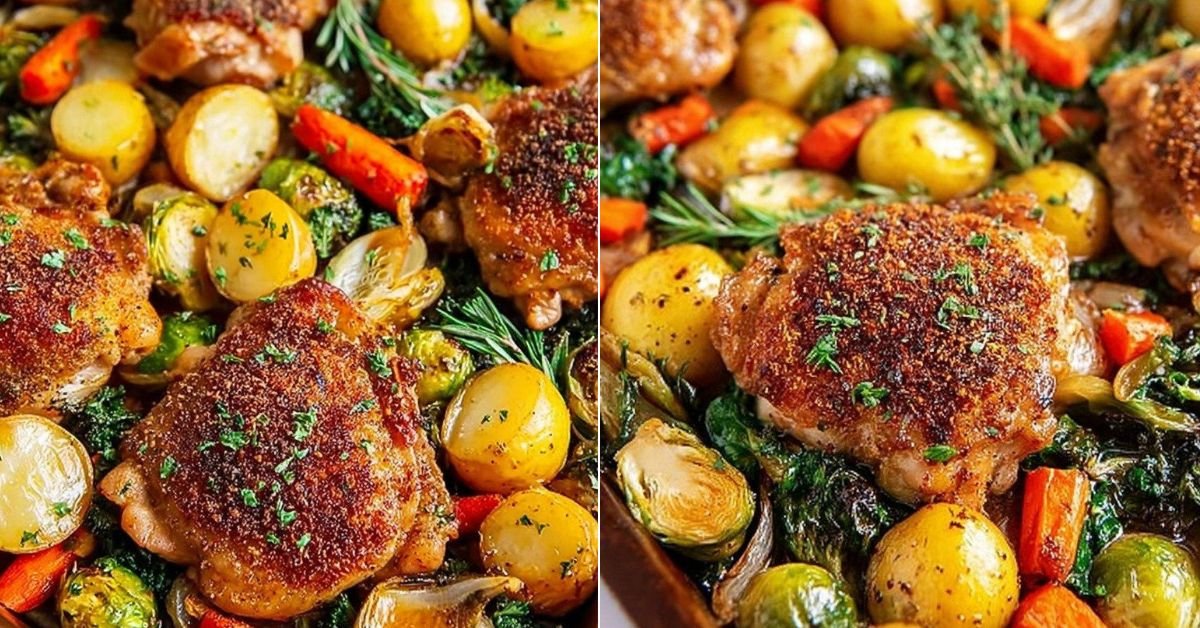
1) What I Learned Testing Chicken Thighs And Vegetables
Dry chicken and pale vegetables can make a sheet pan dinner feel disappointing instead of helpful. I’m Angela, and my first try packed everything too tightly, so the vegetables steamed while the chicken cooked unevenly. After testing hotter roasting, smaller potato pieces, and better pan spacing, I discovered that sheet pan chicken thighs and vegetables need one simple rule: give every piece room to roast. That small adjustment turned this into the kind of baked chicken and vegetables dinner I feel calm serving on a busy family night.
Table of Contents
- 1) What I Learned Testing Chicken Thighs And Vegetables
- 2) Key Takeaways
- 3) Easy Chicken Thighs And Vegetables Recipe
- 4) Why Most Chicken Thighs And Vegetables Recipes Fail
- 5) Ingredients for Chicken Thighs And Vegetables
- 6) How to Make Chicken Thighs And Vegetables
- 7) Recipe Card: Chicken Thighs And Vegetables
- 8) Tips for Making Chicken Thighs And Vegetables
- 9) Common Mistakes & Fixes
- 10) How to Tell Chicken Thighs And Vegetables Are Done
- 11) Professional Secrets Behind Better Chicken Thighs And Vegetables
- 12) Best Dishes or Pairings to Serve With Chicken Thighs And Vegetables
- 13) Making Chicken Thighs And Vegetables Ahead of Time
- 14) Storing Leftover Chicken Thighs And Vegetables
- 15) FAQ (Real Cooking Questions)
- 16) Save This Chicken Thighs And Vegetables Recipe
- 17) Conclusion
- 18) Nutrition
2) Key Takeaways
- Sheet pan chicken thighs and vegetables work best when the chicken and vegetables are spread in one even layer, not piled together.
- Potatoes and carrots should be cut small enough to become tender in the same 30 to 35 minute roasting window as the chicken.
- Olive oil helps the garlic powder, paprika, salt, and pepper coat every surface, which improves browning and prevents bland bites.
- The chicken is done when the thickest part reaches 165°F, while the vegetables should be tender inside with lightly browned edges.
3) Easy Chicken Thighs And Vegetables Recipe
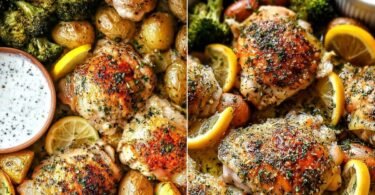
This Chicken Thighs And Vegetables recipe is built around one practical sheet pan method: coat everything well, spread it out, and roast at high heat until the chicken is juicy and the vegetables are tender. The 425°F oven matters because lower heat can soften the vegetables without giving them those roasted edges that make the dish taste finished. The goal is not just cooked chicken; the goal is browned Brussels sprouts, sweet carrots, tender potatoes, and savory pan juices that bring the whole meal together.
What makes this sheet pan chicken thighs and veggies method reliable is the balance between size and spacing. Chicken thighs can handle high heat because they stay moist better than leaner cuts, but the vegetables need to be cut evenly so they do not lag behind. When everything is coated with olive oil and seasoning, the oven does most of the work while the pan develops a roasted chicken and vegetables flavor that feels fuller than the ingredient list suggests.
4) Why Most Chicken Thighs And Vegetables Recipes Fail
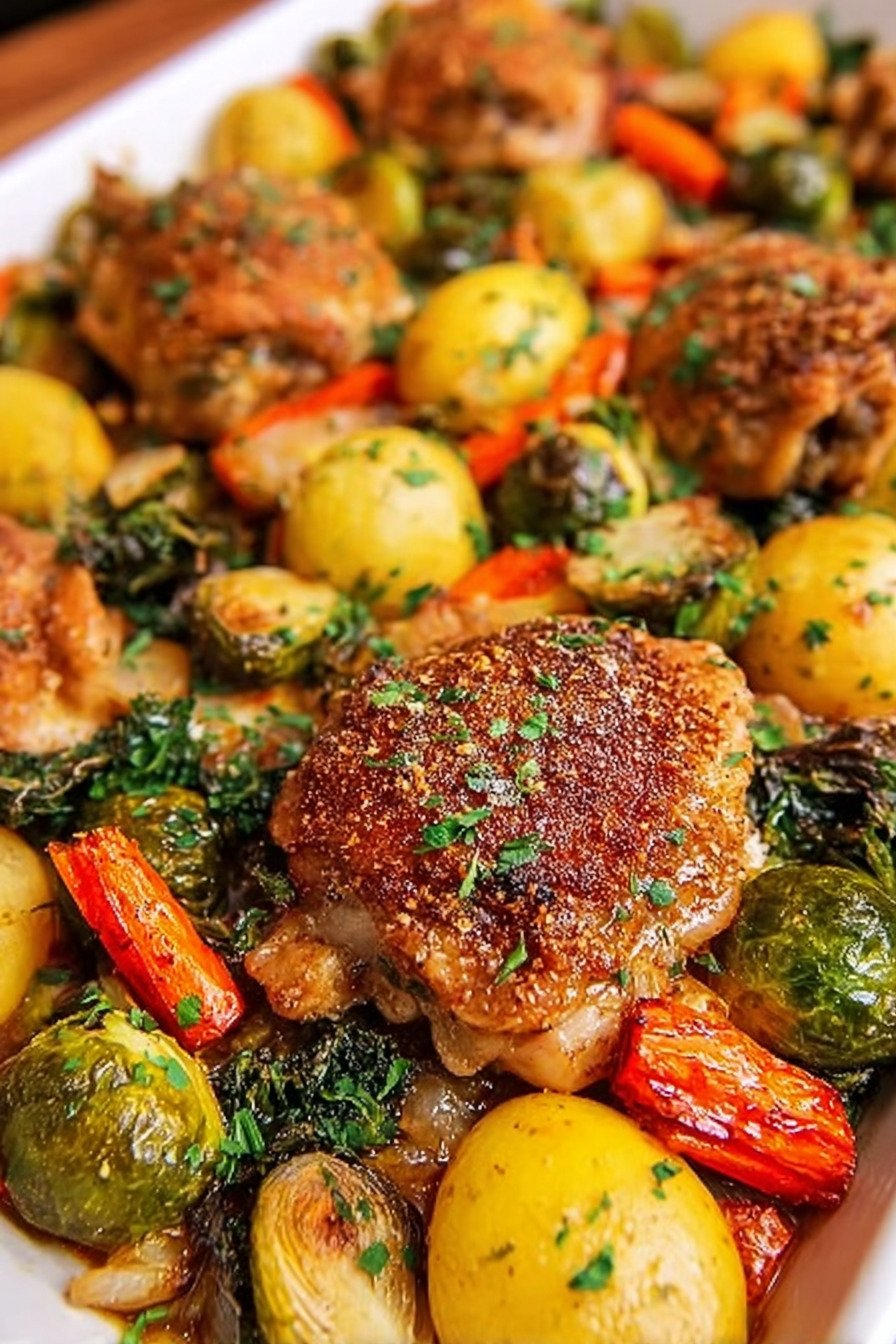
Most Chicken Thighs And Vegetables recipes fail because the pan is overcrowded. When Brussels sprouts, carrots, potatoes, and chicken thighs sit too close together, moisture gets trapped and the ingredients steam instead of roast. The real-world sign is a pan full of liquid, pale vegetables, and chicken that looks cooked but not appetizing. A single layer fixes that problem by allowing hot air to circulate around the food.
Another common issue is uneven vegetable size. Large potato chunks take longer than carrots and Brussels sprouts, so the chicken may finish before the vegetables become tender. Cutting the potatoes into small, even pieces helps the whole pan finish together. Under-seasoning is also a problem because chicken thighs and potatoes both need salt to taste complete. Season the mixture evenly before it goes into the oven, not only after baking.
The final failure is ignoring doneness cues. Chicken should not be judged by color alone because browning and safe internal temperature are different things. The thickest part of the chicken needs to reach 165°F, while the vegetables should be fork-tender. When those two checkpoints meet, baked chicken and vegetables come out juicy, tender, and properly roasted instead of dry, watery, or uneven.
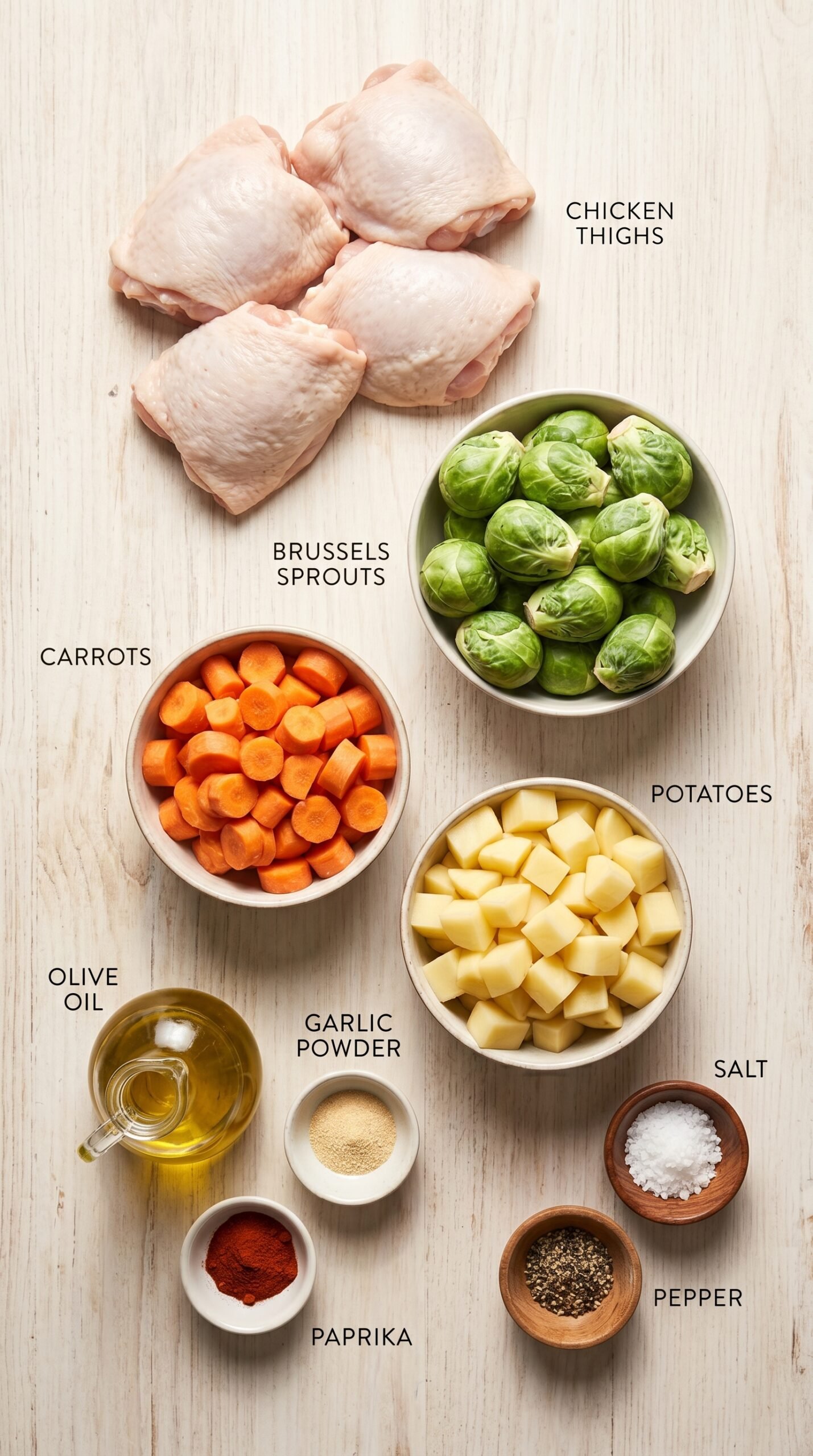
5) Ingredients for Chicken Thighs And Vegetables
Chicken thighs: Chicken thighs are the main protein because they stay juicy during high-heat roasting. Use them when you want a forgiving sheet pan dinner that can handle 30 to 35 minutes in the oven without drying out as quickly as chicken breast.
Brussels sprouts: Brussels sprouts add earthy flavor and browned edges when they have enough room on the pan. If they are very large, cutting them smaller helps the centers soften before the outer leaves overbrown.
Carrots: Carrots bring natural sweetness that balances the savory chicken and paprika. Chop them into similar-size pieces so they roast evenly and do not stay firm while the potatoes finish.
Potatoes: Potatoes make the sheet pan meal more filling. Dicing them is important because large pieces may stay firm after the chicken is cooked through.
Olive oil: Olive oil helps the seasoning cling and encourages roasted edges. Too little oil can leave the vegetables dry and patchy, while too much can make the pan greasy.
Garlic powder: Garlic powder gives steady savory flavor without the risk of fresh garlic burning at 425°F. It works especially well for garlic herb chicken thighs and vegetables when paired with dried herbs as an optional variation.
Paprika: Paprika adds warm color and mild sweetness. It helps the chicken and vegetables look more roasted even with a short ingredient list.
Salt and pepper: Salt wakes up the chicken, potatoes, and vegetables, while pepper adds a gentle bite. Season before roasting so the flavor is carried through the oil coating.
- Chicken thighs vs chicken breast: Thighs stay juicier under high heat, while breast meat cooks faster and can dry out before the potatoes are tender.
- Small potatoes vs large potato chunks: Smaller diced potatoes match the chicken’s cooking time better and prevent underdone centers.
- Garlic powder vs fresh garlic: Garlic powder is steadier for sheet pan roasting because fresh garlic can burn before the chicken finishes.
- Single layer vs crowded pan: A single layer creates roasted chicken and vegetables, while a crowded pan creates steam and soft edges.
6) How to Make Chicken Thighs And Vegetables
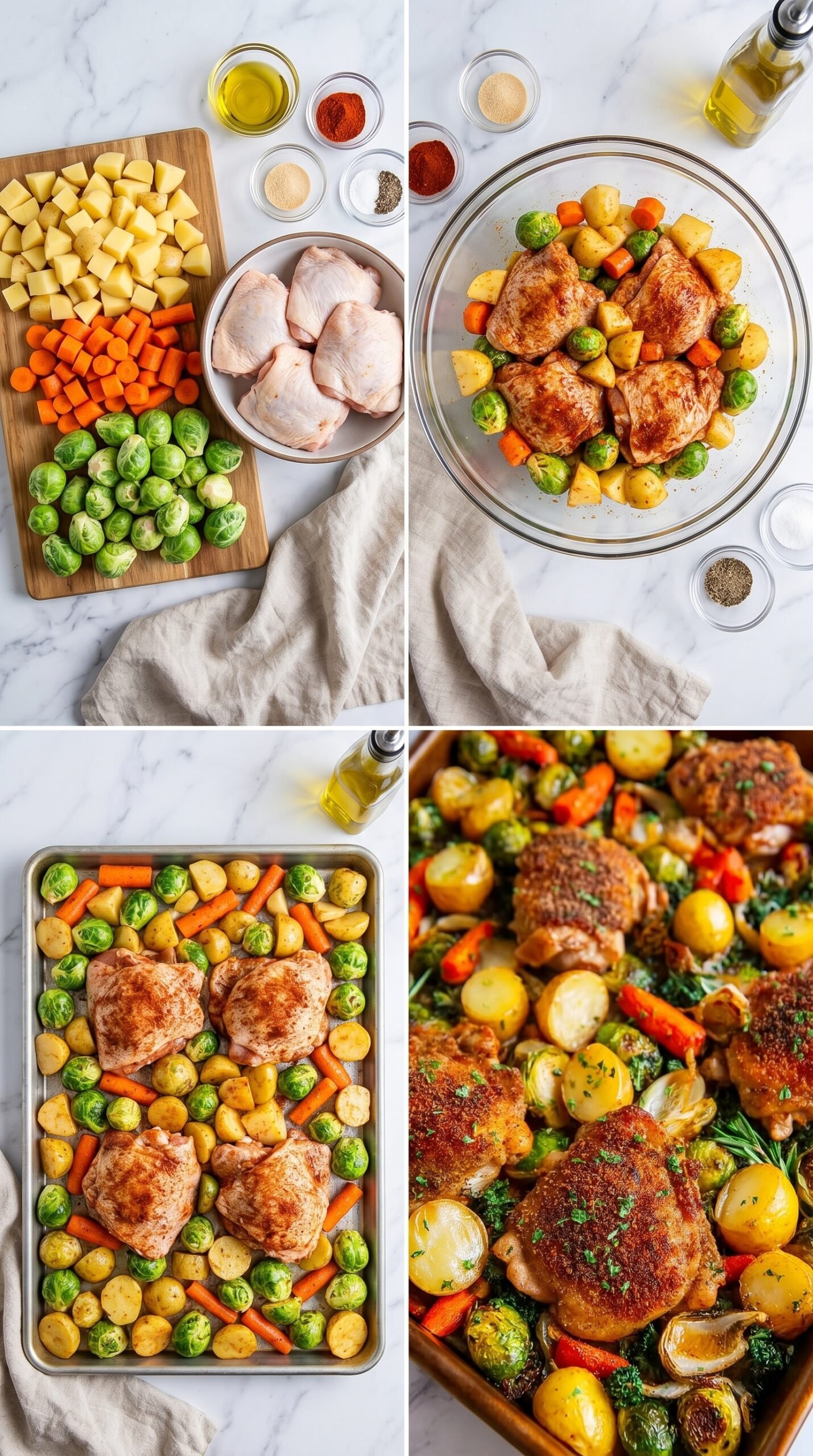
Step 1: Preheat the oven to 425°F. Starting with a fully heated oven helps the chicken begin roasting right away and gives the vegetables a better chance to brown instead of slowly releasing moisture.
Step 2: Toss the chicken thighs, Brussels sprouts, carrots, and potatoes in a large bowl with olive oil, garlic powder, paprika, salt, and pepper. Look for a light, even coating on every piece, with no dry patches of seasoning at the bottom of the bowl.
Step 3: Spread everything on a sheet pan in one layer. Keep the chicken thighs separated and avoid piling vegetables underneath the chicken, because covered vegetables soften but do not roast well.
Step 4: Bake for 30 to 35 minutes. The chicken should be cooked through, the potatoes should be tender when pierced, and the Brussels sprouts should show browned edges.
Step 5: Serve the chicken and vegetables warm, spooning any savory pan juices over the top. Letting the chicken sit briefly before serving helps the juices settle instead of running out immediately.
7) Recipe Card: Chicken Thighs And Vegetables
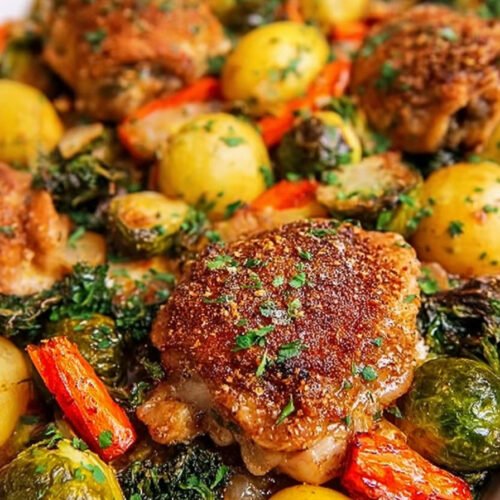
Chicken Thighs And Vegetables Sheet Pan Dinner
Ingredients
- 4 chicken thighs, patted dry so the seasoning clings and the skin roasts better
- 2 cups Brussels sprouts, trimmed and halved if large for even roasting
- 2 cups carrots, chopped into similar-size pieces so they soften evenly
- 2 cups potatoes, diced small enough to cook through with the chicken
- 3 tablespoons olive oil, used to coat the chicken and vegetables for browning
- 1 teaspoon garlic powder, for savory depth without burning like fresh garlic can
- 1 teaspoon paprika, for warm color and mild smoky-sweet flavor
- Salt and pepper to taste, added evenly so the chicken and vegetables are seasoned throughout
Instructions
- Preheat the oven to 425°F (220°C) so the sheet pan is ready for strong roasting heat, which helps the chicken brown while the vegetables become tender.
- Place the chicken thighs, Brussels sprouts, carrots, and potatoes in a large bowl. Add the olive oil, garlic powder, paprika, salt, and pepper, then toss until every piece is lightly coated and no dry seasoning pockets remain.
- Spread the mixture onto a sheet pan in a single layer, keeping the chicken thighs spaced apart and the vegetables spread out so they roast instead of steam.
- Bake for 30 to 35 minutes, or until the chicken reaches 165°F in the thickest part and the vegetables are fork-tender with browned edges. If the vegetables need deeper color, leave them in for a few extra minutes after checking the chicken.
- Let the chicken rest briefly, then serve warm with the roasted vegetables and any pan juices spooned over the top.
8) Tips for Making Chicken Thighs And Vegetables
Pat the chicken thighs dry before tossing them with oil and seasoning. Surface moisture slows browning, and browning is what gives sheet pan chicken thighs and vegetables a roasted flavor instead of a boiled flavor. Use a large bowl for tossing because it gives the oil, garlic powder, paprika, salt, and pepper enough space to coat the chicken and vegetables evenly.
Cut the carrots and potatoes with timing in mind. The chicken needs about 30 to 35 minutes, so vegetable pieces should be small enough to become tender during that same window. If your potatoes are larger, they may need extra time, but the chicken should not be overbaked while waiting. In that case, remove the chicken once it reaches 165°F and let the vegetables continue roasting for a few minutes.
For healthy roasted chicken and vegetables, the key is not removing all the oil; it is using enough oil to roast properly without drowning the pan. The three tablespoons here help transfer heat, carry seasoning, and prevent dry vegetable edges. If the pan looks wet halfway through baking, the vegetables may be too crowded, so spread them out more next time.
9) Common Mistakes & Fixes
Problem: The vegetables are soft but not browned. Cause: The sheet pan was overcrowded, causing steam to build up. Fix: Use a larger pan or divide the mixture between two pans so the vegetables sit in a single layer.
Problem: The potatoes are still firm when the chicken is done. Cause: The potato pieces were cut too large. Fix: Dice potatoes smaller and more evenly, or give the potatoes a few extra minutes after removing fully cooked chicken from the pan.
Problem: The chicken tastes bland even though it looks cooked. Cause: The seasoning did not coat the chicken evenly, or there was not enough salt. Fix: Toss thoroughly in a large bowl and season the chicken surfaces directly before baking.
Problem: The chicken turns dry. Cause: It stayed in the oven beyond the safe doneness point. Fix: Check the thickest part with a thermometer and remove the chicken when it reaches 165°F.
Problem: The garlic flavor tastes flat. Cause: Garlic powder was not evenly distributed in the oil. Fix: Toss until the oil and spices lightly coat all sides of the chicken and vegetables.
10) How to Tell Chicken Thighs And Vegetables Are Done
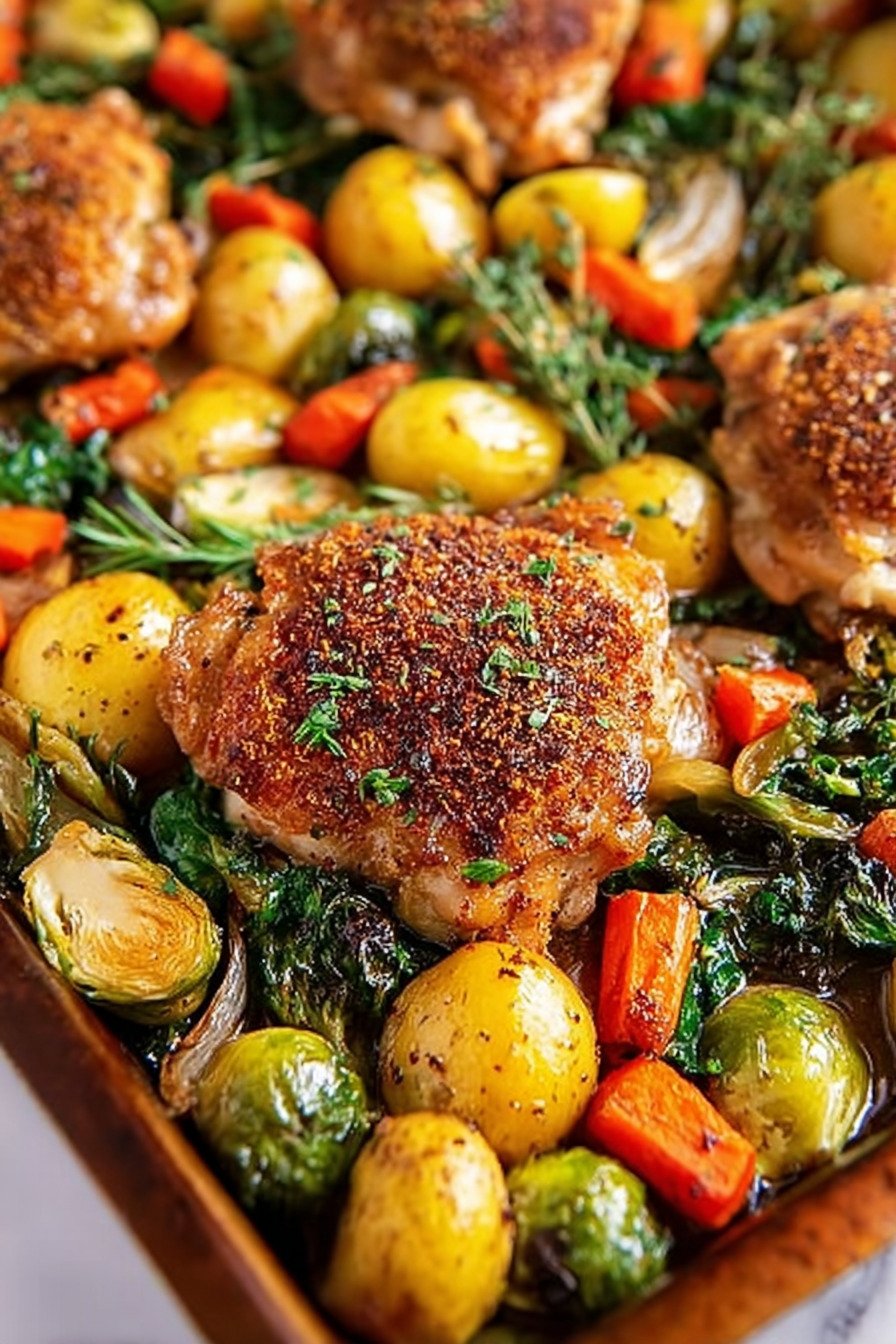
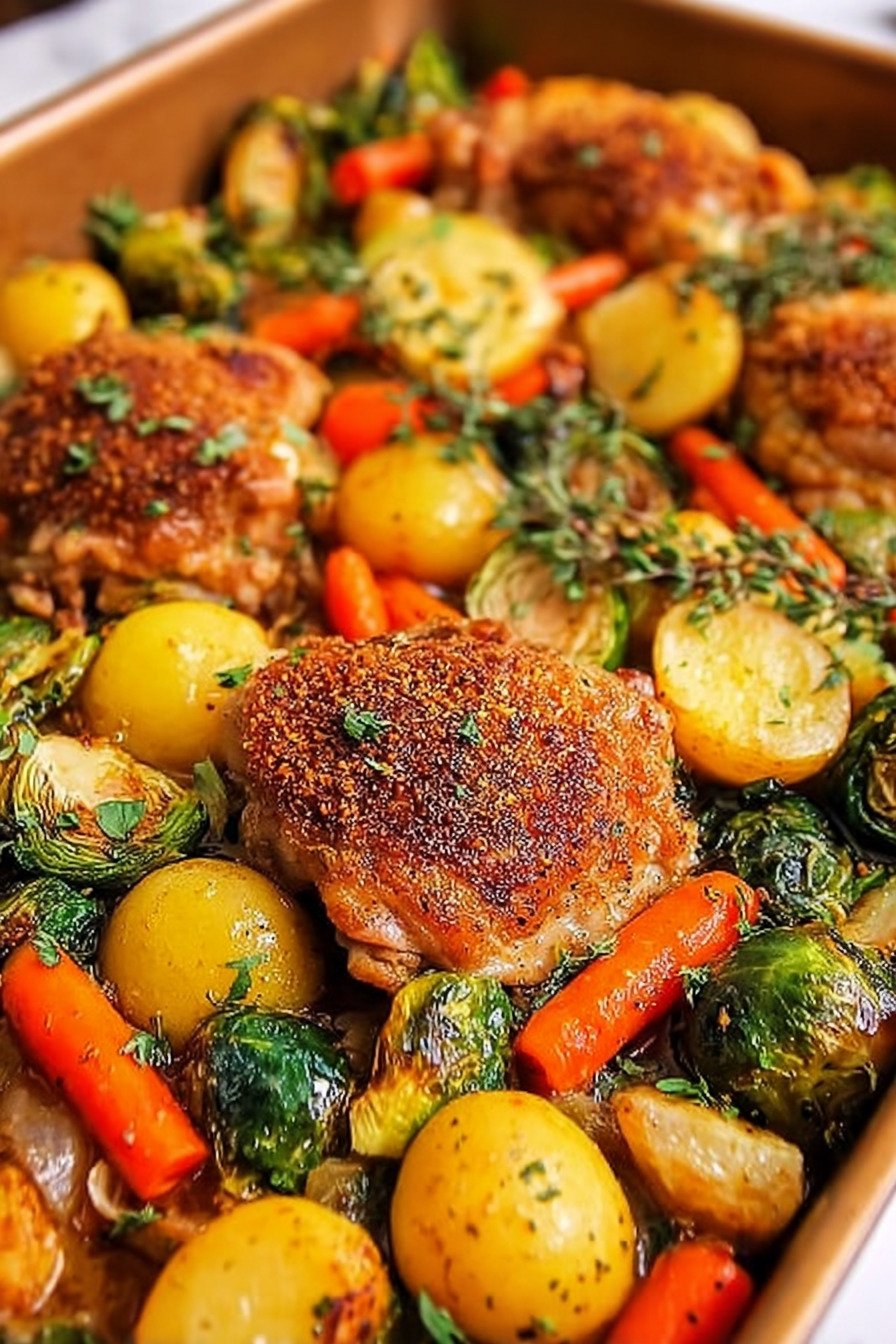
Chicken Thighs And Vegetables are done when the chicken is juicy, the vegetables are tender, and the pan smells roasted instead of watery. Visually, the Brussels sprouts should have browned edges, the carrots should look slightly softened and glossy, and the potatoes should have tender centers. The chicken should be opaque throughout, but the most reliable cue is an internal temperature of 165°F in the thickest part.
The texture should feel balanced: tender potatoes, soft carrots, roasted Brussels sprouts, and moist chicken. If you see watery pooling across the pan, the vegetables likely steamed. If the chicken skin or surface looks pale, the pan may have been crowded or the oven may not have been hot enough. The flavor should be savory from garlic powder and paprika, with enough salt and pepper to make the vegetables taste complete.
11) Professional Secrets Behind Better Chicken Thighs And Vegetables
The biggest professional habit for this kind of sheet pan dinner is controlling moisture before the pan goes into the oven. Dry chicken surfaces, evenly cut vegetables, measured oil, and generous spacing all support browning. Browning is not just visual; it creates deeper flavor and keeps roasted chicken and vegetables from tasting flat.
Another useful technique is placing the ingredients with intention. Put chicken thighs where they have direct heat exposure, and spread potatoes, carrots, and Brussels sprouts around them rather than underneath them. This prevents the vegetables from sitting in chicken juices too early. If you want an herb roasted chicken and vegetables variation, add a small pinch of dried thyme or rosemary to the seasoning, but keep the base method the same.
12) Best Dishes or Pairings to Serve With Chicken Thighs And Vegetables
Chicken Thighs And Vegetables can stand alone as a complete dinner because the pan already includes protein, potatoes, and vegetables. For a fresher plate, serve it with a crisp green salad, cucumber salad, or lemony cabbage slaw. The acidity helps balance the richness of the chicken thighs and olive oil.
If you want a heartier meal, pair it with rice, couscous, warm bread, or a simple grain bowl base. For a lighter dinner, serve the chicken and vegetables with Greek yogurt sauce, a squeeze of lemon, or chopped fresh herbs added after baking. Those finishing touches brighten the pan without changing the original sheet pan method.
13) Making Chicken Thighs And Vegetables Ahead of Time
You can prep the vegetables ahead by trimming the Brussels sprouts, chopping the carrots, and dicing the potatoes earlier in the day. Keep the potatoes covered and refrigerated if prepping far in advance so they do not discolor. For the best texture, toss everything with oil and seasoning closer to baking time rather than letting the vegetables sit heavily coated for too long.
If you want to make the full sheet pan chicken thighs and vegetables recipe ahead, bake it, cool it, and store it in portions. The texture will be best when reheated in the oven or on a hot pan because dry heat helps revive the roasted edges. Microwave reheating works for convenience, but it softens the vegetables more.
14) Storing Leftover Chicken Thighs And Vegetables
Store leftover Chicken Thighs And Vegetables in an airtight container in the refrigerator for up to 3 days. Let the food cool before sealing the container so excess steam does not drip back onto the vegetables and make them soggy. For best reheating, place leftovers on a sheet pan at 375°F until warmed through.
Freezing is possible, but the vegetables may soften after thawing, especially potatoes and Brussels sprouts. If you freeze leftovers, use them later in a grain bowl, soup-style lunch, or chopped chicken and vegetable wrap where a softer texture is less noticeable. Always reheat chicken until hot throughout.
15) FAQ (Real Cooking Questions)
Can I use boneless chicken thighs? Yes, but they may cook faster than bone-in thighs. Start checking earlier so the chicken does not dry out before the vegetables finish.
Can I use different vegetables? Yes, but choose vegetables with similar roasting times. Broccoli, cauliflower, sweet potatoes, or onions can work, but cut dense vegetables smaller so they cook evenly.
Why did my vegetables turn watery? The pan was likely too crowded, or the vegetables were wet before baking. Dry the vegetables well and spread them into a single layer before roasting.
How do I make the chicken more flavorful? Make sure the oil and seasonings coat the chicken directly. Salt matters, and paprika plus garlic powder should be distributed evenly rather than sitting at the bottom of the bowl.
Can I turn this into garlic herb chicken thighs and vegetables? Yes. Keep the same base recipe, then add a small amount of dried thyme, rosemary, or Italian seasoning as an optional herb variation.
16) Save This Chicken Thighs And Vegetables Recipe
If this Chicken Thighs And Vegetables recipe helped you solve dry chicken or soggy vegetables, save it for a busy dinner night. The key reminder is: use a hot oven, cut the vegetables evenly, and keep everything in one uncrowded layer.
17) Conclusion
Chicken Thighs And Vegetables become much more reliable when you understand what the sheet pan needs: heat, space, even cuts, and clear doneness cues. The difference between steamed vegetables and roasted vegetables often comes down to pan spacing, while the difference between dry chicken and juicy chicken comes down to checking doneness instead of guessing. Once those details are in place, this sheet pan chicken thighs and vegetables recipe becomes a practical dinner you can repeat with confidence.
18) Nutrition
Serving Size 1 portion Calories 485 Sugar 6 g Sodium 430 mg Fat 27 g Saturated Fat 7 g Carbohydrates 31 g Fiber 7 g Protein 30 g Cholesterol 145 mg




Leave a Comment