
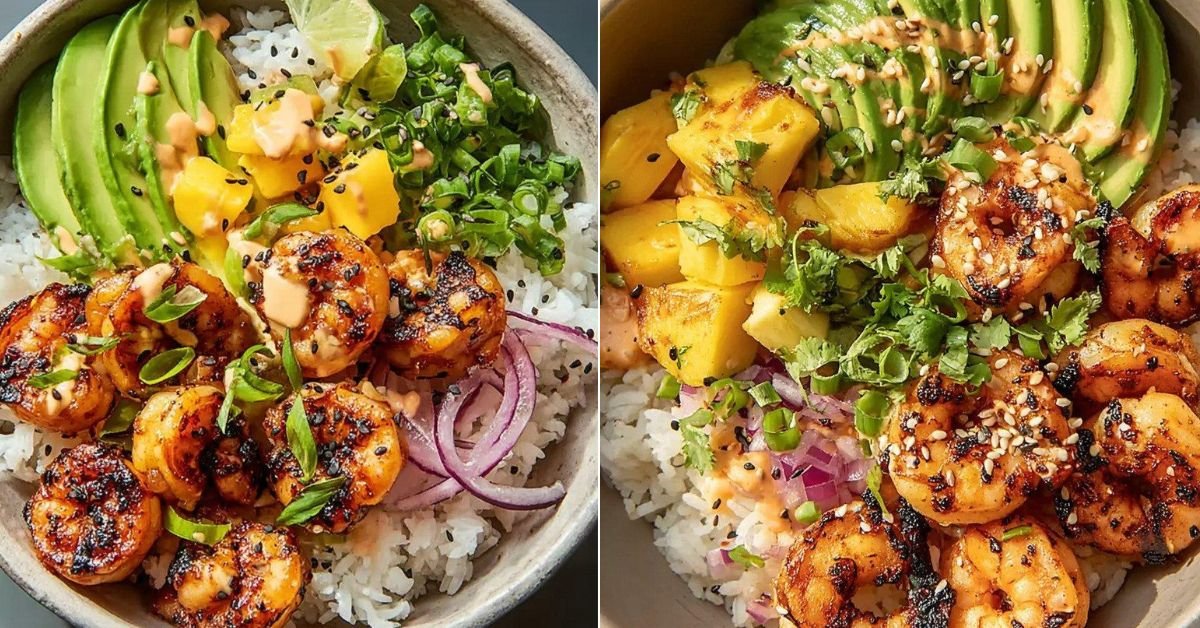
1) What Makes This Charred Shrimp And Avocado Bowl Work
Dry, rubbery shrimp can wreck a fresh bowl fast, and I learned that the messy way. I’m Angela, and after testing this shrimp and avocado bowl with damp shrimp, under-rinsed rice, and watery salsa, I found the fix: dry the shrimp hard, char it quickly, and keep every topping bright but controlled. The first bowl that finally worked felt like a calm summer dinner win: fluffy rice, smoky edges, creamy avocado, sweet mango, and a lime-chili drizzle that made the whole thing taste balanced, not heavy. It is a shrimp dinner healthy enough for warm nights but still satisfying.
Table of Contents
- 1) What Makes This Charred Shrimp And Avocado Bowl Work
- 2) Key Takeaways
- 3) Easy The Ultimate Charred Shrimp And Avocado Bowl Recipe
- 4) Why Most The Ultimate Charred Shrimp And Avocado Bowl Recipes Fail
- 5) Ingredients for The Ultimate Charred Shrimp And Avocado Bowl
- 6) How to Make The Ultimate Charred Shrimp And Avocado Bowl
- 7) Recipe Card: The Ultimate Charred Shrimp And Avocado Bowl
- 8) Tips for Making The Ultimate Charred Shrimp And Avocado Bowl
- 9) Common Mistakes & Fixes
- 10) How to Tell a Shrimp and Avocado Bowl Has the Right Texture
- 11) Professional Secrets Behind Better The Ultimate Charred Shrimp And Avocado Bowl
- 12) Best Dishes or Pairings to Serve With The Ultimate Charred Shrimp And Avocado Bowl
- 13) Making The Ultimate Charred Shrimp And Avocado Bowl Ahead of Time
- 14) Storing Leftover The Ultimate Charred Shrimp And Avocado Bowl
- 15) FAQ (Real Cooking Questions)
- 16) Save This The Ultimate Charred Shrimp And Avocado Bowl Recipe
- 17) Conclusion
- 18) Nutrition
2) Key Takeaways
- Dry shrimp before seasoning: Surface moisture blocks browning, so patting the shrimp completely dry is the difference between smoky char and pale steamed seafood.
- Rinse and rest the rice: Clear rinse water removes excess starch, while a short covered rest keeps the rice fluffy enough to support the toppings.
- Keep the salsa chunky, not soupy: Uniform mango cubes, minced onion, jalapeno, cilantro, and lime give freshness without flooding the bowl.
- Build in sections: Arranging the rice, shrimp, avocado, salsa, sauce, and sesame seeds separately keeps the bowl colorful, textured, and easy to eat.
3) Easy The Ultimate Charred Shrimp And Avocado Bowl Recipe
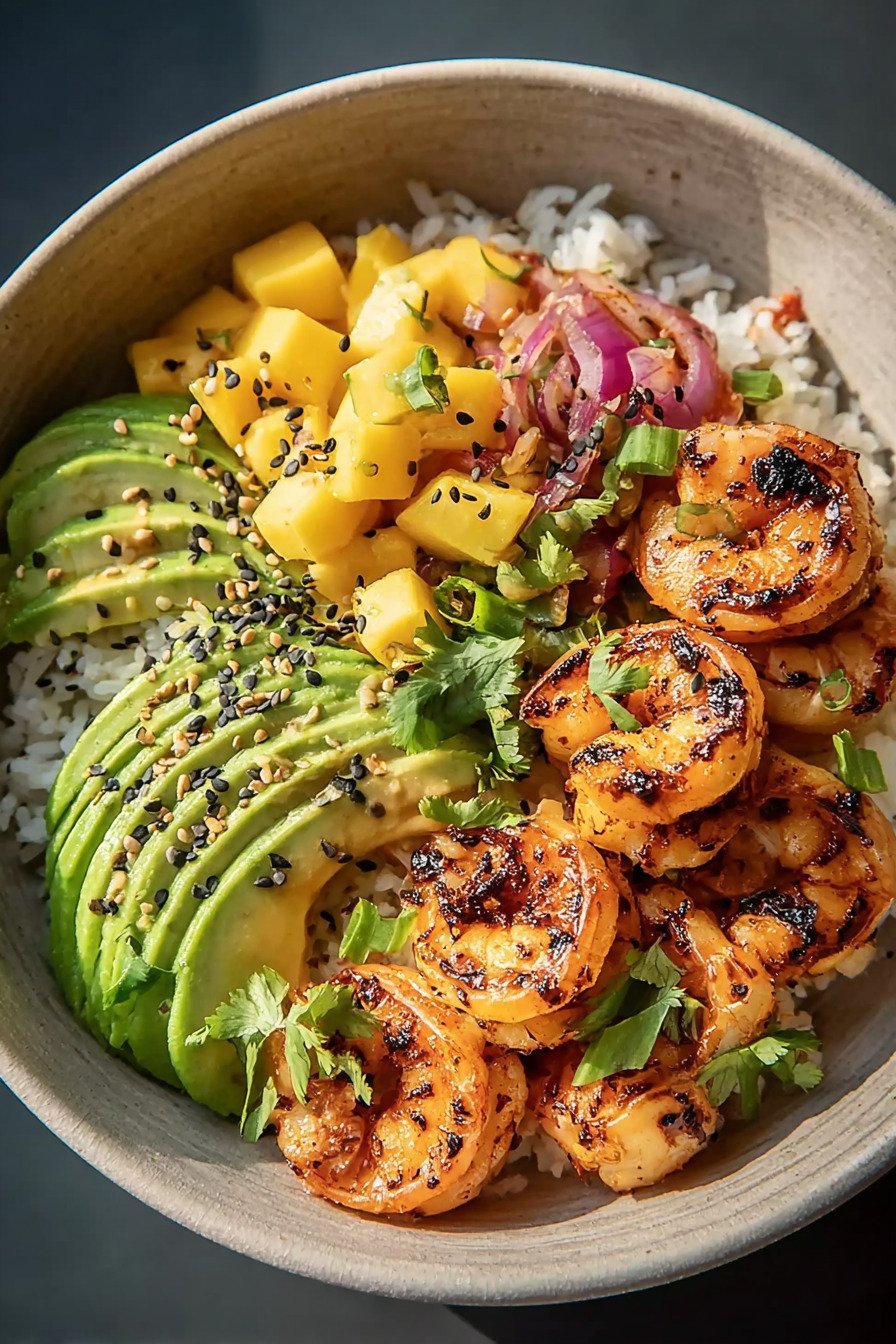
This bowl works because every component has a specific job. The rice is mild and fluffy, the shrimp brings smoky heat, the mango salsa adds sweet acidity, the avocado cools the spice, and the lime-chili sauce gives the bowl a creamy finish. A good shrimp and avocado bowl should not taste like separate toppings thrown over rice. It should taste layered, bright, and balanced.
The biggest technique is speed. Shrimp cook quickly, so the pan needs to be hot before they go in. If the skillet is only warm, the shrimp release moisture before they brown. A cast-iron skillet helps because it holds heat well and gives the spice coating time to toast against the pan. That brief contact creates the reddish charred edges that make this bowl feel more like a composed dinner than a plain rice bowl.
The rice matters more than people think. Long-grain white rice should be rinsed until the water runs clear because loose starch can make the base gummy. Once the rice cooks, letting it steam for 5 minutes off the heat helps the grains settle. That gives the bowl a softer, lighter base for the charred shrimp and avocado instead of a compact, sticky layer.
4) Why Most The Ultimate Charred Shrimp And Avocado Bowl Recipes Fail
The shrimp steam instead of char: Shrimp hold a surprising amount of surface moisture, especially if they were thawed from frozen. When that moisture hits the skillet, it creates steam and prevents browning. Drying the shrimp completely before adding olive oil and spices gives the chili powder, smoked paprika, and cumin a better chance to toast.
The shrimp turn rubbery: Large shrimp only need a short sear, usually 2–3 minutes per side. If they curl tightly and feel hard, they have gone too far. The goal is opaque flesh, lightly firm texture, and deeply browned edges, not long cooking.
The rice becomes heavy: Rice that is not rinsed can cook up sticky because loose starch clings to the grains. Rinsing until the water runs clear and resting the rice after cooking helps the grains stay separate enough for healthy dinner recipes bowls.
The salsa waters down the bowl: Mango salsa should be juicy but not runny. Dicing the mango evenly and tossing it gently with onion, jalapeno, cilantro, and lime keeps the pieces intact. If the mango is extra ripe, let excess juice sit in the bowl instead of pouring all of it over the rice.
The sauce tastes flat or heavy: Mayonnaise gives body, but it needs sriracha and lime juice for balance. Whisking until the sauce is smooth and light orange ensures the heat and acidity are evenly distributed instead of hitting in random streaks.
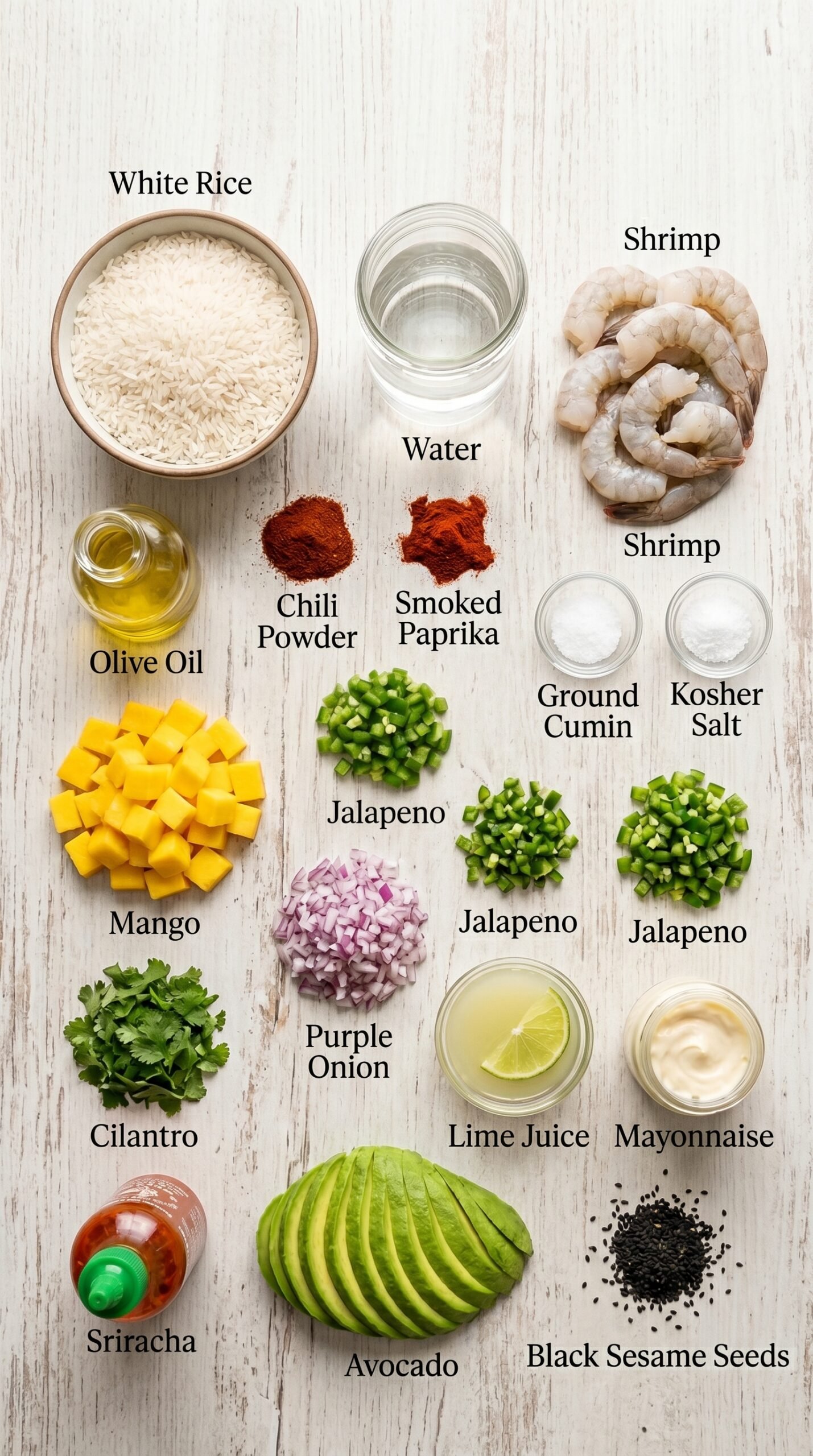
5) Ingredients for The Ultimate Charred Shrimp And Avocado Bowl
Long-grain white rice: This rice gives the bowl a clean, fluffy base. Use it at the start of the recipe and rinse until the water runs clear. If replaced with a stickier rice, the bowl will feel heavier and the toppings may sink instead of sitting neatly on top.
Water: The water cooks the rice at the proper ratio. Too much water makes the base soft and wet; too little leaves the grains firm in the center. Keeping the measured amount steady makes the bowl more consistent.
Large shrimp: Large peeled and deveined shrimp are ideal because they sear quickly but still stay juicy. Smaller shrimp cook faster and can overcook before the spice blend develops color. Larger shrimp also make the bowl feel more substantial.
Olive oil: Olive oil helps the spices cling to the shrimp and encourages browning. Add it after the shrimp are dry, not before, so it coats the surface instead of trapping water underneath.
Chili powder: Chili powder builds the reddish spice coating that gives the shrimp visual warmth and savory depth. If reduced too much, the shrimp will taste mild and look pale.
Smoked paprika: Smoked paprika reinforces the charred flavor without requiring a grill. It is especially useful for shrimp summer recipes when you want grilled-style flavor from a skillet.
Ground cumin: Cumin adds a warm, earthy note behind the chili and paprika. Use it sparingly because too much can make the bowl taste dusty instead of fresh.
Kosher salt: Salt sharpens the shrimp spices and helps the bowl taste complete. If the shrimp taste flat after cooking, the issue is often not enough salt in the seasoning stage.
Mango: Bright yellow mango brings sweetness and juice to balance the smoky shrimp. Use diced, uniform cubes so each spoonful gets fruit without turning the salsa mushy.
Purple onion: Finely minced purple onion adds crunch and a sharp bite. Large pieces can overpower the mango, so small cuts are important for balance.
Green jalapeno: Jalapeno gives controlled heat. Mince it finely so the spice spreads through the salsa instead of landing in one harsh bite.
Fresh cilantro leaves: Cilantro adds a green, citrusy finish. Add it to the salsa and use a little more at the end if you want a fresher aroma.
Fresh lime juice: Lime juice wakes up the mango salsa and keeps the bowl from tasting heavy. Bottled lime juice usually tastes flatter, so fresh lime is worth using here.
Mayonnaise: Mayonnaise gives the drizzle body and cling. It helps the sauce sit on the shrimp and rice instead of disappearing into the bowl.
Sriracha: Sriracha or a smooth hot sauce adds heat, color, and a little tang. Chunky hot sauce will not drizzle as cleanly, so smooth sauce works better.
Fresh lime juice for the sauce: The second measure of lime juice thins the mayonnaise and brightens the sriracha. Without it, the sauce can taste too rich for a fresh bowl.
Avocado: A freshly sliced avocado adds creamy contrast to the smoky shrimp and bright mango. Slice it right before serving because avocado browns quickly once exposed to air.
Black sesame seeds: Sesame seeds add a small nutty crunch and visual contrast. They go on at the end so they stay distinct instead of disappearing into the sauce.
- Large shrimp vs small shrimp: Large shrimp are easier to char without overcooking; small shrimp can turn firm before the spices brown.
- Rinsed rice vs unrinsed rice: Rinsed rice cooks lighter, while unrinsed rice can make the bowl feel gummy.
- Fresh mango vs overly soft mango: Fresh, firm-ripe mango holds shape; very soft mango releases more juice and can make the salsa watery.
- Smooth sauce vs chunky sauce: A smooth lime-chili sauce drizzles evenly, while chunky sauce can clump and overpower individual bites.
6) How to Make The Ultimate Charred Shrimp And Avocado Bowl
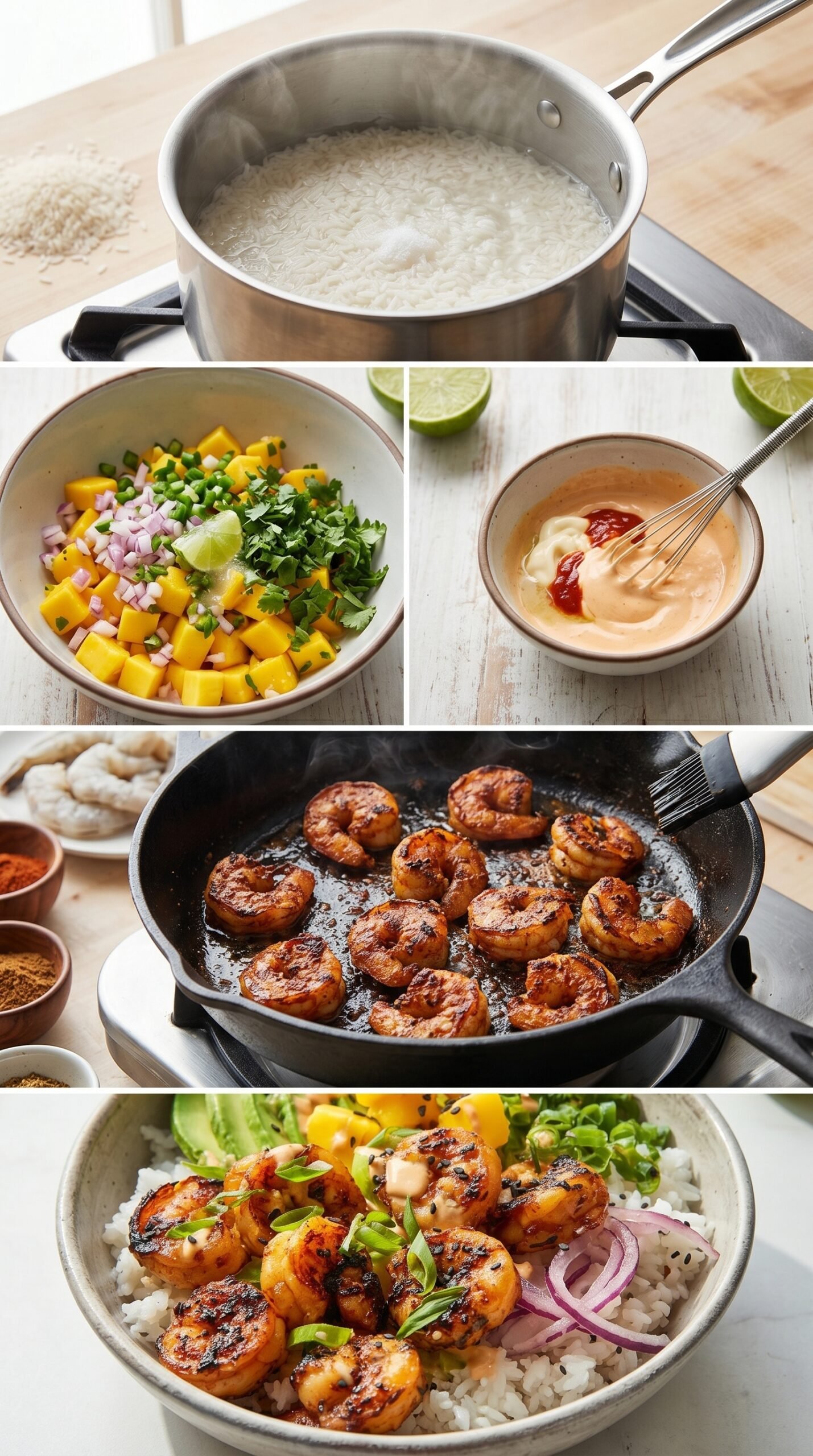
Step 1: Rinse the long-grain white rice under cold water until the water runs clear. This removes excess starch and helps the grains cook fluffy. Bring the rice, water, and a pinch of salt to a boil, then reduce the heat to low, cover, and simmer until the liquid is absorbed. Let the rice steam off the heat for 5 minutes before fluffing.
Step 2: Toss the diced mango, minced purple onion, jalapeno bits, and chopped cilantro in a mixing bowl. Add lime juice and fold gently. The salsa should look glossy and chunky, not crushed or soupy.
Step 3: Whisk mayonnaise, sriracha, and lime juice until completely smooth and light orange. A squeeze bottle gives the cleanest drizzle, but a spoon works if the sauce is smooth enough to fall in thin ribbons.
Step 4: Pat the shrimp completely dry before adding olive oil, chili powder, smoked paprika, cumin, and salt. Heat a cast-iron skillet over medium-high heat. When the pan is hot, sear the shrimp for 2–3 minutes per side until the edges are deeply charred and the centers are opaque.
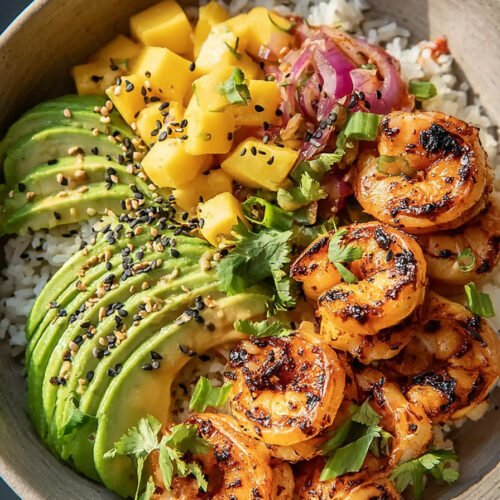
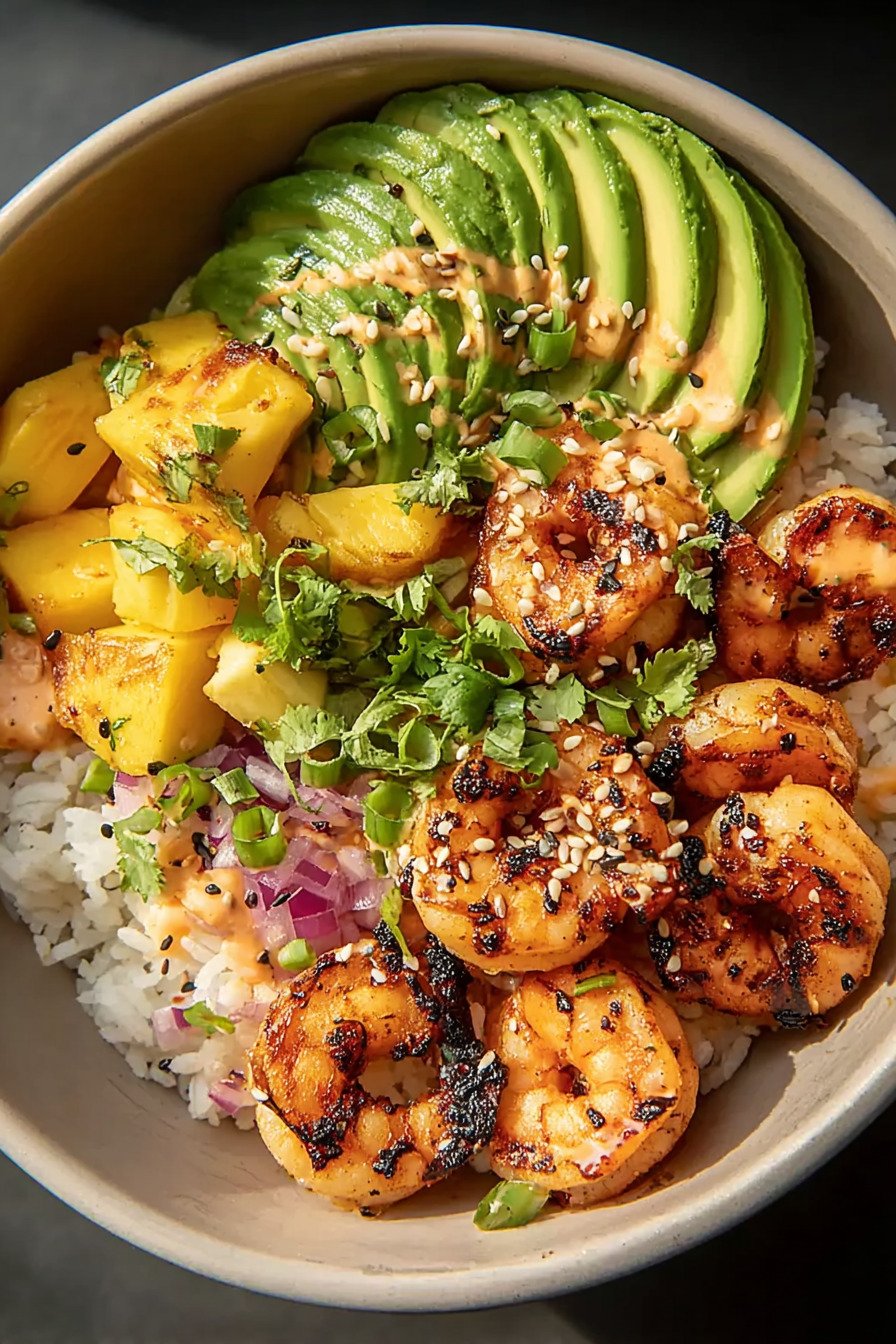
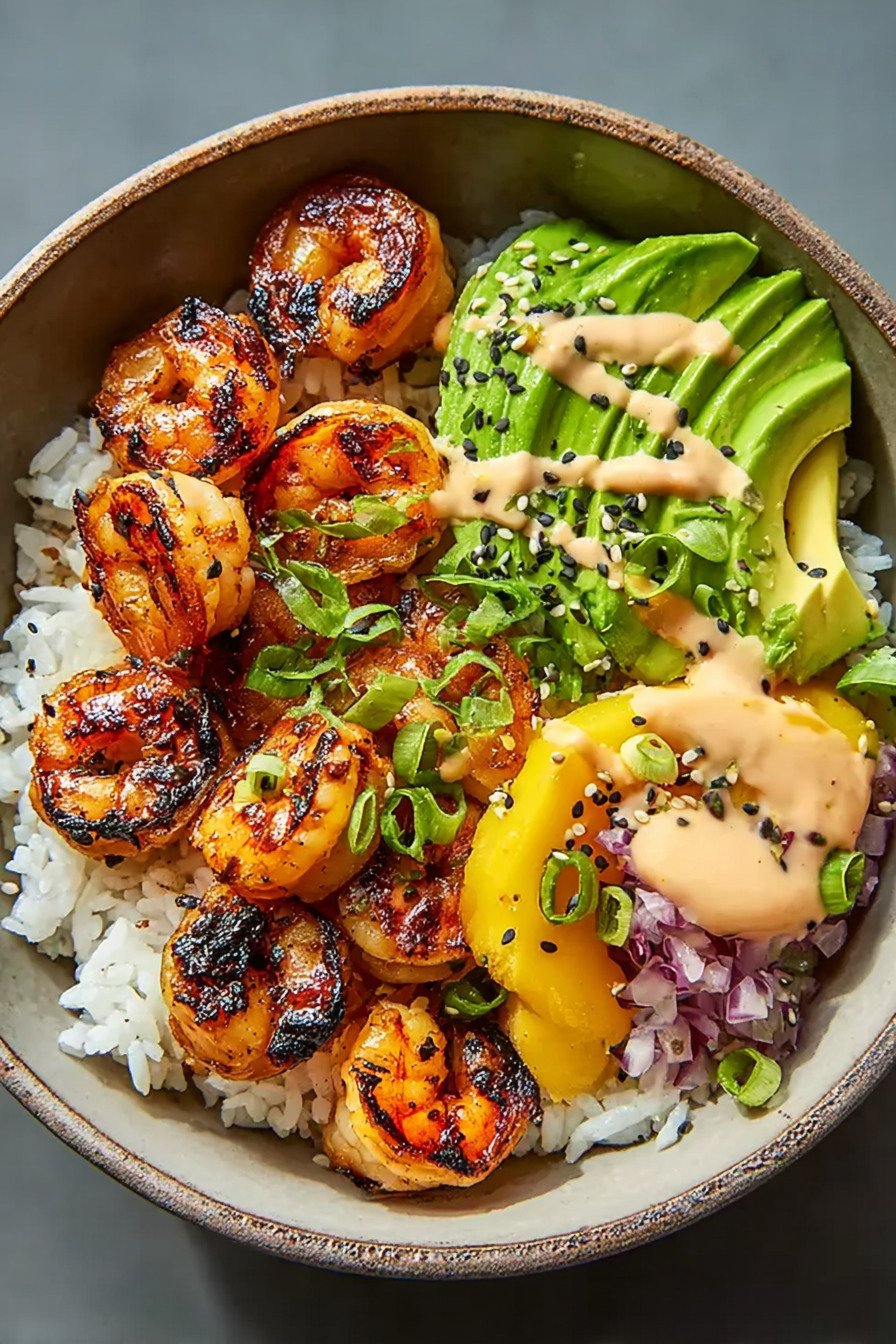
Step 5: Spread fluffy rice in a wide shallow bowl. Arrange the charred shrimp, avocado slices, and mango salsa in sections. Finish with a zigzag of lime-chili sauce, black sesame seeds, and tiny cilantro leaves. Stop there; too much sauce can hide the clean contrast that makes this bowl work.
7) Recipe Card: The Ultimate Charred Shrimp And Avocado Bowl
The Ultimate Charred Shrimp And Avocado Bowl
Ingredients
- 1 cup long-grain white rice, rinsed until the water runs clear so the grains cook fluffy instead of sticky
- 2 cups water, measured for cooking the rice evenly
- 1 lb large shrimp, peeled and deveined for quick, even searing
- 1 tbsp olive oil, used to help the spice blend cling and encourage browning
- 1 tbsp chili powder, for the reddish smoky spice coating
- 1 tsp smoked paprika, for deeper color and charred aroma
- 0.5 tsp ground cumin, for warm earthy flavor
- 0.5 tsp kosher salt, to season the shrimp and sharpen the spices
- 1 cup bright yellow mango, diced into uniform cubes so every bite has sweet freshness
- 0.25 cup purple onion, finely minced for crisp bite without overpowering the salsa
- 1 tbsp green jalapeno, minced into bits for controlled heat
- 2 tbsp fresh green cilantro leaves, chopped for a bright herbal finish
- 1 tbsp fresh lime juice, to brighten the mango salsa
- 0.5 cup mayonnaise, for a creamy drizzle base
- 1 tbsp sriracha, or smooth hot sauce for gentle heat and color
- 1 tbsp fresh lime juice, to loosen and brighten the lime-chili sauce
- 1 large green avocado, freshly sliced into a neat fan for creamy contrast
- 1 tbsp black sesame seeds, for sprinkling over the finished bowl
Instructions
- Rinse the white rice under cold water until the water runs clear, then combine it with the water and a pinch of salt in a saucepan. Bring to a boil, reduce the heat to low, cover, and simmer for 15–18 minutes, until the liquid is absorbed. Let the rice steam off the heat for 5 minutes before fluffing with a fork so the grains stay light.
- In a mixing bowl, gently toss the diced mango, minced purple onion, minced jalapeno, and chopped cilantro. Add the fresh lime juice and fold just until the salsa looks glossy. Set it aside while the rice finishes so the flavors mingle without letting the mango break down.
- Whisk the mayonnaise, sriracha, and lime juice until the sauce turns smooth and light orange with no streaks. Transfer it to a squeeze bottle for a clean zigzag drizzle, or use a spoon if preferred.
- Pat the shrimp completely dry with paper towels, because extra surface moisture prevents charring. Toss the shrimp with olive oil, chili powder, smoked paprika, cumin, and kosher salt until evenly coated. Heat a cast-iron skillet over medium-high heat, then sear the shrimp for 2–3 minutes per side, just until deeply browned at the edges and opaque through the center.
- Spread the fluffy white rice in a wide shallow bowl. Arrange the charred shrimp, the freshly sliced avocado fan, and a scoop of chunky mango salsa in separate sections. Drizzle the lime-chili sauce in a zigzag pattern, then finish with black sesame seeds and tiny fresh cilantro leaves.
8) Tips for Making The Ultimate Charred Shrimp And Avocado Bowl
Start with the rice because it needs both cooking time and resting time. The rest period is not wasted time; it lets the steam redistribute so the rice becomes fluffy instead of wet on the bottom and dry on top. Fluff with a fork, not a spoon, to avoid compacting the grains.
Dry the shrimp more than you think you need to. If using thawed frozen shrimp, drain them well, place them on paper towels, and blot the tops too. This one step protects the char and keeps the finished bowl from tasting watery.
Use medium-high heat, not low heat, for the shrimp. Low heat gives the shrimp time to release moisture before the spices toast. High heat gives fast color, but if the pan smokes aggressively or the spices smell bitter, lower the heat slightly for the next batch.
Keep the mango salsa chunky. The salsa is a contrast topping, not a dressing. If you stir too hard, the mango breaks down and the bowl loses its fresh, clean texture.
Slice the avocado last. For healthy dinner avocado bowls, fresh avocado is the difference between creamy and dull. A neat fan looks polished, but the bigger benefit is texture: cool, soft avocado balances smoky shrimp and spicy sauce.
9) Common Mistakes & Fixes
Problem: The shrimp look pale instead of charred. Cause: The shrimp were too wet or the skillet was not hot enough. Fix: Pat the shrimp dry before seasoning and preheat the cast-iron skillet until the shrimp sizzle as soon as they touch the pan.
Problem: The shrimp taste tough. Cause: They cooked too long after turning opaque. Fix: Pull the shrimp when the edges are charred and the centers are just opaque. Carryover heat will finish the last bit.
Problem: The rice is clumpy. Cause: The rice was not rinsed enough or was stirred too much after cooking. Fix: Rinse until the water runs clear, let the rice steam off the heat, then fluff lightly with a fork.
Problem: The bowl tastes too rich. Cause: The sauce is heavy or overused. Fix: Keep the lime juice bright in the sauce and drizzle lightly. The sauce should connect the bowl, not cover it.
Problem: The mango salsa makes the bowl soggy. Cause: Very ripe mango released too much juice. Fix: Spoon the salsa onto the bowl without pouring all the liquid from the mixing bowl.
10) How to Tell a Shrimp and Avocado Bowl Has the Right Texture
A well-built shrimp and avocado bowl should have clear texture contrast. The rice should look fluffy and separate, not packed down or glossy with excess liquid. The shrimp should have browned, lightly crisp edges with opaque centers and a gentle spring when bitten. The avocado should be creamy and smooth, while the mango salsa should stay chunky with small pops of onion, jalapeno, and cilantro.
The aroma should be smoky from the paprika and chili powder, fresh from the lime and cilantro, and lightly sweet from the mango. The sauce should drizzle in smooth ribbons and sit on top of the bowl instead of pooling underneath the rice. Failure signs are easy to spot: watery rice, tightly curled shrimp, gray shrimp with no char, mushy mango, browned avocado, or a sauce that tastes heavy without acidity.
11) Professional Secrets Behind Better The Ultimate Charred Shrimp And Avocado Bowl
The first professional move is sequencing. Cook the rice first, make the salsa while the rice steams, whisk the sauce before searing, and cook the shrimp last. Shrimp are at their best right after searing, so all other components should be ready before they hit the pan.
The second secret is spice contact. Spices do not create deep flavor just by sitting on shrimp; they need brief contact with hot fat and a hot pan. Olive oil helps the chili powder, smoked paprika, and cumin bloom against the skillet. That is why dry shrimp and medium-high heat matter so much.
The third secret is controlled acidity. Lime appears in both the salsa and sauce, but it plays two different roles. In the salsa, lime keeps the mango bright. In the sauce, lime loosens the mayonnaise and balances the sriracha. This is what makes the bowl taste fresh instead of heavy.
The final secret is shallow-bowl assembly. A wide bowl gives each topping space, which protects the visual sections and keeps the textures from collapsing into one soft mixture. That matters for quick pescatarian meals because the presentation makes a fast dinner feel intentional.
12) Best Dishes or Pairings to Serve With The Ultimate Charred Shrimp And Avocado Bowl
This bowl already has rice, seafood, fruit, sauce, and avocado, so the best pairings should be crisp, light, or citrusy. A simple cucumber salad works well because it adds crunch without competing with the mango salsa. Grilled corn is another smart match because its sweetness echoes the mango while the char connects with the shrimp.
For a bigger dinner, serve the bowl with lime wedges, extra cilantro, and a cold sparkling water with citrus. If you want a warmer side, roasted vegetables with a little chili and lime fit the same flavor profile. Avoid heavy creamy sides, because the lime-chili sauce and avocado already provide enough richness.
For summer fresh recipes, this bowl also works well with crisp slaws, chilled melon, grilled zucchini, or a simple tomato salad. Keep the sides fresh and acidic so the smoky shrimp stays the main flavor.
13) Making The Ultimate Charred Shrimp And Avocado Bowl Ahead of Time
This bowl can be made ahead, but it should be stored in parts. Cook the rice, cool it, and refrigerate it in a sealed container. Make the lime-chili sauce ahead and keep it chilled. The mango salsa can be prepared a few hours in advance, but it is best when the mango still holds its shape.
Shrimp are best cooked close to serving, because reheated shrimp can become firm. If you need to meal prep, slightly undercook the shrimp by a few seconds, cool them quickly, and reheat gently. Do not slice the avocado ahead unless you plan to use it right away. For the cleanest meal-prep version, pack the avocado whole and slice it when assembling.
To assemble later, warm the rice with a small splash of water, add the shrimp, then finish with salsa, avocado, sauce, sesame seeds, and cilantro. This keeps the final texture closer to a fresh bowl instead of a refrigerated mixed salad.
14) Storing Leftover The Ultimate Charred Shrimp And Avocado Bowl
Store leftover rice, shrimp, mango salsa, and sauce in separate airtight containers when possible. The rice and shrimp can be refrigerated for up to 3 days. The sauce can hold for about 4 days if kept cold and covered. Mango salsa is best within 1–2 days because the fruit releases juice over time.
Avocado is the most delicate part. If you have leftover sliced avocado, press it tightly against plastic wrap or store it with a little lime juice, but expect some browning. For best results, use fresh avocado for each bowl.
Reheat the rice gently with a splash of water. Warm the shrimp briefly in a skillet over low heat or microwave in short bursts just until warmed through. Avoid long reheating because shrimp dry out quickly. Leftovers can also become a chilled rice bowl if you keep the sauce light and add fresh lime before eating.
15) FAQ (Real Cooking Questions)
Can I use frozen shrimp? Yes, but thaw them fully and dry them very well before seasoning. Frozen shrimp often carry extra moisture, and that moisture is the main reason charred shrimp fail in a skillet.
Can I make this shrimp and avocado bowl with brown rice? Yes, but brown rice has a firmer texture and longer cooking time. Keep the toppings the same and make sure the rice is fully cooked and rested before assembling.
How spicy is the lime-chili sauce? It has a gentle heat from sriracha, balanced by mayonnaise and lime. For a milder bowl, use less sriracha. For more heat, add a little extra, but keep the lime so the sauce stays bright.
Can I turn this into meal prep? Yes. This is one of those healthy dinner recipes bowls that works well if you store the components separately. Keep sauce and salsa away from the rice until serving, and slice avocado fresh.
What can I use instead of mango? Pineapple or peach can work as an optional variation, but mango gives the cleanest sweet contrast to the smoky shrimp. Choose fruit that is ripe but still firm enough to dice.
16) Save This The Ultimate Charred Shrimp And Avocado Bowl Recipe
If this The Ultimate Charred Shrimp And Avocado Bowl helped you solve the problem of rubbery shrimp or soggy rice bowls, save it for summer dinners, meal prep, or quick pescatarian meals. The key reminder is: dry the shrimp well, sear it fast, and assemble the fresh toppings right before serving.
17) Conclusion
The difference between an average rice bowl and a memorable shrimp and avocado bowl is not complicated; it is control. Rinse the rice so it stays fluffy. Dry the shrimp so it chars instead of steams. Keep the mango salsa chunky. Slice the avocado fresh. Use just enough lime-chili sauce to connect the flavors without burying them.
Once those details are in place, the whole bowl changes. The shrimp tastes smoky and tender, the rice feels light, the mango brings brightness, and the avocado adds calm creaminess. That is the kind of recipe knowledge that makes the next bowl easier, cleaner, and more confident.
18) Nutrition
Serving Size 1 portion Calories 548 Sugar 10 g Sodium 615 mg Fat 25 g Saturated Fat 4 g Carbohydrates 52 g Fiber 5 g Protein 30 g Cholesterol 190 mg
Leave a Comment