
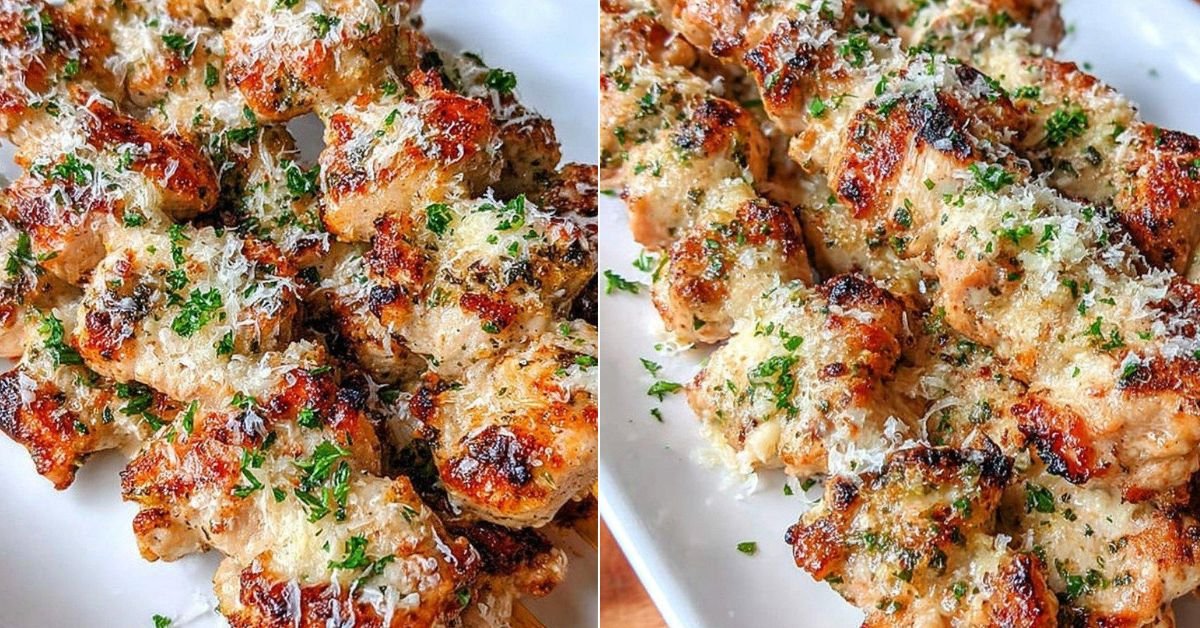
1) What I Learned Testing Ranch Garlic Parmesan Chicken Skewers
Dry chicken on skewers is usually not a grill problem; it is a timing, spacing, and coating problem. I’m Angela, and my first batch of ranch garlic parmesan chicken skewers looked browned but tasted a little flat inside. After testing shorter marinating, better skewer spacing, and a hotter grill, I discovered the ranch and Parmesan need just enough time to cling without turning heavy. These garlic parm skewers became the kind of calm, reliable dinner I want on a warm family night: juicy, savory, garlicky, and easy to serve straight from the grill.
Table of Contents
- 1) What I Learned Testing Ranch Garlic Parmesan Chicken Skewers
- 2) Key Takeaways
- 3) Easy Ranch Garlic Parmesan Chicken Skewers Recipe
- 4) Why Most Ranch Garlic Parmesan Chicken Skewers Recipes Fail
- 5) Ingredients for Ranch Garlic Parmesan Chicken Skewers
- 6) How to Make Ranch Garlic Parmesan Chicken Skewers
- 7) Recipe Card: Ranch Garlic Parmesan Chicken Skewers
- 8) Tips for Making Ranch Garlic Parmesan Chicken Skewers
- 9) Common Mistakes & Fixes
- 10) How to Tell Ranch Garlic Parmesan Chicken Skewers Are Done
- 11) Professional Secrets Behind Better Ranch Garlic Parmesan Chicken Skewers
- 12) Best Dishes or Pairings to Serve With Ranch Garlic Parmesan Chicken Skewers
- 13) Making Ranch Garlic Parmesan Chicken Skewers Ahead of Time
- 14) Storing Leftover Ranch Garlic Parmesan Chicken Skewers
- 15) FAQ (Real Cooking Questions)
- 16) Save This Ranch Garlic Parmesan Chicken Skewers Recipe
- 17) Conclusion
- 18) Nutrition
2) Key Takeaways
- The chicken needs bite-size, even pieces so the centers reach 165°F before the outside dries out.
- Ranch dressing gives the marinade body, while Parmesan adds salty depth and helps create a savory coating on the grill.
- Leaving a little space between chicken pieces is the step most cooks skip; it prevents steaming and helps the skewers brown evenly.
- Medium-high heat works best because it gives grilled chicken skewers color without scorching the Parmesan before the chicken is cooked through.
3) Easy Ranch Garlic Parmesan Chicken Skewers Recipe
These ranch garlic parmesan chicken skewers are built around a simple but effective marinade: ranch dressing for moisture and tang, garlic for aroma, Parmesan for savory depth, parsley for color, and black pepper for a gentle bite. The method works because the chicken is coated before grilling, not brushed at the end, so the flavor starts building before the skewers ever hit the heat.
The goal is not a thick, saucy coating that drips into the flames. The goal is a thin, clingy layer that seasons the chicken, browns lightly, and stays attached as the skewers cook. When the pieces are cut evenly and threaded with space between them, the grill can do its job: browning the outside while the inside stays juicy.
This chicken skewer recipe is especially useful when you want something that feels flavorful without needing a long ingredient list. It is also forgiving if you pay attention to two checkpoints: do not over-marinate, and do not overcook. Ranch parmesan chicken tastes best when the marinade has enough time to season the surface, then the grill finishes it quickly and cleanly.
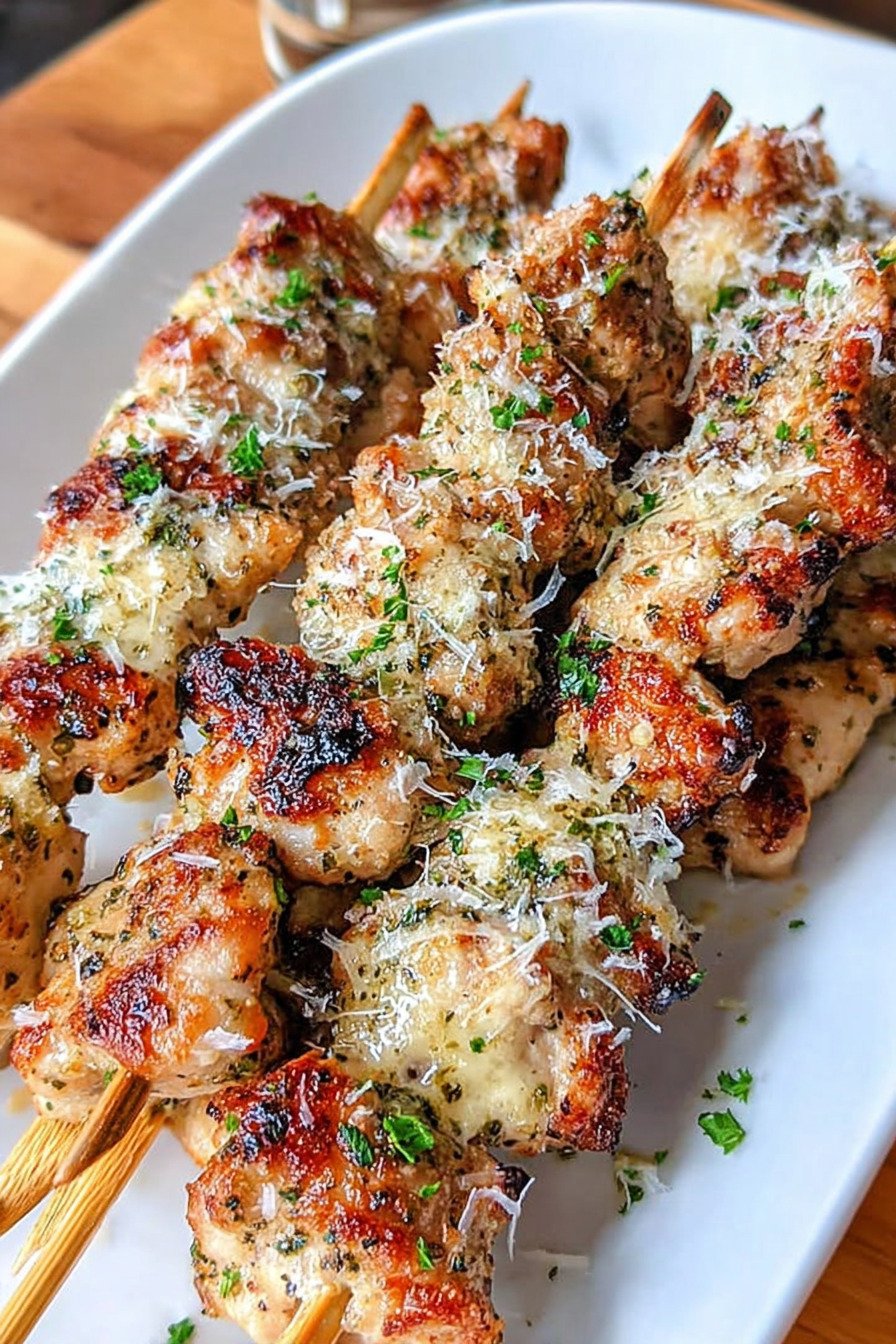
4) Why Most Ranch Garlic Parmesan Chicken Skewers Recipes Fail
Most ranch garlic parmesan chicken skewers fail for one of five reasons: uneven chicken pieces, overcrowded skewers, weak marinating time, excessive grill heat, or missed doneness. Chicken breast cooks quickly, which is helpful, but it also means small mistakes show up fast. A piece that is twice as thick as the others may still be underdone while the thinner pieces are already drying at the edges.
The second common issue is packing the chicken too tightly. When the pieces touch, steam gets trapped between them. That prevents good browning and leaves pale spots where the marinade tastes more wet than savory. A small gap between pieces helps hot air move around the chicken, giving you better grill marks and more consistent texture.
Another failure point is garlic. Minced garlic adds great aroma, but if the grill is too hot or the coating is too thick, the garlic can darken before the chicken finishes cooking. Medium-high heat gives enough browning without turning the Parmesan and garlic bitter. If the skewers are coloring too quickly, move them to a slightly cooler area of the grill.
Flat flavor usually comes from rushing the marinade. Thirty minutes is enough to season the surface, while up to 2 hours gives the ranch, Parmesan, garlic, parsley, salt, and pepper more time to cling. The trick is stopping there. Too much time can make the coating heavy and salty instead of balanced.
The final mistake is guessing doneness by color alone. Grill marks are not the same as cooked chicken. The safest and most reliable cue is an internal temperature of 165°F. When the skewers hit that point, pull them off the grill so the chicken stays juicy instead of turning chalky.
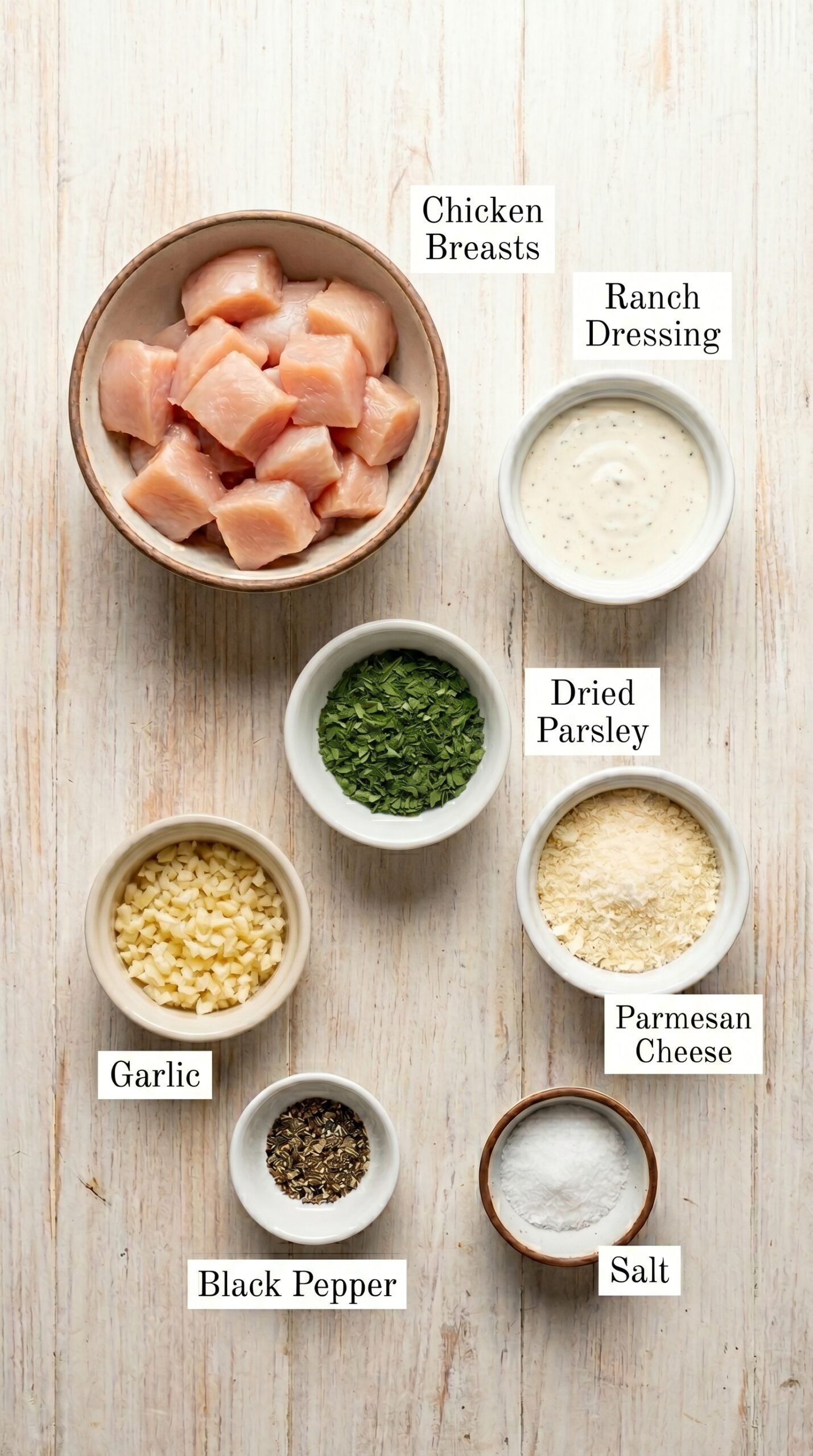
5) Ingredients for Ranch Garlic Parmesan Chicken Skewers
Boneless, skinless chicken breasts: Chicken breast works well here because it cooks quickly and takes on the ranch garlic Parmesan coating cleanly. Cut it into bite-sized pieces before marinating so every piece cooks at the same rate. If the pieces are too large, the outside can dry before the center reaches a safe temperature.
Ranch dressing: Ranch dressing acts as the creamy base of the marinade. It helps the garlic, Parmesan, parsley, salt, and pepper cling to the chicken. Use it before grilling, not after, so the flavor has time to settle into the surface. A thinner dressing may drip more, while a thicker dressing gives better coating.
Garlic: Minced garlic gives these garlic parm skewers their warm, savory aroma. Use it in the marinade so it spreads through the coating. If the garlic is chopped too large, it may burn in spots on the grill; fine mincing gives better flavor distribution.
Grated Parmesan cheese: Parmesan adds saltiness, depth, and a lightly savory crust. It should be mixed into the marinade before the chicken is added so it coats evenly. Replacing it with a soft cheese would change the texture and make the coating more likely to melt and slide off.
Dried parsley: Parsley adds color and a mild herbal note that keeps the ranch parmesan chicken from tasting one-dimensional. Rub it lightly between your fingers before adding it if you want a little more aroma.
Black pepper: Black pepper gives the marinade a gentle sharpness that balances the creamy ranch and salty Parmesan. Freshly cracked pepper tastes more aromatic, but standard ground black pepper still works.
Salt: Salt supports the chicken’s flavor, but it should be measured carefully because ranch dressing and Parmesan are already seasoned. Too much salt can make the skewers taste heavy, especially after marinating.
- Chicken breast vs chicken thigh: Breast gives a leaner, cleaner bite, while thigh would be richer and more forgiving. Keep the core recipe as chicken breast for the intended texture.
- Thick coating vs thin coating: A thin coating browns better and clings more evenly. A heavy coating can drip, flare, and scorch before the chicken is done.
- Short marinade vs long marinade: Thirty minutes gives clear flavor; up to 2 hours deepens it. Longer is not always better because salty ingredients can overpower the chicken.
- Metal skewers vs wooden skewers: Metal skewers conduct heat and need no soaking. Wooden skewers should be soaked while the chicken marinates so they do not burn too quickly.
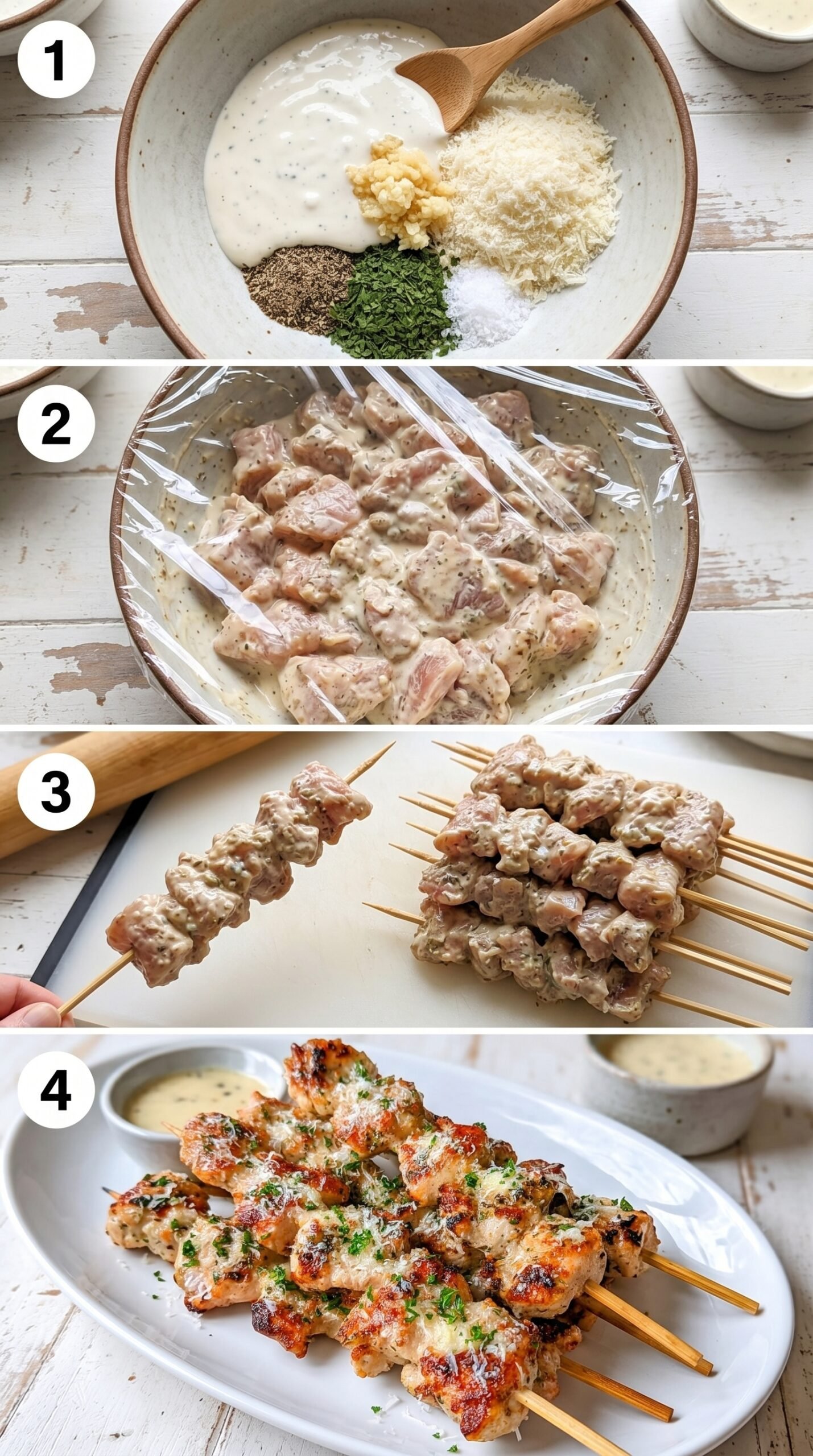
6) How to Make Ranch Garlic Parmesan Chicken Skewers
Step 1: Mix the ranch dressing, minced garlic, grated Parmesan, dried parsley, black pepper, and salt until the marinade looks creamy and evenly speckled. You should not see dry clumps of Parmesan sitting at the bottom of the bowl.
Step 2: Add the chicken pieces and toss gently until each piece is coated. Cover the bowl and refrigerate for at least 30 minutes. For stronger flavor, let it go up to 2 hours, but avoid treating this like an overnight marinade because the salty coating can become too intense.
Step 3: While the chicken marinates, preheat the grill to medium-high heat. If using wooden skewers, soak them in water during this time. This helps slow down charring on the exposed ends once the skewers hit the grill.
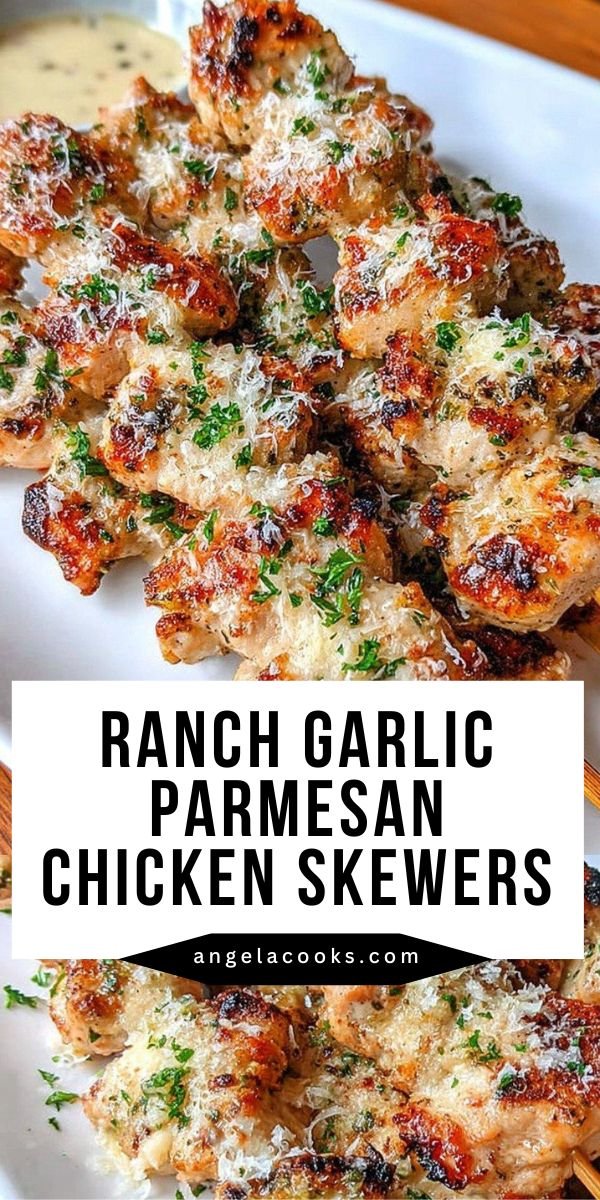
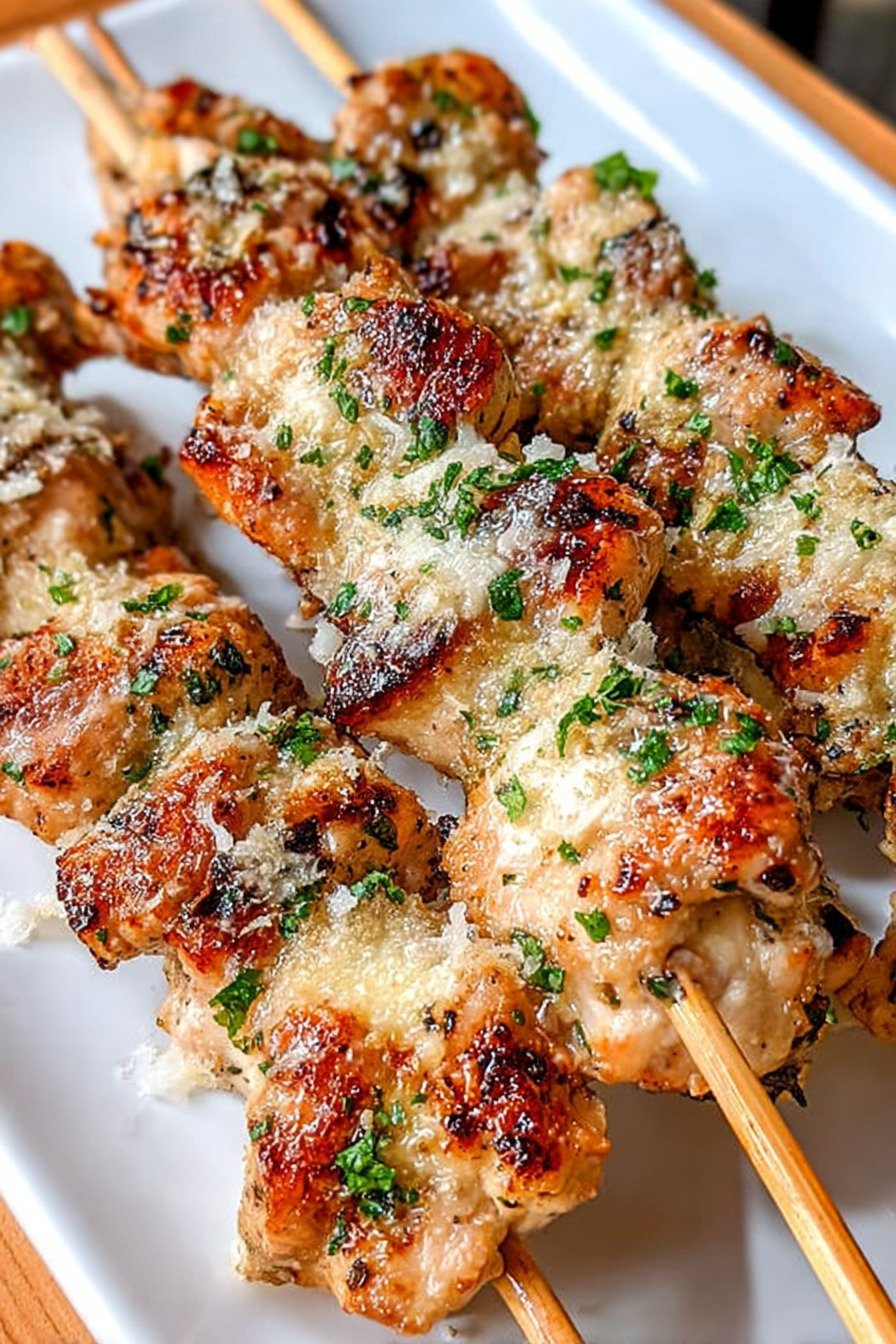
Step 4: Thread the marinated chicken onto skewers with a little space between each piece. This is a small detail with a big payoff: the chicken browns instead of steaming, and the centers cook more evenly.
Step 5: Grill the skewers for 10 to 12 minutes, turning occasionally. Look for light grill marks, a savory garlic aroma, and chicken that feels firm but not tight. The internal temperature should reach 165°F before serving.
Step 6: Remove the skewers from the grill and serve immediately. If you want a fresher finish, add a small sprinkle of extra Parmesan and parsley at the table rather than piling more coating onto the chicken before grilling.
7) Recipe Card: Ranch Garlic Parmesan Chicken Skewers
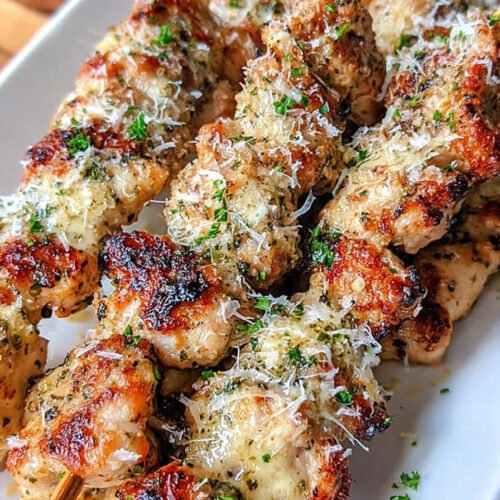
Ranch Garlic Parmesan Chicken Skewers
Ingredients
- 1 lb boneless, skinless chicken breasts, cut into bite-sized pieces so they cook evenly on skewers
- 1/4 cup ranch dressing, used as the creamy, seasoned base for the marinade
- 2 cloves garlic, minced finely so the flavor spreads through the chicken
- 1/2 cup grated Parmesan cheese, packed lightly for salty, savory coating
- 1 tsp dried parsley, rubbed lightly between your fingers to wake up the aroma
- 1/2 tsp black pepper, freshly cracked if possible for better bite
- 1/4 tsp salt, adjusted carefully because Parmesan and ranch are already seasoned
Instructions
- In a large bowl, stir together the ranch dressing, minced garlic, grated Parmesan cheese, dried parsley, black pepper, and salt until the marinade looks thick, creamy, and evenly mixed with no dry pockets of Parmesan.
- Add the chicken pieces to the bowl and toss gently until every piece is coated. Cover and refrigerate for at least 30 minutes, or up to 2 hours for deeper flavor; avoid going much longer because the coating can become too salty and dense.
- While the chicken marinates, preheat the grill to medium-high heat. If using wooden skewers, soak them in water during this time so the exposed ends are less likely to char too quickly.
- Remove the chicken from the refrigerator and thread the marinated pieces onto skewers, leaving a little space between each piece so heat can circulate and the centers cook at the same pace as the edges.
- Place the skewers on the grill and cook for 10 to 12 minutes, turning occasionally for grill marks and even browning. The chicken is done when the outside is lightly charred, the juices run clear, and the internal temperature reaches 165°F (75°C).
- Transfer the cooked skewers off the grill and serve immediately while the Parmesan coating is savory and aromatic. Garnish with extra Parmesan cheese and parsley if desired.
8) Tips for Making Ranch Garlic Parmesan Chicken Skewers
Cut the chicken pieces as evenly as possible. For skewers, consistency matters more than exact shape. Pieces that are roughly the same size finish together, which helps prevent the common problem of dry edges and undercooked centers.
Do not rinse off the marinade before grilling. The ranch and Parmesan coating is the flavor layer. Instead, let excess marinade drip naturally as you thread the chicken, then place the skewers on a hot, clean grill.
Use medium-high heat rather than the highest flame. Parmesan can brown quickly, and garlic can become harsh if it burns. The better move is steady heat, occasional turning, and a thermometer check near the end.
If the skewers start browning too fast, move them to a cooler zone of the grill. That gives the chicken time to finish cooking without turning the coating bitter. This is one of the easiest ways to rescue grilled chicken skewers before they dry out.
Let the skewers sit for a couple of minutes after grilling. Chicken breast does not need a long rest, but a brief pause helps the juices settle so the first bite tastes moist instead of rushed.
9) Common Mistakes & Fixes
Problem: The chicken tastes dry. Cause: The pieces were too small, grilled too long, or cooked past 165°F. Fix: Cut the chicken evenly, check early, and pull the skewers as soon as they reach the safe internal temperature.
Problem: The coating burns before the chicken cooks. Cause: The grill is too hot, or the marinade is too thick on the surface. Fix: Use medium-high heat, let excess marinade drip off naturally, and move the skewers to a cooler zone if browning happens too quickly.
Problem: The skewers look pale and wet. Cause: The chicken pieces were packed too tightly, trapping steam. Fix: Leave a little space between pieces so heat can circulate and the chicken can brown.
Problem: The flavor tastes flat. Cause: The chicken did not marinate long enough, or the Parmesan and garlic were not mixed evenly. Fix: Mix the marinade thoroughly before adding the chicken and give it at least 30 minutes in the refrigerator.
Problem: The skewers taste too salty. Cause: Ranch dressing and Parmesan are both seasoned, and a long marinade can intensify the saltiness. Fix: Measure the salt carefully and keep marinating time within the 30-minute to 2-hour range.
10) How to Tell Ranch Garlic Parmesan Chicken Skewers Are Done
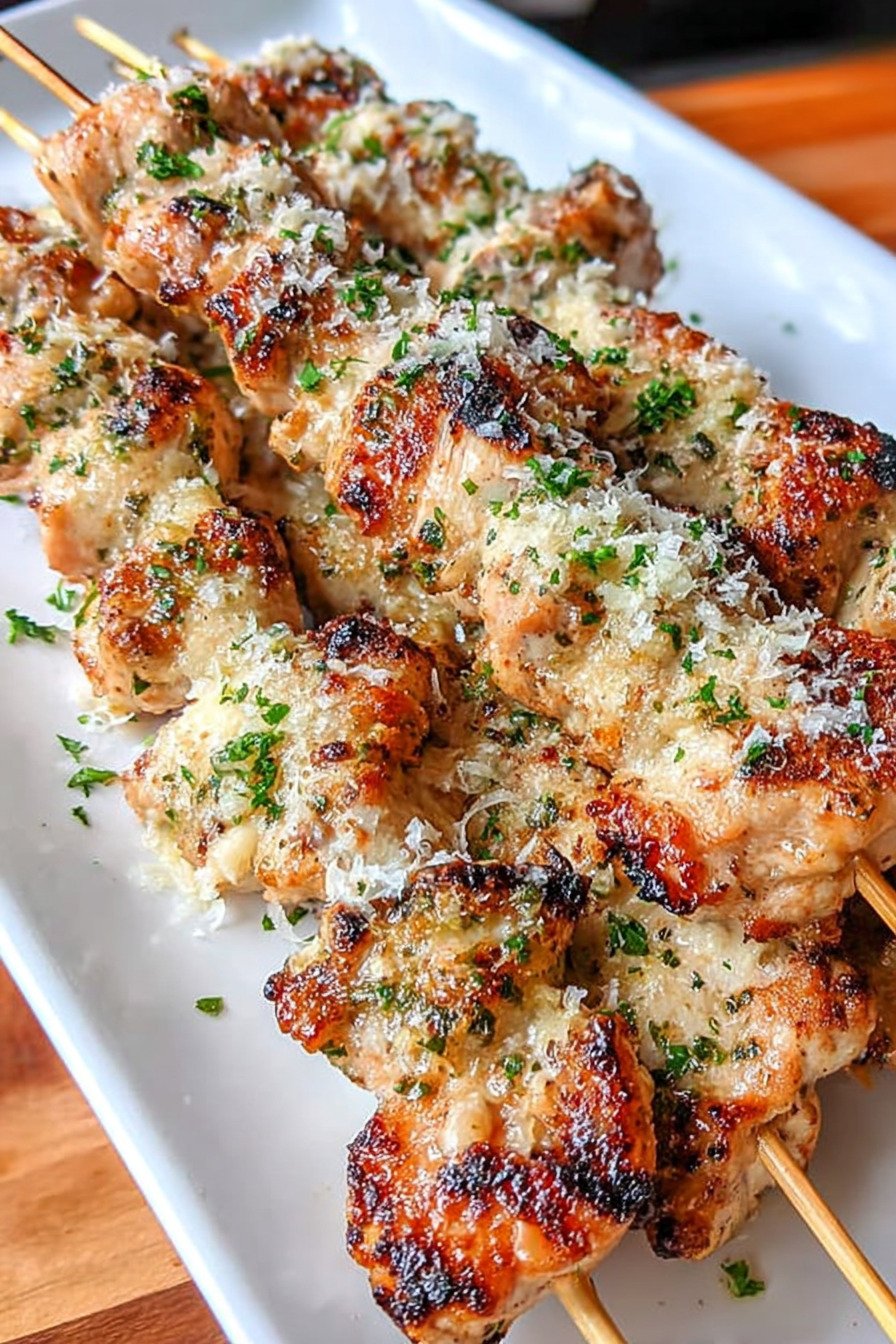
Ranch garlic parmesan chicken skewers are done when the outside has light grill marks, the coating looks savory rather than wet, and the chicken pieces feel firm without feeling hard. The aroma should be garlicky and lightly toasted, not sharp or burnt.
The most reliable doneness signal is internal temperature. Chicken should reach 165°F in the thickest piece on the skewer. If you do not have a thermometer, cut into the largest piece and check that the juices run clear and the center is opaque, but a thermometer is still the better tool.
Good texture should be juicy, tender, and easy to bite through. Failure signs include a rubbery bounce, chalky white fibers, blackened garlic bits, watery coating, or chicken pieces that shrink dramatically on the skewer. Those signals usually mean the heat was too high, the chicken was overcooked, or the pieces were not spaced well.
11) Professional Secrets Behind Better Ranch Garlic Parmesan Chicken Skewers
The first professional habit is controlling surface moisture. A marinade should coat the chicken, not drown it. When the coating is balanced, the grill browns the outside instead of steaming it. That is why this method uses a modest amount of ranch dressing with Parmesan rather than a large bowl of loose sauce.
The second secret is using the grill in zones. Even if your grill does not have labeled heat zones, one area will usually be hotter than another. Start the skewers over medium-high heat for color, then shift them if the Parmesan darkens too quickly. This gives you control instead of hoping every skewer behaves the same.
The third secret is restraint after cooking. It is tempting to keep turning and checking, but chicken breast dries when it stays on the heat too long. Once the skewers reach 165°F, remove them. A clean finish with a little extra Parmesan and parsley is better than trying to force more flavor onto overcooked chicken.
12) Best Dishes or Pairings to Serve With Ranch Garlic Parmesan Chicken Skewers
These ranch garlic parmesan chicken skewers pair well with foods that balance their creamy, savory coating. A crisp green salad with a bright vinaigrette works because the acidity cuts through the ranch and Parmesan. Grilled vegetables are another strong match because they share the same smoky flavor without making the plate feel heavy.
For a fuller dinner, serve the skewers with rice, roasted potatoes, warm flatbread, corn on the cob, or a simple pasta salad. If you want a lighter plate, add cucumber salad, tomato salad, or steamed green beans. The best pairings are fresh, lightly seasoned sides that let the garlic parmesan chicken stay the main flavor.
For casual gatherings, slide the chicken off the skewers and serve it in wraps, grain bowls, or over chopped romaine. That turns the same skewer recipes into a flexible meal without changing the original cooking method.
13) Making Ranch Garlic Parmesan Chicken Skewers Ahead of Time
You can prep the chicken and marinade ahead, but timing matters. The best make-ahead window is 30 minutes to 2 hours before grilling. That gives the ranch, garlic, Parmesan, parsley, salt, and pepper enough time to season the chicken without making the coating too salty or heavy.
If you want to prep earlier in the day, cut the chicken and store it covered in the refrigerator, then add the marinade closer to cooking time. Wooden skewers can soak while the chicken marinates. Threading can be done shortly before grilling, but avoid letting loaded wooden skewers sit too long if the marinade is very thick, because they can become messy to handle.
For serving later, grill the skewers just until done, cool them quickly, and reheat gently. The texture will always be best fresh from the grill, but careful reheating keeps the chicken from drying out.
14) Storing Leftover Ranch Garlic Parmesan Chicken Skewers
Store leftover ranch garlic parmesan chicken skewers in an airtight container in the refrigerator for up to 3 days. Remove the chicken from the skewers if that makes storage easier. Keep the pieces in a shallow container so they cool quickly and reheat evenly.
To reheat, use gentle heat. A covered skillet over low heat works well with a tiny splash of water to keep the chicken from drying. You can also reheat in the microwave in short bursts, but stop as soon as the chicken is warm. Overheating cooked chicken breast is the fastest way to lose the juicy texture.
Leftovers are useful in salads, wraps, rice bowls, and quick lunches. The Parmesan coating may soften after storage, but the garlic ranch flavor stays strong enough to carry a simple meal.
15) FAQ (Real Cooking Questions)
Can I marinate ranch garlic parmesan chicken skewers overnight? I do not recommend overnight marinating for this recipe. Ranch dressing and Parmesan both contain salt, and a long soak can make the chicken taste overly seasoned. Stay between 30 minutes and 2 hours for the best balance.
Can I use chicken thighs instead of chicken breasts? Chicken thighs can work as an optional variation because they are fattier and more forgiving, but the original method is designed for boneless, skinless chicken breasts. If using thighs, cut them evenly and still cook to 165°F.
Why did my garlic parm skewers burn? The grill was probably too hot, or too much marinade stayed on the surface. Parmesan and garlic brown quickly. Use medium-high heat, turn the skewers occasionally, and move them to a cooler area if they darken too fast.
Can I make this chicken skewer recipe without a grill? The main recipe is grilled, but as an optional variation, you can cook the skewers on a grill pan. Keep the heat controlled and check the internal temperature. The flavor will be similar, though you may get less smoky char.
How do I keep grilled chicken skewers juicy? Cut the chicken evenly, do not crowd the skewers, marinate long enough for flavor, and use a thermometer. Pull the chicken at 165°F instead of waiting for extra-dark grill marks.
16) Save This Ranch Garlic Parmesan Chicken Skewers Recipe
If this ranch garlic parmesan chicken skewers recipe helped you solve dry, bland grilled chicken, save it for cookouts, family dinners, or quick warm-weather meals. The key reminder is: even chicken pieces, light spacing on the skewers, and a 165°F doneness check keep the texture juicy.
17) Conclusion
The real secret behind ranch garlic parmesan chicken skewers is not adding more ingredients; it is using the simple ones with better control. Ranch needs time to cling, Parmesan needs moderate heat, garlic needs protection from scorching, and chicken breast needs a clear stopping point. Once you understand those details, the recipe feels much less like a guessing game.
That is the kind of grilling confidence worth keeping: chicken that tastes seasoned, looks browned, smells garlicky, and stays juicy when it reaches the plate. A few small technique choices turn a basic skewer into a reliable dinner you can repeat without stress.
18) Nutrition
Serving Size 1 portion Calories 285 Sugar 1 g Sodium 610 mg Fat 15 g Saturated Fat 5 g Carbohydrates 3 g Fiber 0 g Protein 34 g Cholesterol 100 mg





Leave a Comment