1) What I Learned Testing This Chickpea Pasta Salad
Bland, soggy pasta salad is usually caused by wet ingredients and weak dressing, so I’m Angela, and I tested this chickpea pasta salad until it stayed bright, crisp, and satisfying after chilling. My first batch tasted flat because the pasta and chickpeas diluted the lemon dressing, so I adjusted the Dijon, dried the chickpeas, and cut the vegetables smaller. That simple discovery turned it into a healthy chickpea pasta salad I now trust for calm weekday lunches, family cookouts, and cold chickpea pasta salad meal prep when I want something fresh without babysitting the kitchen.
Table of Contents
- 1) What I Learned Testing This Chickpea Pasta Salad
- 2) Key Takeaways
- 3) Easy Chickpea Pasta Salad Recipe
- 4) Why Most Chickpea Pasta Salad Recipes Fail
- 5) Ingredients for Chickpea Pasta Salad
- 6) How to Make Chickpea Pasta Salad
- 7) Recipe Card: Chickpea Pasta Salad
- 8) Tips for Making Chickpea Pasta Salad
- 9) Common Mistakes & Fixes
- 10) How to Tell Chickpea Pasta Salad Has the Right Texture
- 11) Professional Secrets Behind Better Chickpea Pasta Salad
- 12) Best Dishes or Pairings to Serve With Chickpea Pasta Salad
- 13) Making Chickpea Pasta Salad Ahead of Time
- 14) Storing Leftover Chickpea Pasta Salad
- 15) FAQ (Real Cooking Questions)
- 16) Save This Chickpea Pasta Salad Recipe
- 17) Conclusion
- 18) Nutrition
2) Key Takeaways
- Dry chickpeas matter: Rinsed chickpeas should be patted dry so the dressing stays bold instead of watered down.
- Al dente pasta holds better: Pasta that is slightly firm keeps its shape after chilling and tossing.
- Small vegetable cuts improve every bite: Tomatoes, cucumber, pepper, and onion should be close to pasta size for balanced texture.
- The dressing needs a real whisk: Dijon helps the olive oil and lemon juice emulsify so the salad tastes seasoned throughout.
3) Easy Chickpea Pasta Salad Recipe
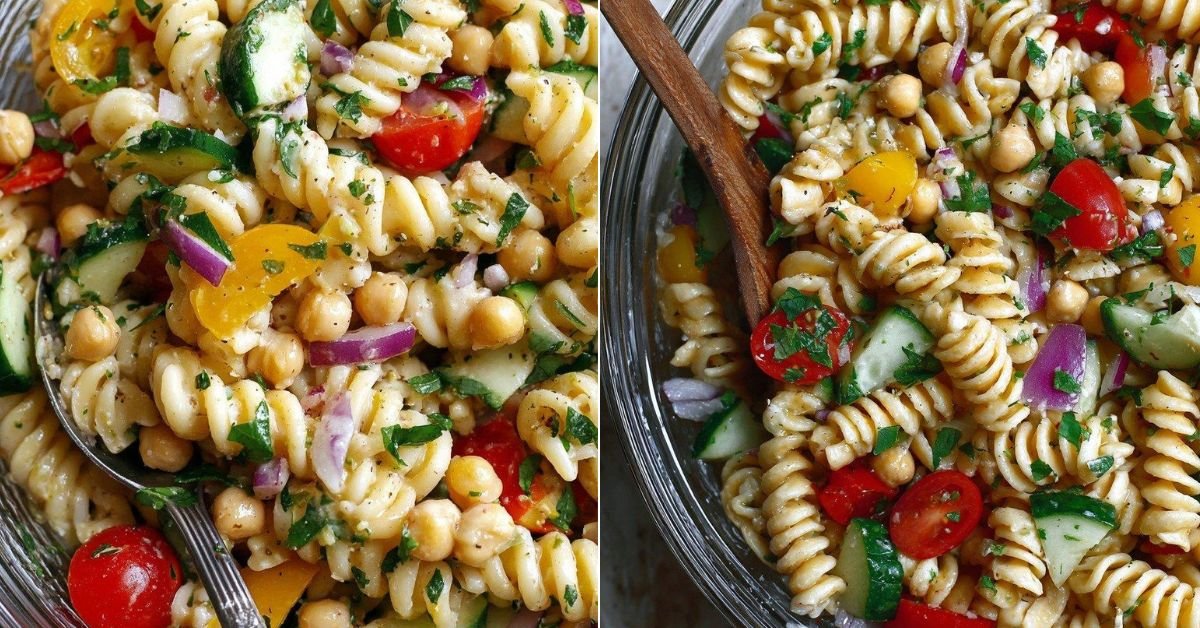
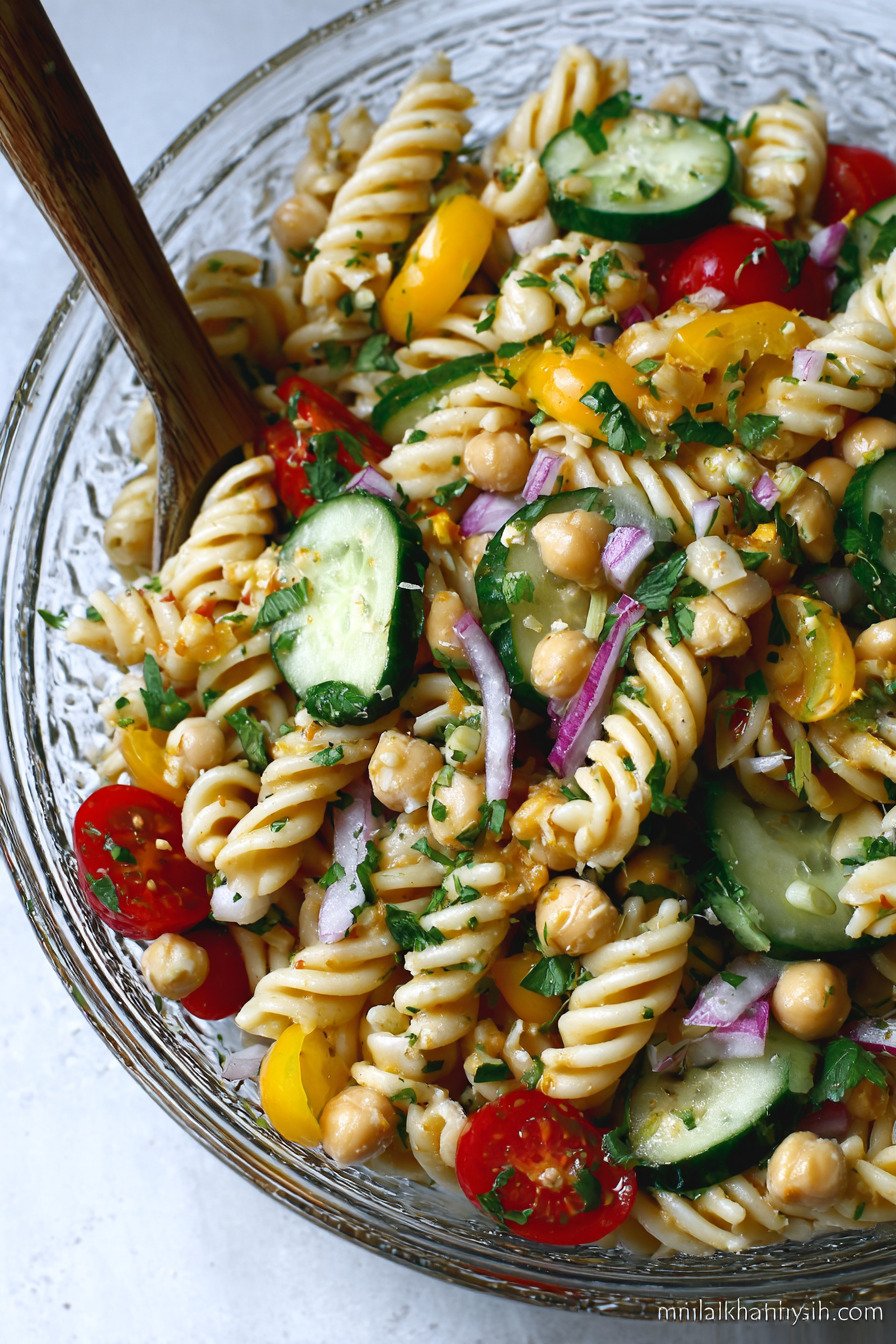
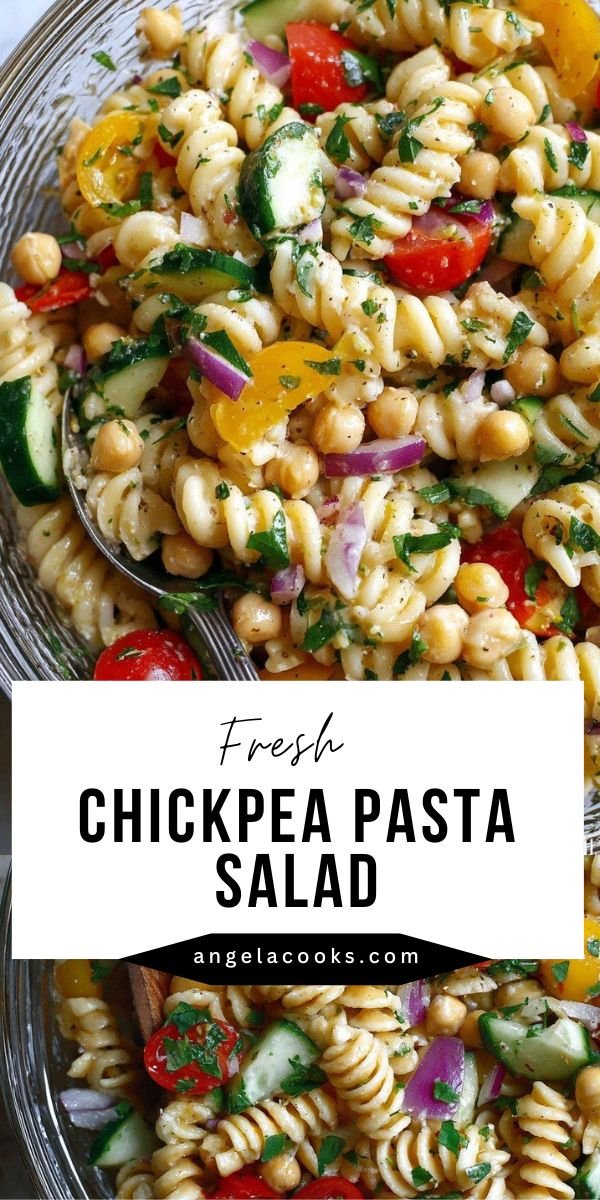
This chickpea pasta salad works because it treats cold pasta salad like a texture recipe, not just a bowl of mixed ingredients. The pasta needs to be cooked al dente, rinsed briefly to stop carryover cooking, and drained well so it does not bring extra water into the bowl. Chickpeas add a satisfying, almost creamy bite, while cucumber, cherry tomatoes, red bell pepper, red onion, and parsley keep the salad fresh and crisp.
The lemon Dijon dressing is intentionally simple, but each ingredient has a job. Olive oil gives body, lemon juice adds brightness, Dijon helps the dressing cling, honey or maple syrup softens sharp edges, and garlic gives the salad a savory backbone. When chilled for at least 30 minutes, the pasta absorbs just enough flavor without turning heavy.
4) Why Most Chickpea Pasta Salad Recipes Fail
Most chickpea pasta salad recipes fail because they ignore moisture. Pasta that is overcooked or left wet after rinsing brings extra water into the bowl, which weakens the dressing and makes the salad taste flat. Chickpeas can cause the same problem if they are rinsed but not dried. The fix is simple: drain both well, then let the pasta cool slightly before dressing.
Another common failure is uneven chopping. Large cucumber chunks, oversized tomato halves, or too much red onion in one bite can make the salad feel unbalanced. Cutting the vegetables close to the size of the pasta creates the kind of forkful that tastes intentional: a little pasta, a little chickpea, a little crunch, and a little acidity.
The dressing can also break or taste sharp if it is stirred casually instead of whisked. Dijon mustard helps olive oil and lemon juice come together, but it needs steady whisking to create a smooth coating. If the dressing pools at the bottom, the top tastes plain and the bottom tastes too strong. A final toss before serving fixes that problem.
5) Ingredients for Chickpea Pasta Salad
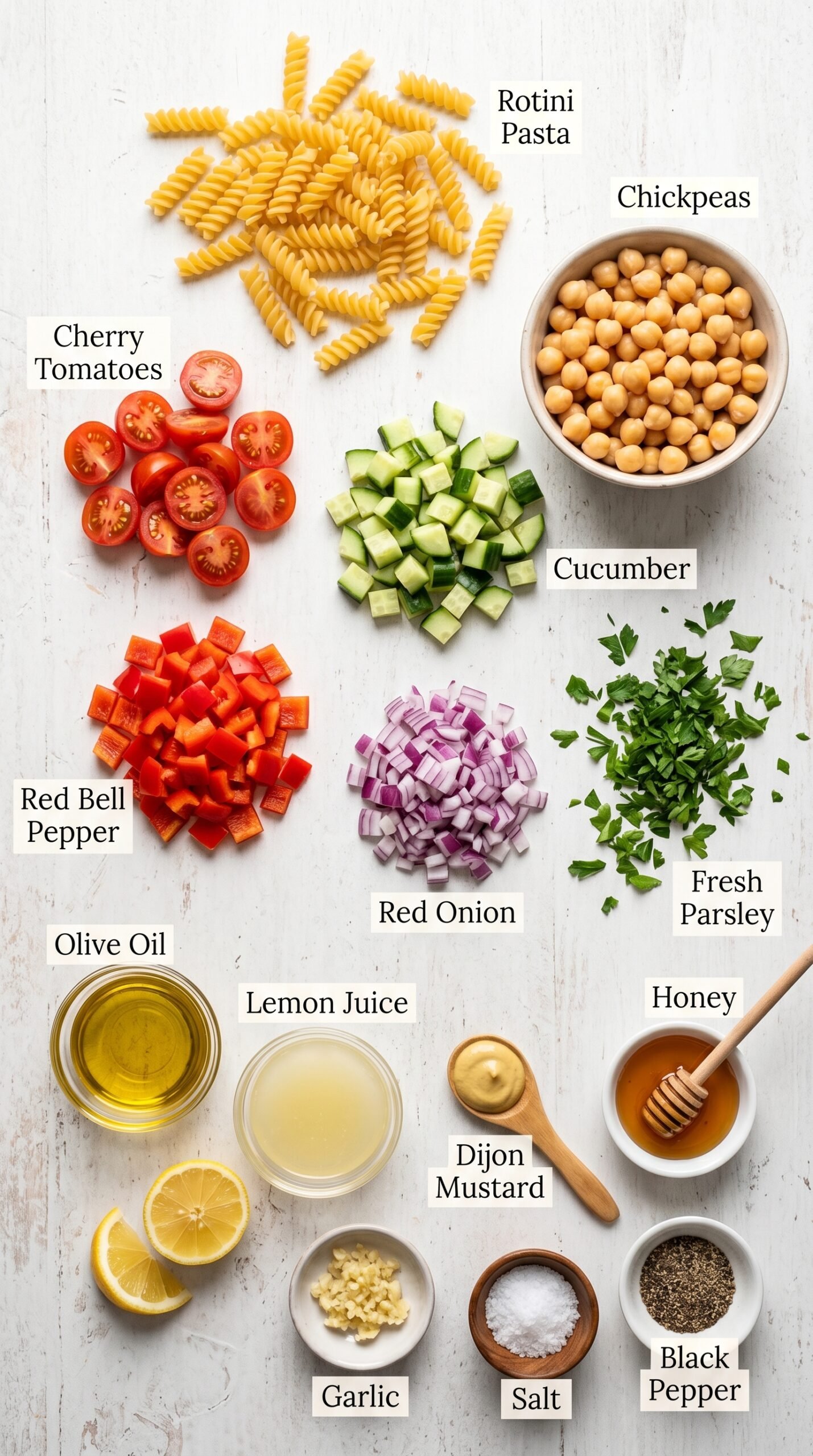
Pasta: Use 8 oz, about 2 cups, of pasta such as rotini or penne because ridges and tubes catch the dressing better than very smooth shapes. Add it to boiling salted water and cook until al dente. If you use very small pasta, watch the timing closely because it can soften fast after chilling.
Chickpeas: One 15 oz can of chickpeas gives the salad protein, substance, and a tender bite. Drain, rinse, and pat them dry before mixing. If they go into the bowl wet, the dressing becomes thin and the salad loses flavor after resting.
Cherry tomatoes: One cup of halved cherry tomatoes adds juicy sweetness and color. Add them after the pasta has cooled slightly so they stay fresh instead of softening from heat. If using larger tomatoes, remove excess seeds or juice to prevent watery dressing.
Cucumber: One diced cucumber gives the cold chickpea pasta salad its clean crunch. Dice it into small pieces so it does not dominate the pasta. If your cucumber is very seedy, scoop out the center before chopping to protect the salad from extra moisture.
Red bell pepper: Half a diced red bell pepper adds sweetness and a firmer crunch than cucumber. It is best added raw because the goal is freshness, not roasted depth. Green bell pepper can taste sharper, so red keeps the salad more balanced.
Red onion: A quarter cup of finely chopped red onion gives the dressing a bright bite. Chop it small so the flavor spreads evenly. If your onion tastes harsh, rinse the chopped onion briefly under cold water and dry it before adding.
Fresh parsley: A quarter cup of chopped parsley lifts the salad with a clean herbal note. Add it finely chopped so it distributes evenly. Dried parsley does not give the same freshness, so fresh parsley is the better choice here.
Olive oil: Three tablespoons create the base of the dressing and help carry the garlic and Dijon flavor. Use it when whisking the dressing, not after tossing, so the salad coats evenly. A stronger extra-virgin olive oil will taste more pronounced.
Lemon juice: Two tablespoons give the salad brightness and keep it from tasting heavy. Add it to the dressing before seasoning so you can judge how much salt and pepper are needed. Bottled lemon juice can taste flatter, so fresh lemon is better when available.
Dijon mustard: One teaspoon helps emulsify the olive oil and lemon juice while adding gentle sharpness. It is the small ingredient that keeps the dressing from tasting separated. Yellow mustard is milder and less refined, so Dijon gives a cleaner result.
Honey or maple syrup: One teaspoon rounds out the acidity without making the salad sweet. Use honey for a floral note or maple syrup for a plant-based option. Skipping it can make the lemon and Dijon taste too sharp, especially after chilling.
Garlic: One minced garlic clove gives the dressing savory depth. Mince it finely so no one gets a harsh raw garlic bite. If your garlic clove is large, start with less and adjust after the dressing is whisked.
Salt and pepper: Season the dressing first, then taste again after the salad chills. Cold pasta salads often need a final pinch of salt or pepper because chilling dulls flavors slightly.
- Rotini vs penne: Rotini catches dressing in its spirals, while penne gives a firmer bite and a cleaner forkful.
- Dry chickpeas vs wet chickpeas: Dry chickpeas keep the dressing bright; wet chickpeas dilute lemon, Dijon, and salt.
- Fresh lemon vs bottled lemon: Fresh lemon gives a cleaner finish, while bottled lemon can taste flat or slightly bitter.
- Fine onion chop vs large onion pieces: Finely chopped onion seasons the whole salad; large pieces can overpower single bites.
6) How to Make Chickpea Pasta Salad
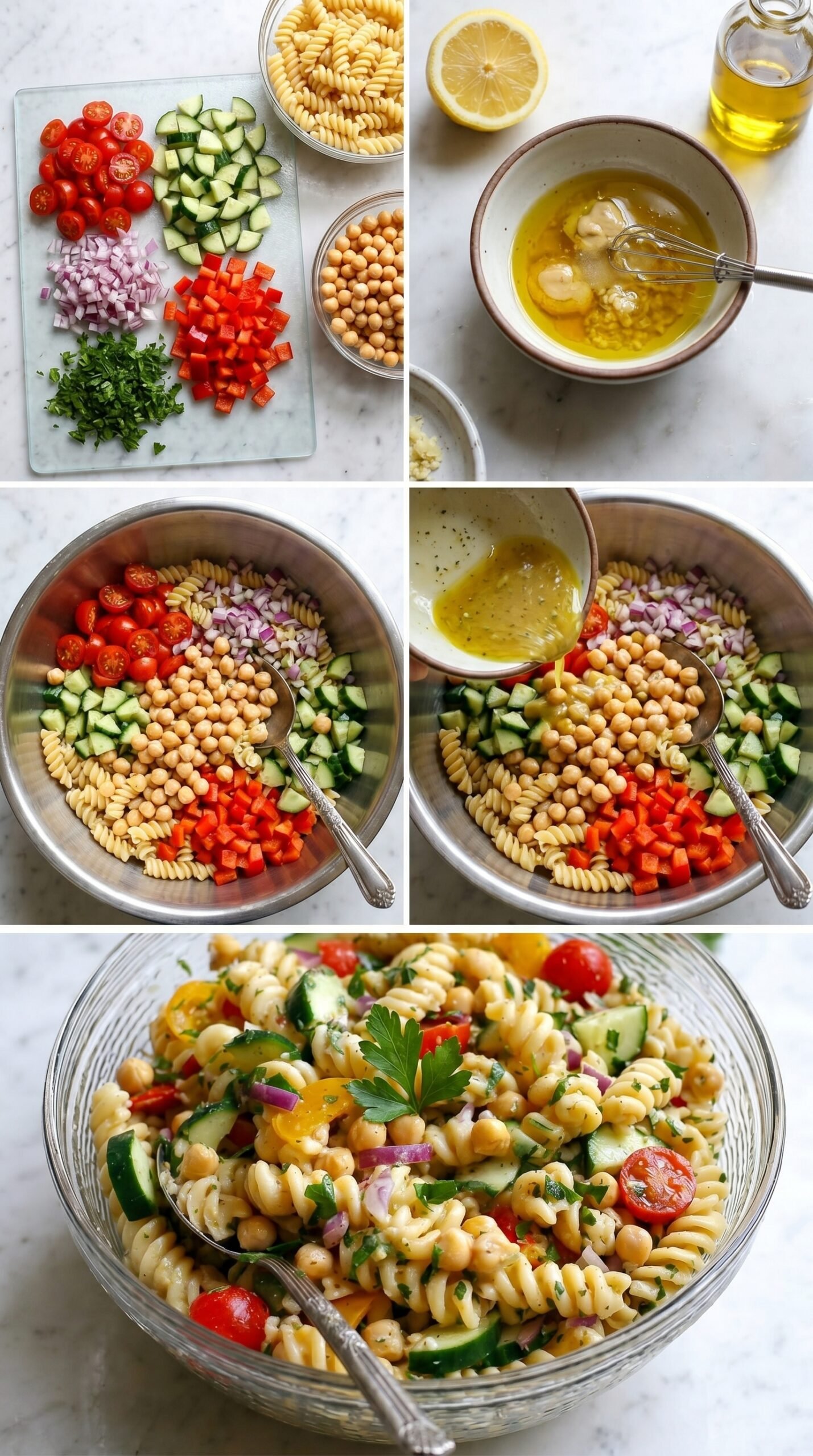
Step 1: Bring a large pot of salted water to a boil before adding the pasta. Salting the water is important because cold pasta salad needs flavor built into the pasta, not just added on top later.
Step 2: Cook the pasta according to the package directions until al dente, stirring occasionally so the pieces do not stick together. The pasta should feel tender but still have enough firmness to hold its shape after chilling.
Step 3: Drain the pasta and rinse it briefly with cold water to stop the cooking. Do not leave it dripping wet; shake the colander well so excess water does not thin the dressing.
Step 4: Drain and rinse the chickpeas, then pat them dry with a paper towel. Chop the tomatoes, cucumber, red bell pepper, red onion, and parsley into small, even pieces so every bite feels balanced.
Step 5: Whisk the olive oil, lemon juice, Dijon mustard, honey or maple syrup, minced garlic, salt, and pepper until smooth. A glossy dressing means the oil and lemon have started to come together instead of separating immediately.
Step 6: Add the cooled pasta, chickpeas, and vegetables to a large bowl. Pour the dressing over the top and toss gently but thoroughly, using a large spoon or clean hands so the pasta does not break.
Step 7: Chill the salad for at least 30 minutes before serving. Toss again, taste, and adjust with a little more salt, pepper, parsley, or lemon if the flavors need brightening.
7) Recipe Card: Chickpea Pasta Salad
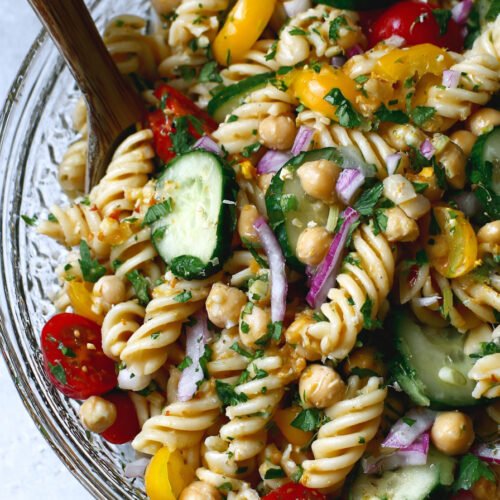
Chickpea Pasta Salad with Lemon Dijon Dressing
Ingredients
For the Pasta Salad
- 8 oz pasta of your choice, about 2 cups, such as rotini or penne for ridges that hold the dressing
- 1 can 15 oz chickpeas, drained and rinsed, then patted dry so the salad does not turn watery
- 1 cup cherry tomatoes, halved for juicy sweetness in each bite
- 1 cucumber, diced into pasta-size pieces for crunch and freshness
- 1/2 red bell pepper, diced for color and mild sweetness
- 1/4 red onion, finely chopped so the flavor stays sharp but not overpowering
- 1/4 cup chopped fresh parsley, added for a clean herbal finish
For the Dressing
- 3 tablespoons olive oil, used as the smooth base of the dressing
- 2 tablespoons lemon juice, added for brightness and acidity
- 1 teaspoon Dijon mustard, used to help the dressing emulsify and cling to the pasta
- 1 teaspoon honey or maple syrup, added to balance the lemon and mustard
- 1 garlic clove, minced finely so it blends evenly into the dressing
- Salt and pepper to taste, adjusted after chilling because cold salads often need a final seasoning check
Instructions
Cook the Pasta
- Bring a large pot of salted water to a full boil so the pasta cooks evenly and has flavor from the inside out.
- Add the pasta and cook according to the package directions until al dente, stirring occasionally so the pieces do not stick together.
- Drain the pasta in a colander, rinse briefly with cold water to stop the cooking, then set it aside to cool slightly without leaving it dripping wet.
Prep the Chickpeas and Veggies
- Drain and rinse the chickpeas under cold water, then pat them dry with a paper towel to keep excess moisture out of the salad.
- Chop the cherry tomatoes, cucumber, red bell pepper, and red onion into bite-sized pieces that are close to the size of the pasta for balanced forkfuls.
- Chop the parsley finely so it spreads through the salad instead of clumping in one spot.
Make the Dressing
- In a small bowl, whisk together the olive oil, lemon juice, Dijon mustard, honey or maple syrup, and minced garlic until the dressing looks smooth and lightly glossy.
- Season with salt and pepper to taste, starting lightly because the flavor will become more noticeable after the salad chills.
- Whisk continuously while the oil blends with the lemon and mustard to create a more stable dressing that coats the pasta instead of pooling at the bottom.
Combine Everything
- Add the cooked pasta, chickpeas, cherry tomatoes, cucumber, red bell pepper, red onion, and parsley to a large mixing bowl.
- Pour the dressing over the salad while the pasta is cool or just slightly warm, not hot, so the vegetables stay crisp.
- Toss gently but thoroughly with a large spoon or clean hands until every piece is lightly coated, being careful not to break the pasta.
Chill and Serve
- Refrigerate the salad for at least 30 minutes so the lemon, garlic, Dijon, vegetables, chickpeas, and pasta can settle into a brighter, more cohesive flavor.
- Before serving, toss again and taste for salt, pepper, or a small squeeze of lemon if the flavor has softened in the fridge.
- Serve cold, or let it sit briefly at room temperature if you prefer a softer texture and more open flavor.
8) Tips for Making Chickpea Pasta Salad
The biggest texture tip is to stop cooking the pasta before it becomes fully soft. Pasta continues to absorb moisture as it rests, so al dente pasta gives the final salad a better bite. If the pasta is already soft when drained, it can become mushy after 30 minutes in the fridge.
For a stronger chickpea pasta salad meal prep result, keep a spoonful of dressing aside and add it just before serving. Pasta absorbs oil and acid during storage, so refreshing the salad brings back the glossy coating and bright flavor.
Do not skip the second toss. After chilling, dressing naturally settles and the pasta absorbs some of it. A quick toss redistributes garlic, lemon, herbs, and seasoning so the top of the bowl tastes as good as the bottom.
If you want a chickpea feta pasta salad variation, add crumbled feta after the salad has cooled. Feta brings salt and creaminess, so reduce the first round of salt slightly and adjust after tasting.
9) Common Mistakes & Fixes
Problem: The salad tastes watery. Cause: The pasta or chickpeas were not drained well, or the cucumber released too much moisture. Fix: Shake the pasta dry, pat the chickpeas, and use firm cucumber pieces without excess seeds when needed.
Problem: The pasta tastes bland. Cause: The cooking water was not salted enough, or the salad was not tasted after chilling. Fix: Salt the boiling water and always do a final seasoning check before serving.
Problem: The dressing sits at the bottom. Cause: The oil, lemon, and Dijon were not whisked long enough. Fix: Whisk until the dressing looks slightly glossy, then toss thoroughly and repeat after chilling.
Problem: One flavor takes over. Cause: The onion, garlic, or lemon was too strong for the amount of pasta. Fix: Chop onion finely, mince garlic well, and balance sharpness with the honey or maple syrup already in the dressing.
10) How to Tell Chickpea Pasta Salad Has the Right Texture
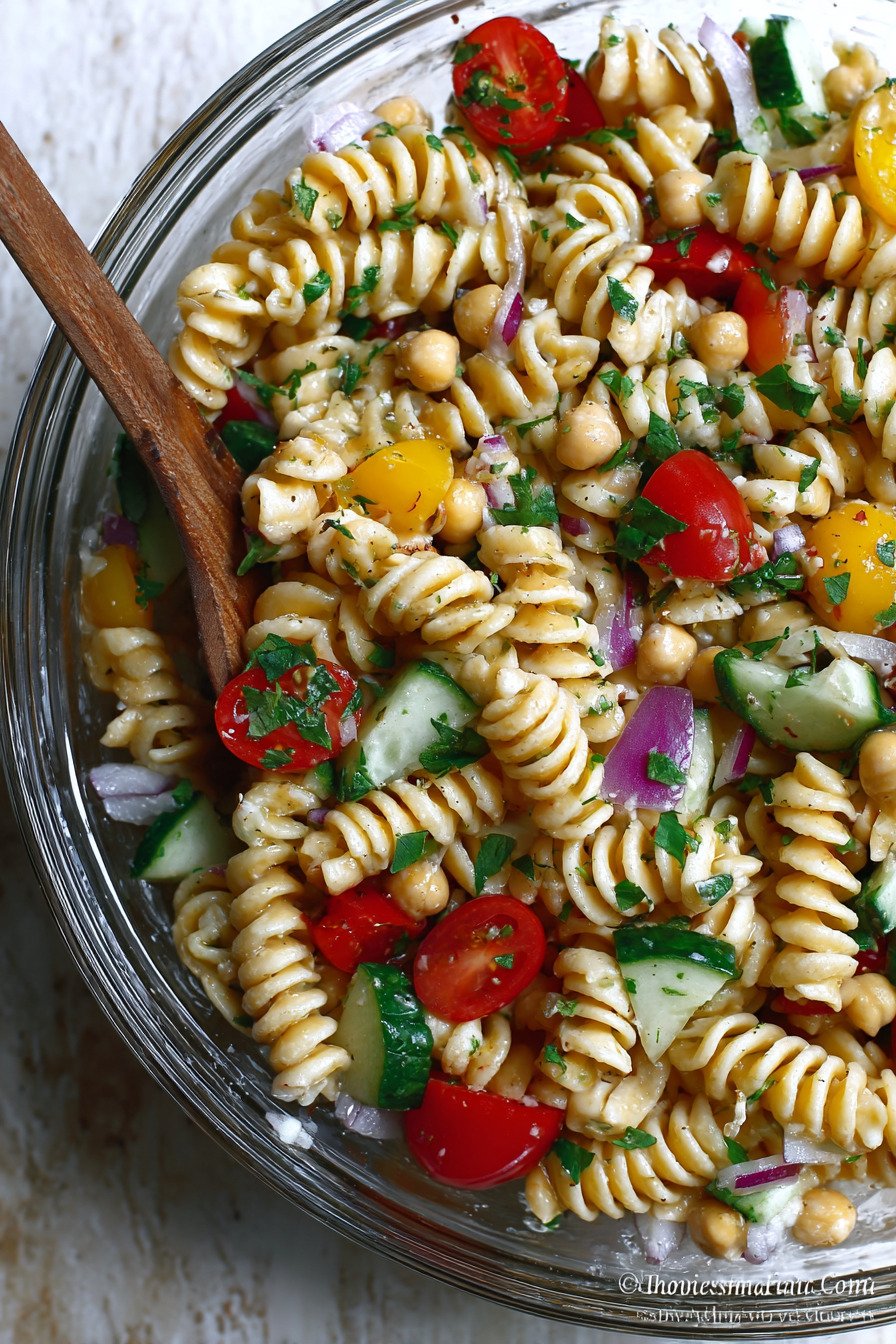
Chickpea pasta salad has the right texture when the pasta is tender but not floppy, the chickpeas feel creamy but not mushy, and the vegetables still give a clean crunch. The dressing should lightly coat the pasta instead of pooling heavily at the bottom of the bowl. Visually, the salad should look glossy and colorful, not wet or dull.
The aroma should be fresh and savory, with lemon, parsley, Dijon, and garlic coming through without any one ingredient smelling harsh. The flavor should taste bright first, then rounded from olive oil and chickpeas. Failure signs include watery liquid in the bowl, broken pasta pieces, limp cucumber, harsh onion, or a dressing that tastes sharp in one bite and plain in the next.
11) Professional Secrets Behind Better Chickpea Pasta Salad
A better healthy chickpea pasta salad comes from controlling water, size, and seasoning. Professional kitchens do not rely on dressing alone to fix bland ingredients; they season the cooking water, drain carefully, and cut ingredients so every spoonful has the same balance. That is why pasta shape matters, vegetable size matters, and the final toss matters.
The dressing also works better when the garlic is minced very fine and whisked into the acid before the salad is tossed. Lemon juice softens the raw edge of garlic, Dijon holds the oil in place, and a small amount of honey or maple syrup rounds the acidity. These small details make the salad taste finished rather than thrown together.
12) Best Dishes or Pairings to Serve With Chickpea Pasta Salad
Chickpea pasta salad is flexible enough for lunch bowls, cookouts, picnic plates, and simple dinners. Serve it with grilled chicken, lemony fish, turkey sandwiches, veggie wraps, roasted vegetables, or a simple soup when you want a fresh side with more substance than a leafy salad.
For a lighter meal, serve it over crisp romaine or baby spinach. For a heartier plate, pair it with grilled protein and warm bread. Because the dressing is lemony and clean, it also works well beside richer dishes that need a cool, acidic contrast.
13) Making Chickpea Pasta Salad Ahead of Time
Chickpea pasta salad is a strong make-ahead recipe because the pasta, chickpeas, and vegetables benefit from a short rest. Make it at least 30 minutes before serving so the lemon Dijon dressing has time to settle into the pasta. For the freshest texture, make it the same day or up to one day ahead.
If preparing it for cold lunch pasta salads, store it in a sealed container and toss before packing. If the salad looks slightly dry after refrigeration, add a small splash of olive oil or lemon juice and adjust the salt. Add extra parsley just before serving for the freshest color and aroma.
14) Storing Leftover Chickpea Pasta Salad
Store leftover chickpea pasta salad in an airtight container in the refrigerator for up to 3 days. The pasta will continue to absorb dressing as it sits, so the texture may become softer by the second or third day. Stir well before serving and taste for salt, pepper, and lemon.
Freezing is not recommended because cucumber, tomatoes, and pasta lose their fresh texture after thawing. For leftovers, turn the salad into a quick lunch bowl with greens, add it to a wrap, or serve it beside eggs, grilled chicken, or roasted vegetables.
15) FAQ (Real Cooking Questions)
Can I make chickpea pasta salad the night before? Yes, but the texture is best if you refresh it before serving. Toss it well, then add a small splash of lemon juice or olive oil if the pasta has absorbed too much dressing.
Can I use a different pasta shape? Yes. Rotini and penne work especially well because they hold dressing, but bowties or small shells can also work. Avoid very delicate pasta shapes that break easily after chilling.
How do I keep cold chickpea pasta salad from getting soggy? Drain the pasta well, pat the chickpeas dry, and avoid adding excess tomato or cucumber liquid. A well-emulsified dressing also helps coat instead of soak.
Can I add feta? Yes. For a chickpea feta pasta salad, fold in feta after the salad has cooled. Taste before adding extra salt because feta brings its own salty flavor.
Is this a healthy pasta salad side? It can be a balanced side because it includes chickpeas, fresh vegetables, olive oil, and a lemon-based dressing. Portion size and the type of pasta you choose will affect how light or filling it feels.
16) Save This Chickpea Pasta Salad Recipe
If this chickpea pasta salad helped you solve bland or watery cold pasta salad, save it for lunches, cookouts, or meal prep days. The key reminder is: dry the chickpeas, cook the pasta al dente, and toss again after chilling.
17) Conclusion
Chickpea pasta salad becomes much more reliable when you understand the small details behind it. The pasta needs structure, the chickpeas need to be dry, the vegetables need to be evenly cut, and the dressing needs enough Dijon to cling. Once those pieces are handled, the salad tastes bright, fresh, and balanced instead of watery or flat.
This is the kind of recipe that proves simple food still needs technique. With a good final toss and a quick seasoning check after chilling, you get a cold pasta salad that feels intentional, colorful, and ready for real-life meals.

18) Nutrition
Serving Size 1 portion Calories 330 Sugar 6 g Sodium 310 mg Fat 12 g Saturated Fat 2 g Carbohydrates 48 g Fiber 8 g Protein 11 g Cholesterol 0 mg
Leave a Comment