

1) What I Learned Testing Lemon Garlic Chicken Thighs
Dry chicken thighs can make dinner feel like a small betrayal, especially when the kitchen smells amazing but the meat turns tough. I’m Angela, and after one batch of pale, steamed-looking chicken, I started testing what actually makes lemon garlic chicken thighs roast up juicy with crisp skin. The discovery was simple but powerful: dry the skin well, keep the lemon bright but not overpowering, and roast the thighs skin-side up with space around them. Now this is one of my favorite easy chicken dinner recipes for calm weeknights and Sunday dinners.
Table of Contents
- 1) What I Learned Testing Lemon Garlic Chicken Thighs
- 2) Key Takeaways
- 3) Easy Lemon Garlic Chicken Thighs Recipe
- 4) Why Most Lemon Garlic Chicken Thighs Recipes Fail
- 5) Ingredients for Lemon Garlic Chicken Thighs
- 6) How to Make Lemon Garlic Chicken Thighs
- 7) Recipe Card: Lemon Garlic Chicken Thighs
- 8) Tips for Making Lemon Garlic Chicken Thighs
- 9) Common Mistakes & Fixes
- 10) How to Tell Lemon Garlic Chicken Thighs Are Done
- 11) Professional Secrets Behind Better Lemon Garlic Chicken Thighs
- 12) Best Dishes or Pairings to Serve With Lemon Garlic Chicken Thighs
- 13) Making Lemon Garlic Chicken Thighs Ahead of Time
- 14) Storing Leftover Lemon Garlic Chicken Thighs
- 15) FAQ (Real Cooking Questions)
- 16) Save This Lemon Garlic Chicken Thighs Recipe
- 17) Conclusion
- 18) Nutrition
2) Key Takeaways
- Dry skin is the crisp-skin secret: Patting the chicken thoroughly before marinating helps the skin roast instead of steam.
- Lemon zest matters as much as lemon juice: Zest gives clean citrus aroma without adding extra liquid that can soften the skin.
- Skin-side up is non-negotiable: It lets the fat render down through the meat while the top turns golden and crisp.
- A thermometer prevents dry chicken: Bone-in thighs should reach 165°F in the thickest part, but the probe should not touch the bone.
3) Easy Lemon Garlic Chicken Thighs Recipe
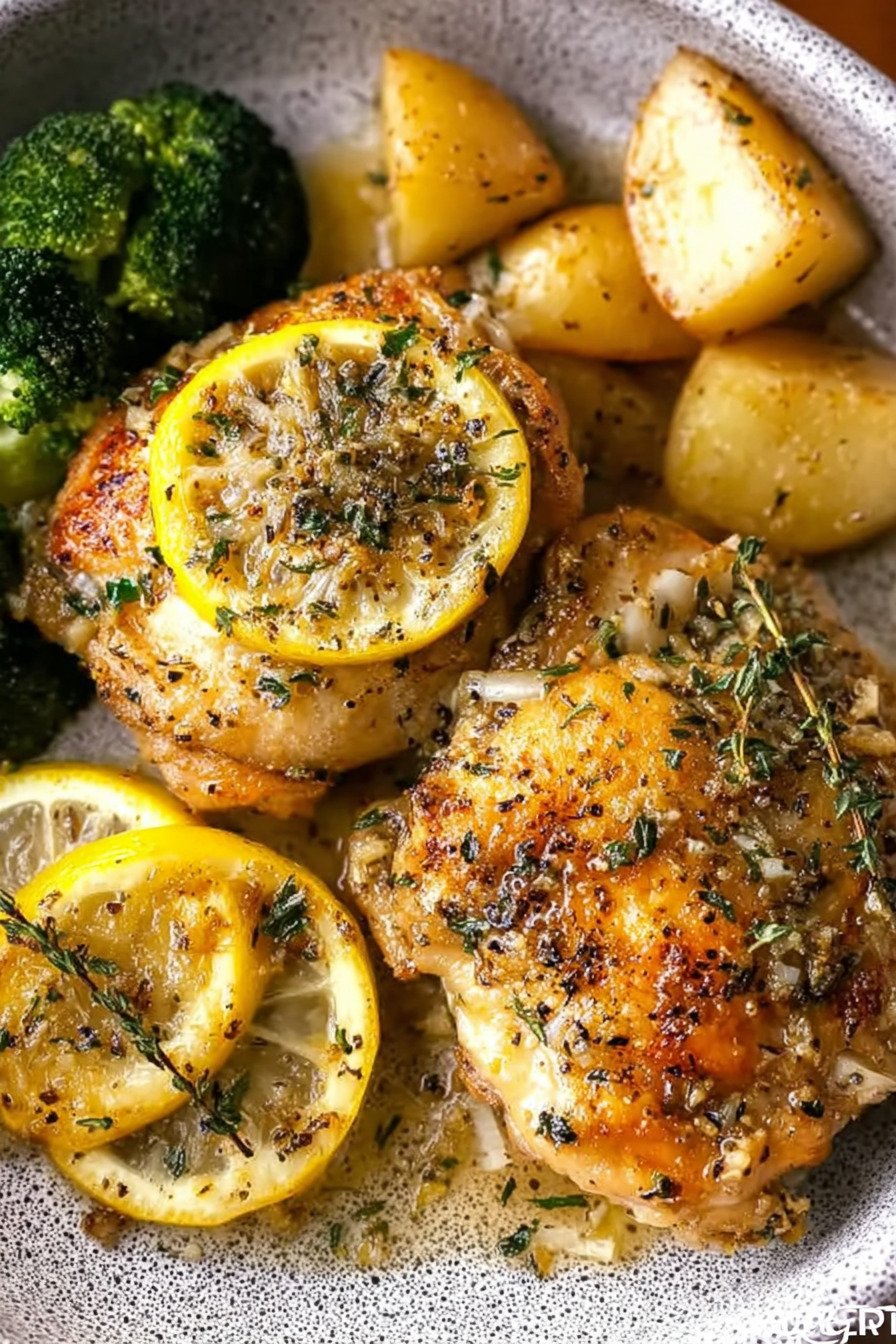
Lemon garlic chicken thighs are simple, but the details decide whether the final dish tastes bright and juicy or flat and overcooked. Bone-in, skin-on thighs are forgiving because the bone helps slow the cooking slightly and the skin protects the meat from drying out. The olive oil carries the garlic, oregano, lemon zest, lemon juice, salt, and pepper over the chicken so every bite has seasoning on the surface.
The goal is not a heavy marinade that hides the chicken. The goal is a thin, flavorful coating that helps the skin brown while giving the meat a sharp, savory aroma. This is why a short 10-minute rest works well if time allows. It gives the salt and lemon-garlic mixture a chance to cling without letting the lemon juice sit so long that the surface texture changes too much.
For quick chicken thigh recipes, this method is useful because most of the cooking happens in the oven. The hands-on work is drying, mixing, coating, arranging, and checking doneness. That makes it practical for dinner ideas with chicken thighs when you want something that feels cooked with care but does not need constant stovetop attention.
4) Why Most Lemon Garlic Chicken Thighs Recipes Fail
The skin is too wet: Moisture is the enemy of browning. If the chicken goes into the oven damp, the surface has to steam off that water before it can crisp. By the time that happens, the meat may already be done. Patting the thighs dry first gives the skin a head start.
The pan is crowded: Chicken thighs release moisture as they roast. If the pieces are packed tightly together, that moisture gets trapped around the chicken and softens the skin. Leaving space between the thighs allows hot air to circulate and encourages golden edges.
The lemon is used carelessly: Lemon juice gives brightness, but too much acidic liquid or too long of a marinade can make the outside of the chicken feel slightly tight. Lemon zest is the better flavor builder because it gives citrus aroma without flooding the pan with extra liquid.
The garlic burns instead of roasting: Minced garlic can darken quickly if it sits in dry patches on the pan. Tossing it evenly into the olive oil mixture helps protect it. If garlic bits collect around the edges of the dish, spoon a little pan juice over them during roasting.
The chicken is judged by color alone: Golden skin is a good sign, but it does not guarantee the meat is cooked through. The safest checkpoint is the internal temperature. The thickest part of each thigh should reach 165°F, and the juices should look clear when the chicken rests.
5) Ingredients for Lemon Garlic Chicken Thighs
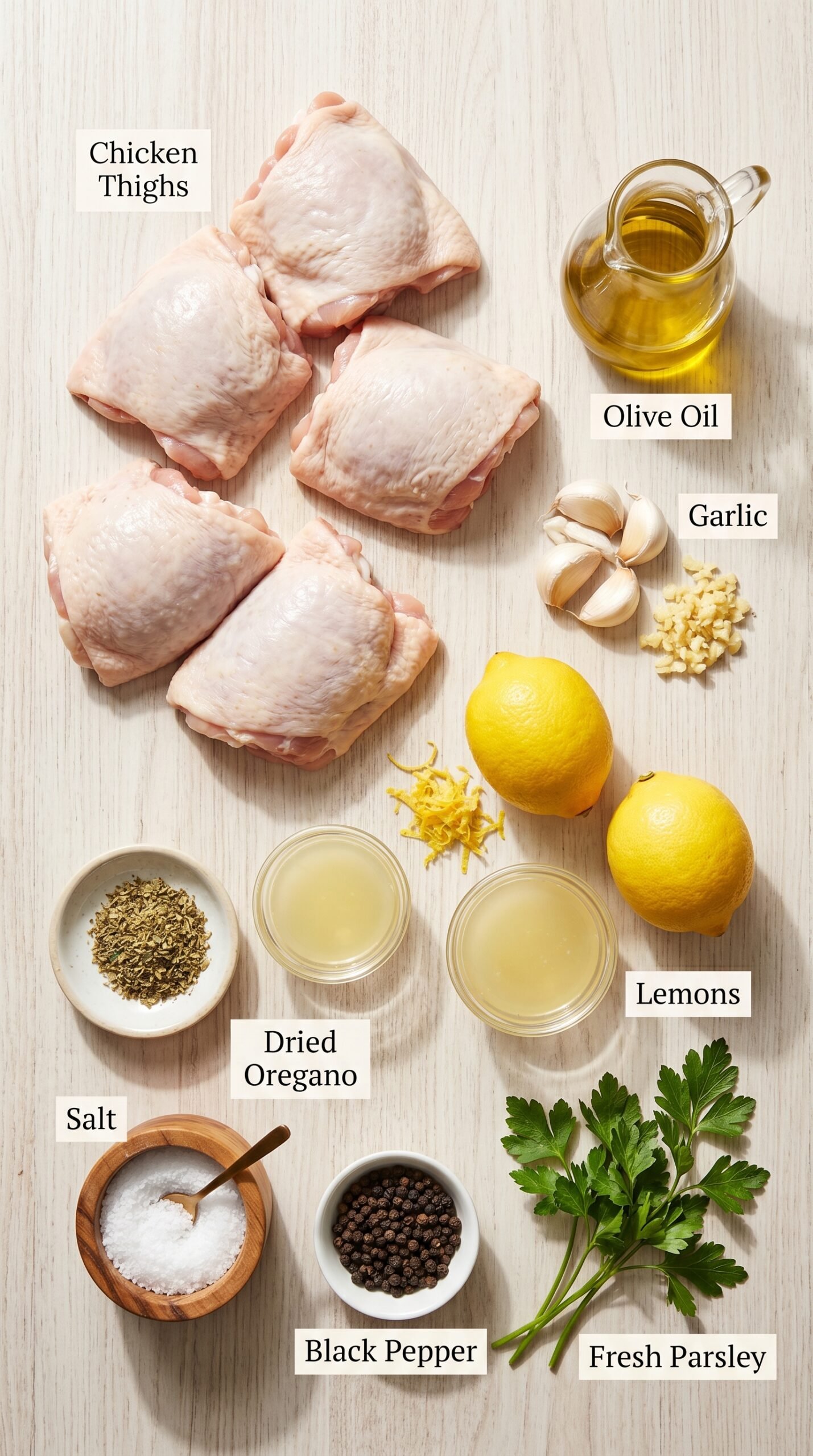
Bone-in, skin-on chicken thighs: Use them when you want juicy meat and a roasted finish with crisp skin. Boneless thighs cook faster, but they do not give the same protective skin layer or deep roasted flavor. Bone-in thighs also hold moisture better, which makes them useful for healthy chicken thigh recipes that still feel satisfying.
Olive oil: Olive oil helps distribute the lemon, garlic, oregano, salt, and pepper over the chicken. It also supports browning by coating the skin lightly. If you use too little, the seasoning can clump; if you use too much, the pan may feel greasy.
Garlic: Minced garlic gives lemon and garlic chicken thighs their savory base. Use it when you want the citrus to taste rounded instead of sharp. Large chunks can taste harsh or burn on the pan, so mince the cloves finely and mix them well into the oil.
Lemons: Zest and juice do different jobs. The zest gives the strongest fresh lemon aroma, while the juice adds brightness and acidity. If you skip the zest, the chicken may taste less fragrant. If you add extra juice, the pan can become wetter and the skin may soften.
Dried oregano: Oregano gives the chicken a warm, herbaceous backbone that works well with lemon. Rub it lightly between your fingers before mixing to wake up its aroma. If substituted with fresh oregano, use a little more and expect a greener, softer flavor.
Salt: Salt is what turns the marinade from fragrant to properly seasoned. It helps the surface taste complete and supports juiciness. Under-salting is one reason lemon chicken tastes sharp but not satisfying.
Black pepper: Pepper adds a small amount of heat and balances the lemon. Freshly cracked pepper has a stronger aroma than pre-ground pepper, but either works if measured carefully.
Fresh parsley: Parsley is optional, but it adds color and a fresh finish after roasting. Add it at the end, not before baking, because fresh herbs can darken and lose their clean flavor in the oven.
- Bone-in thighs vs boneless thighs: Bone-in thighs cook more slowly and stay juicier; boneless thighs are faster but easier to overcook.
- Lemon zest vs lemon juice: Zest brings aroma without extra moisture; juice adds acidity but can soften the surface if overused.
- Skin-side up vs skin-side down: Skin-side up protects the meat and crisps the surface; skin-side down can trap moisture when roasting in a dish.
- Short marinade vs long marinade: A short marinade seasons the surface cleanly; a long acidic marinade can make the exterior less pleasant.
6) How to Make Lemon Garlic Chicken Thighs
Step 1: Preheat the oven to 400°F and dry the chicken thighs with paper towels. Press gently over the skin and edges because hidden moisture can stop browning before it starts.
Step 2: Mix the olive oil, minced garlic, lemon zest, lemon juice, dried oregano, salt, and black pepper in a large bowl. The mixture should look glossy and smell bright, savory, and herbal.
Step 3: Add the chicken thighs and toss until coated on all sides. Let them sit for 10 minutes if time allows. Do not stretch this into a long citrus marinade unless you are comfortable with a slightly firmer surface texture.
Step 4: Arrange the chicken skin-side up on a baking sheet or in an oven-safe dish. Leave room between pieces so the heat can move around them and the skin can turn golden instead of damp.
Step 5: Roast for about 35 minutes, until the skin is golden and crispy and the internal temperature reaches 165°F. Rest briefly, then finish with parsley and lemon wedges if you want a brighter serving plate.

7) Recipe Card: Lemon Garlic Chicken Thighs
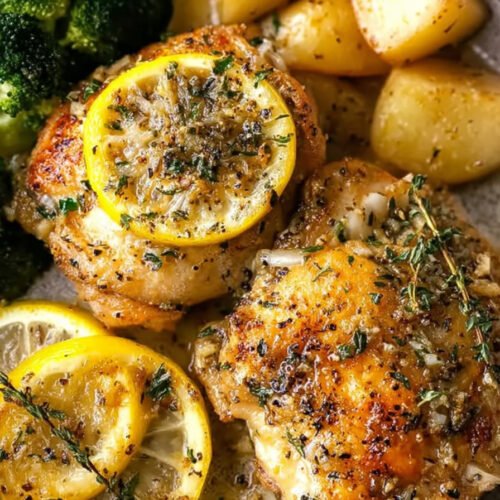
Lemon Garlic Chicken Thighs with Crispy Golden Skin
Ingredients
- 8 bone-in, skin-on chicken thighs, patted very dry so the skin can crisp instead of steam
- 3 tablespoons olive oil, enough to carry the garlic, lemon, and oregano over the chicken
- 4 cloves garlic, minced finely so it seasons evenly without leaving large raw-tasting pieces
- 2 lemons, zested and juiced for bright citrus aroma and acidity
- 1 teaspoon dried oregano, rubbed lightly between your fingers to wake up the flavor
- 1 teaspoon salt, measured evenly so the chicken is seasoned through the surface
- 1/2 teaspoon black pepper, freshly cracked if possible for better aroma
- 2 tablespoons fresh parsley, chopped, optional for a fresh finish after roasting
Instructions
- Preheat the oven to 400°F (200°C). Pat the chicken thighs very dry with paper towels, especially on the skin side, because excess moisture is the main reason roasted chicken skin turns soft instead of golden.
- In a large bowl, whisk together the olive oil, minced garlic, lemon zest, lemon juice, dried oregano, salt, and black pepper until the salt begins to dissolve and the garlic is evenly suspended in the marinade.
- Add the chicken thighs to the bowl and toss until every piece is coated on the top, bottom, and edges. Let the chicken marinate for 10 minutes if time allows, but avoid a very long lemon marinade because too much acid can affect the surface texture.
- Arrange the chicken thighs skin-side up on a baking sheet or in an oven-safe dish, leaving a little space between pieces so hot air can circulate and the skin can brown instead of steam.
- Roast for about 35 minutes, or until the skin is golden and crisp, the garlic smells savory, and the thickest part of the chicken reaches 165°F (74°C) on an instant-read thermometer without touching the bone.
- Let the chicken rest for 5 minutes before serving so the juices settle back into the meat. Garnish with chopped fresh parsley and serve with lemon wedges if desired.
8) Tips for Making Lemon Garlic Chicken Thighs
Use a rimmed baking sheet if you want maximum browning. An oven-safe dish works, but a crowded deep dish can hold steam around the chicken. If using a dish, choose one large enough that the thighs are not touching.
Do not pour a large amount of extra marinade over the skin right before roasting. A light coating is enough. Too much liquid slides into the pan and creates steam, which works against crispness.
Check more than one thigh if the pieces vary in size. Smaller thighs may finish earlier, while larger ones may need a few extra minutes. This matters for chicken thighs healthy enough to serve confidently without drying them out.
Let the chicken rest for 5 minutes before serving. Cutting immediately sends the juices onto the plate instead of keeping them in the meat. A short rest also lets the lemon-garlic aroma settle into the pan juices.
If you want extra browning at the end, use the broiler briefly only after the chicken has reached a safe internal temperature. Watch closely because garlic and skin can move from golden to too dark quickly.
9) Common Mistakes & Fixes
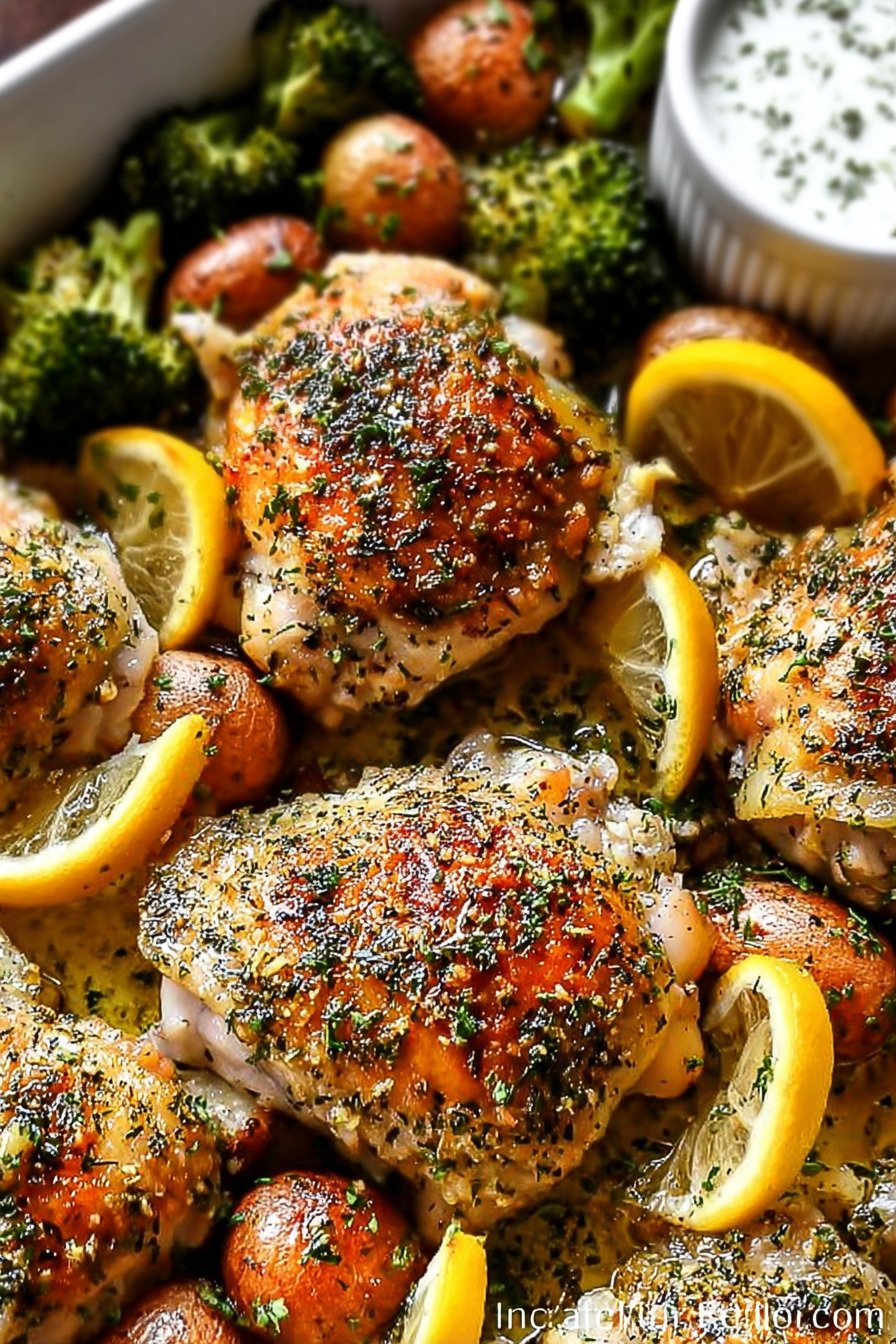
Problem: The skin turns soft. Cause: The chicken was too wet, the pan was crowded, or too much marinade pooled around the pieces. Fix: Pat the thighs dry, space them out, and use only a light coating on the skin.
Problem: The chicken tastes sharp but not balanced. Cause: Lemon juice was doing all the work while salt, zest, and oregano were not strong enough. Fix: Use both zest and juice, measure the salt, and mix the oregano into the oil so the flavor spreads evenly.
Problem: The garlic tastes bitter. Cause: Garlic bits sat dry on the pan and burned. Fix: Mince the garlic finely, mix it into the olive oil, and keep stray garlic from collecting at the pan edges.
Problem: The meat is dry. Cause: The thighs cooked too long or were judged only by skin color. Fix: Use an instant-read thermometer and pull the chicken when the thickest part reaches 165°F.
Problem: The flavor sits only on the surface. Cause: The chicken was coated unevenly or cooked immediately before the salt had time to cling. Fix: Toss thoroughly and let the thighs sit for 10 minutes when possible.
10) How to Tell Lemon Garlic Chicken Thighs Are Done
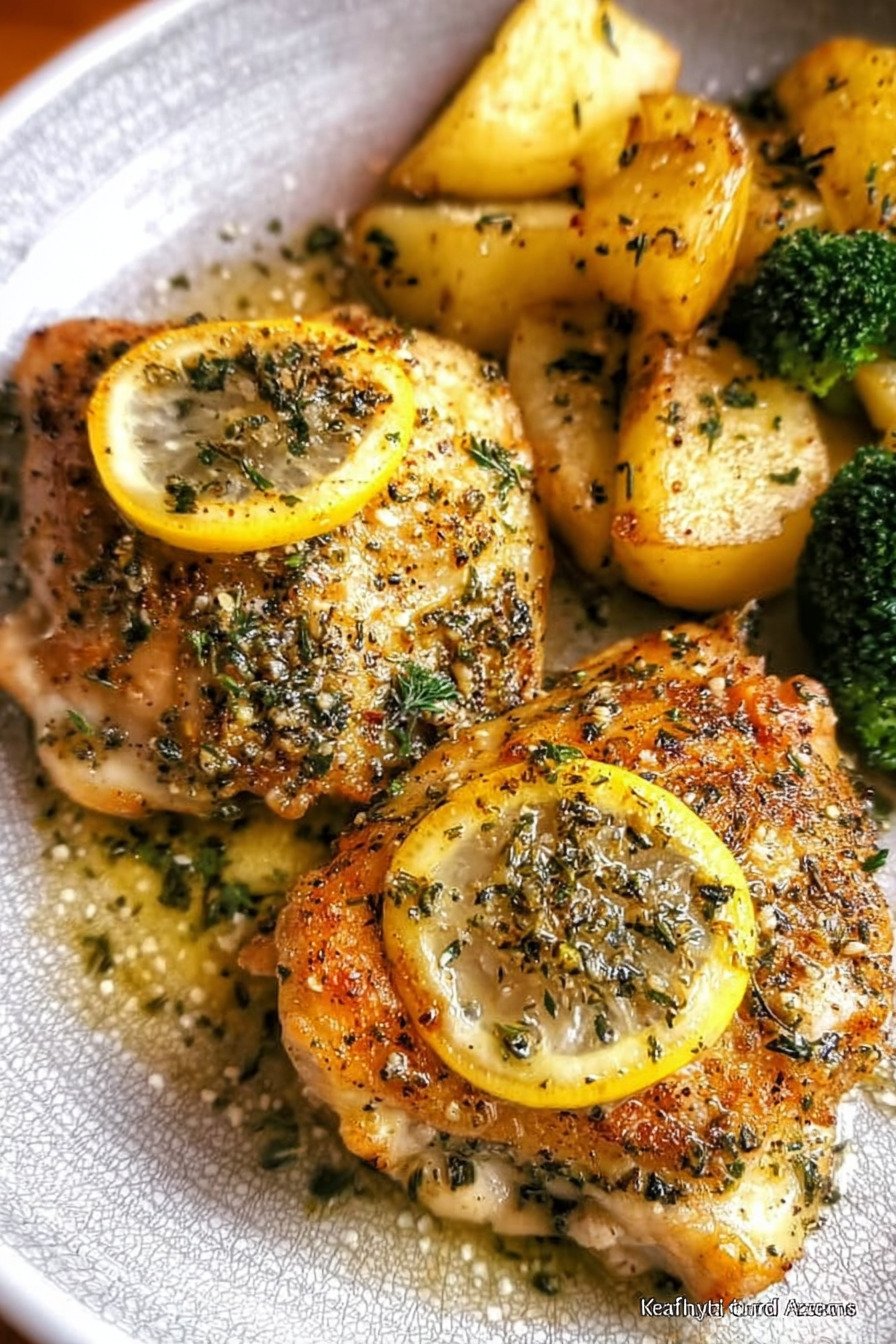
Lemon garlic chicken thighs are done when the skin looks golden with crisp-looking edges, the garlic smells savory rather than raw, and the pan juices are lightly browned instead of watery. The most reliable sign is temperature: the thickest part should read 165°F without the thermometer touching the bone.
The texture should be juicy and tender when pierced, not stringy or tight. The skin should have a roasted surface, though it may soften slightly after resting because the chicken releases steam. The flavor should taste bright from lemon, rounded by garlic, and fully seasoned from the salt and oregano.
Failure signs are easy to spot. Pale skin usually means moisture or crowding. Bitter dark garlic means dry garlic pieces burned. Watery pooling means the pan was too tight or the chicken carried too much marinade. Tough meat usually means the chicken cooked past the ideal temperature.
11) Professional Secrets Behind Better Lemon Garlic Chicken Thighs
The first professional habit is controlling surface moisture. Restaurants dry proteins before cooking because browning cannot happen efficiently until water evaporates. At home, that means paper towels are not a small detail; they are part of the cooking method.
The second secret is layering lemon flavor. Lemon juice alone can taste thin and sharp. Lemon zest carries fragrant oils that make the whole dish smell fresher before you even take a bite. That is why zesting before juicing is worth the extra minute.
The third secret is using the oven as a steady heat source. A 400°F oven gives enough heat to render the skin and cook the meat without needing constant flipping. Keeping the chicken skin-side up gives you better texture and a more attractive finish.
The final secret is resting. Even quick chicken thigh recipes benefit from a pause after roasting. Resting makes the meat easier to serve and keeps more juices inside the chicken instead of losing them on the cutting board.
12) Best Dishes or Pairings to Serve With Lemon Garlic Chicken Thighs
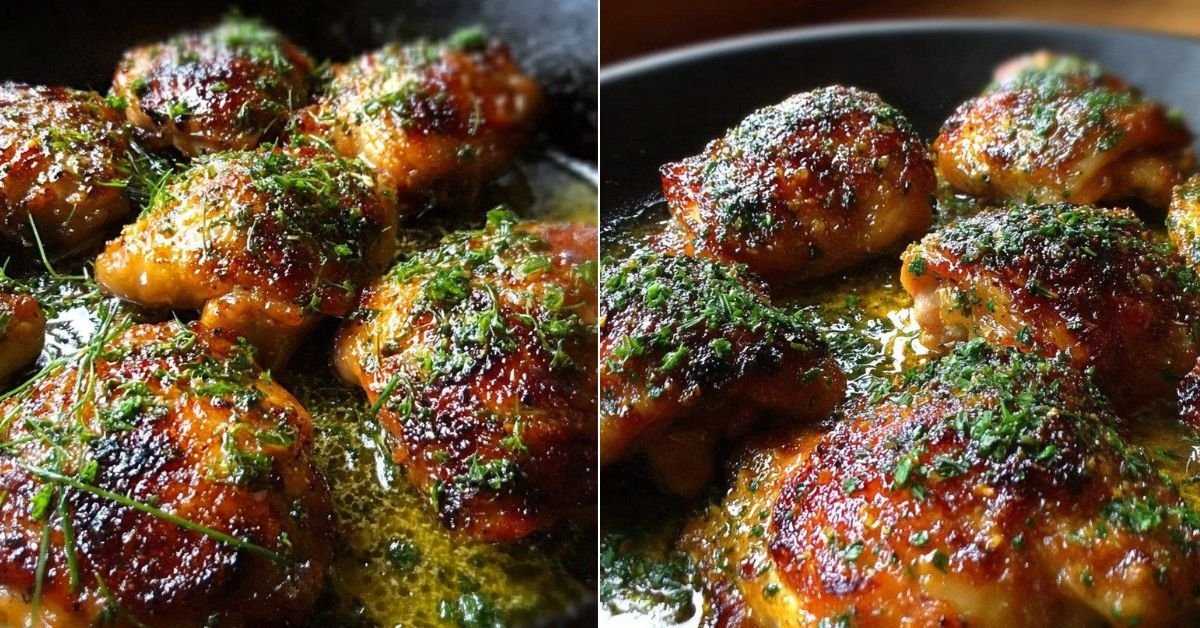
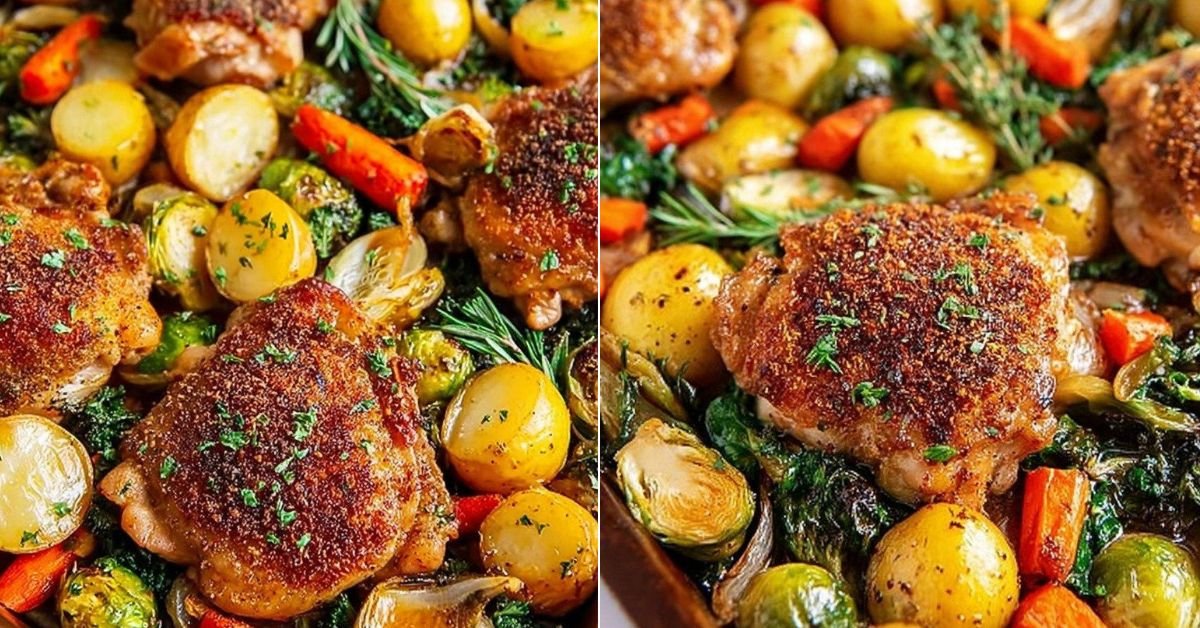
Lemon garlic chicken thighs pair well with sides that can catch the pan juices. Rice, couscous, roasted potatoes, or warm flatbread all work because the lemon-garlic juices are too good to leave behind.
For a lighter plate, serve the chicken with a crisp cucumber salad, roasted broccoli, green beans, or a simple tomato salad. The bright lemon flavor cuts through the richness of the chicken skin, so fresh vegetables feel especially balanced here.
For family-style dinner ideas with chicken thighs, place the roasted pieces on a platter with lemon wedges and parsley. Spoon a little of the pan juice over the top just before serving so the chicken looks glossy and smells fresh.

13) Making Lemon Garlic Chicken Thighs Ahead of Time
You can mix the olive oil, garlic, lemon zest, lemon juice, oregano, salt, and pepper ahead of time and keep it covered in the refrigerator for a few hours. Stir it again before using because the lemon juice and oil may separate.
For the best texture, coat the chicken closer to roasting time rather than leaving it in lemon juice overnight. A short marinade keeps the flavor bright without changing the surface too much. If you need to prep early, dry the chicken and keep it covered in the refrigerator, then toss with the marinade shortly before baking.
If cooking the chicken ahead for meal prep, slightly under-crisp expectations are realistic. The skin is at its best fresh from the oven, but the meat stays useful for bowls, salads, wraps, and easy chicken dinner recipes during the week.
14) Storing Leftover Lemon Garlic Chicken Thighs
Store leftover lemon garlic chicken thighs in an airtight container in the refrigerator for up to 3 days. Let the chicken cool before sealing the container, but do not leave it sitting out for a long time. Trapped steam will soften the skin, so cooling briefly first helps.
Reheat the chicken uncovered in a 350°F oven until warmed through. The microwave works for speed, but it softens the skin and can make the meat heat unevenly. If you only need the meat, remove it from the bone and warm it gently with a spoonful of pan juices.
Leftovers can be sliced into grain bowls, tucked into wraps, served over salad, or paired with roasted vegetables. The lemon-garlic flavor stays strong enough to carry simple lunches without needing a heavy sauce.
15) FAQ (Real Cooking Questions)
Can I use boneless chicken thighs? Yes, but the timing will be shorter and the texture will be different. Boneless thighs do not have the same skin-on protection unless you buy them with skin attached, so check early and use a thermometer.
Can I marinate lemon and garlic chicken thighs overnight? It is better not to marinate them overnight with this much lemon juice. The acid can change the surface texture. For best results, prepare the marinade ahead, then coat the chicken shortly before roasting.
Why did my chicken skin not get crispy? The most common reasons are wet chicken, too much marinade on the skin, or a crowded pan. Dry the thighs thoroughly, space them apart, and roast skin-side up.
Are these good for healthy chicken thigh recipes? They can fit well into a balanced meal because the recipe uses simple ingredients and strong flavor from lemon, garlic, oregano, and parsley. Pair with vegetables, salad, or grains depending on your meal goals.
How do I know the chicken is safe to eat? Use an instant-read thermometer. The thickest part of the thigh should reach 165°F, and the probe should not touch the bone because that can give an inaccurate reading.
16) Save This Lemon Garlic Chicken Thighs Recipe
If this lemon garlic chicken thighs recipe helped you solve dry meat or soft skin, save it for weeknight dinners, Sunday meals, or meal prep. The key reminder is: dry the skin first, roast skin-side up, and check the internal temperature instead of guessing.
17) Conclusion
The difference between disappointing chicken thighs and confident roasted chicken is usually not a complicated trick. It is moisture control, balanced seasoning, smart lemon use, enough pan space, and a reliable temperature check. Once those pieces line up, lemon garlic chicken thighs become bright, savory, juicy, and crisp in the places that matter.
This is the kind of recipe that teaches a useful cooking lesson every time you make it. Dry the skin, respect the lemon, let the oven do the work, and give the chicken a short rest before serving. That small routine turns a simple tray of chicken into a dinner that feels calm, practical, and deeply satisfying.
18) Nutrition
Serving Size 1 portion Calories 365 Sugar 1 g Sodium 420 mg Fat 26 g Saturated Fat 6 g Carbohydrates 3 g Fiber 1 g Protein 29 g Cholesterol 155 mg






Leave a Comment