
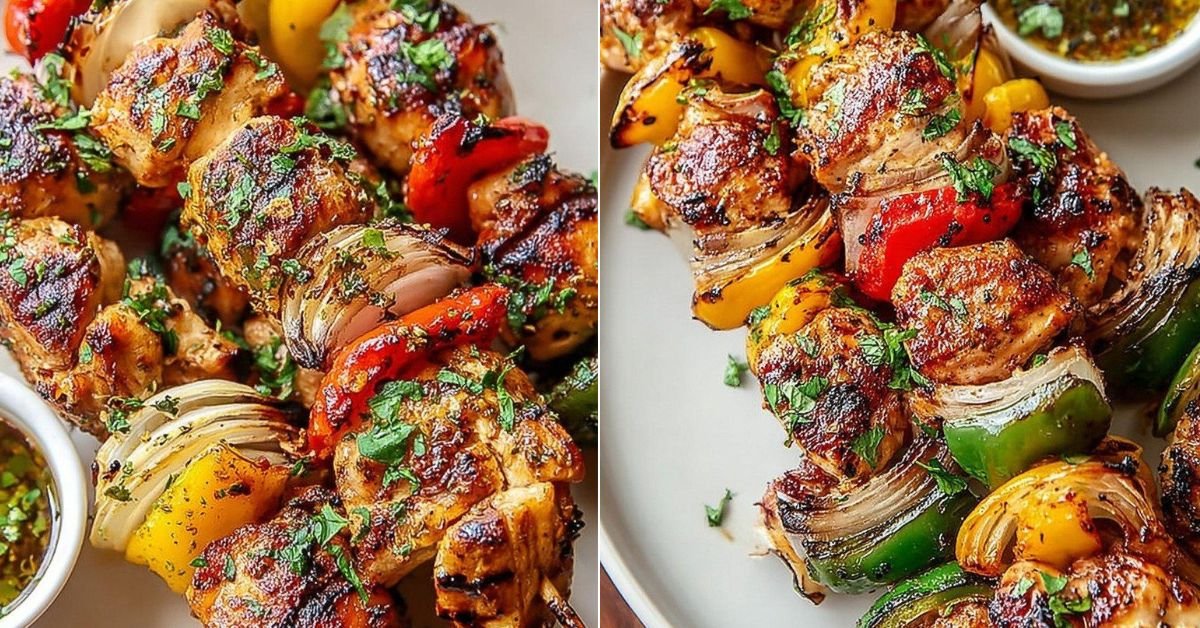
1) What I Learned Testing Grilled Chicken Kabobs
Dry chicken on a skewer can ruin a summer dinner fast. I’m Angela, and my first batch looked colorful but tasted flat because I crowded the skewers and rushed the marinade. After testing grill heat, chicken size, and vegetable spacing, I discovered that juicy grilled chicken kabobs depend on two quiet details: enough marinade time and small gaps between each piece. That little adjustment gave me tender chicken, lightly charred peppers, and the kind of calm backyard dinner that feels worth repeating. These grilled chicken kabobs with vegetables are simple, but the technique matters.
Table of Contents
- 1) What I Learned Testing Grilled Chicken Kabobs
- 2) Key Takeaways
- 3) Easy Grilled Chicken Kabobs Recipe: Easy Summer BBQ Perfection Recipe
- 4) Why Most Grilled Chicken Kabobs Recipe: Easy Summer BBQ Perfection Recipes Fail
- 5) Ingredients for Grilled Chicken Kabobs Recipe: Easy Summer BBQ Perfection
- 6) How to Make Grilled Chicken Kabobs Recipe: Easy Summer BBQ Perfection
- 7) Recipe Card: Grilled Chicken Kabobs Recipe: Easy Summer BBQ Perfection
- 8) Tips for Making Grilled Chicken Kabobs Recipe: Easy Summer BBQ Perfection
- 9) Common Mistakes & Fixes
- 10) How to Tell Grilled Chicken Kabobs Are Perfect
- 11) Professional Secrets Behind Better Grilled Chicken Kabobs Recipe: Easy Summer BBQ Perfection
- 12) Best Dishes or Pairings to Serve With Grilled Chicken Kabobs Recipe: Easy Summer BBQ Perfection
- 13) Making Grilled Chicken Kabobs Recipe: Easy Summer BBQ Perfection Ahead of Time
- 14) Storing Leftover Grilled Chicken Kabobs Recipe: Easy Summer BBQ Perfection
- 15) FAQ (Real Cooking Questions)
- 16) Save This Grilled Chicken Kabobs Recipe: Easy Summer BBQ Perfection Recipe
- 17) Conclusion
- 18) Nutrition
2) Key Takeaways
- Marinade time changes everything: Two hours gives the chicken real flavor; up to eight hours adds deeper seasoning without turning the texture soft.
- Even cuts prevent dry spots: One-inch chicken cubes and similarly sized vegetables help the skewers cook at the same pace.
- Small gaps are not optional: Tight skewers steam instead of grill, which means pale chicken, uneven cooking, and fewer charred edges.
- Temperature beats guessing: The chicken is ready when the thickest piece reaches 165°F and the vegetables are tender with light char.
3) Easy Grilled Chicken Kabobs Recipe: Easy Summer BBQ Perfection Recipe
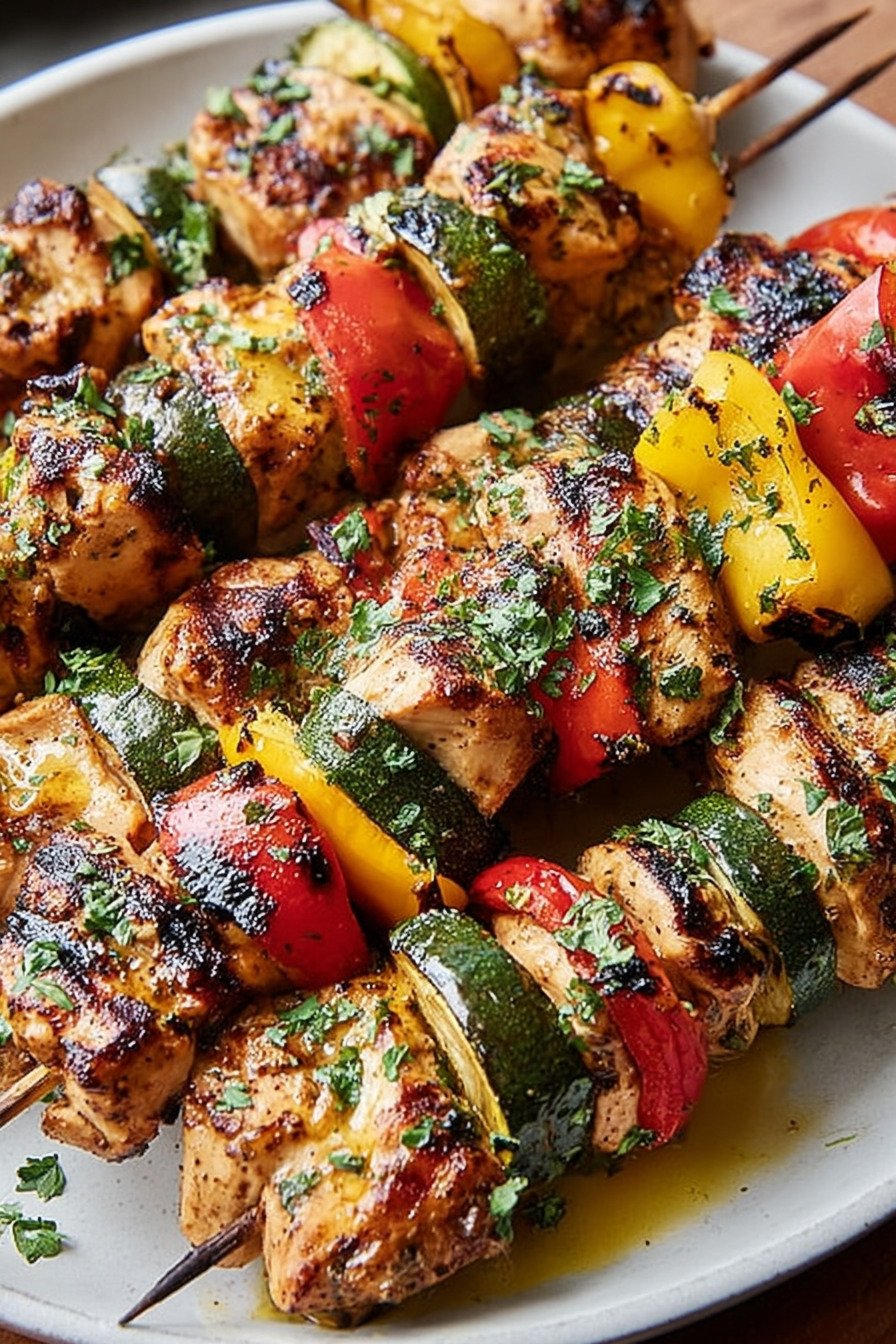
These grilled chicken kabobs are built around a bright olive oil, lemon, garlic, oregano, paprika, salt, and pepper marinade. That combination works because it seasons the chicken before it touches the grill, gives the outside enough oil to brown cleanly, and adds acidity without overwhelming the meat. The vegetables matter too: red bell pepper brings sweetness, green bell pepper adds freshness, red onion turns mellow and lightly smoky, and cherry tomatoes blister into little bursts of juicy flavor.
The goal is not just colorful skewers. The goal is chicken that stays juicy while the vegetables soften and char at the edges. Medium-high heat, around 400-450°F, is strong enough to create grill marks but controlled enough to cook the chicken through before the outside dries out. Turning the skewers every few minutes keeps one side from burning while the inside catches up. That is the difference between a healthy chicken kabob meal that tastes balanced and a skewer that looks better than it eats.
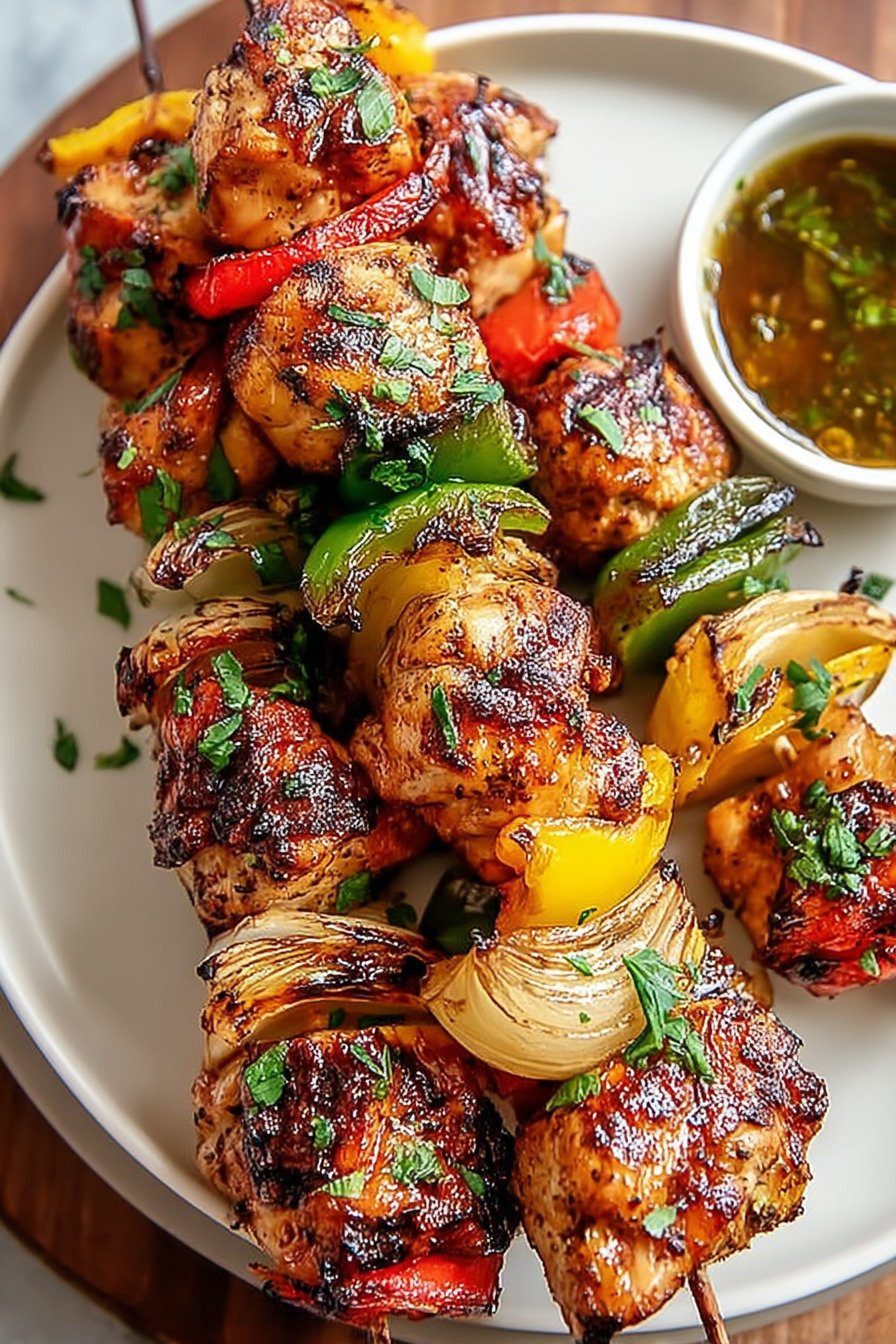
4) Why Most Grilled Chicken Kabobs Recipe: Easy Summer BBQ Perfection Recipes Fail
Most grilled chicken kabobs fail because the pieces are cut unevenly. If one chicken cube is thick and another is thin, the thin piece dries out before the thick piece reaches a safe internal temperature. Keeping the chicken close to 1-inch cubes gives the grill a fair chance to cook everything evenly.
Another common failure is crowding the skewers. When chicken, peppers, onion, and tomatoes are pressed tightly together, heat cannot circulate. Instead of browning, the food steams between the pieces. You can recognize this problem when the chicken looks pale, the vegetables feel soft but not charred, and the skewer takes longer than expected.
Rushing the marinade is another reason kabobs taste flat. Chicken breast is lean, so it needs time to absorb salt, garlic, herbs, and acidity. A short dip coats the surface, but a 2-hour rest gives the seasoning time to move deeper. Going beyond 8 hours is not helpful here because too much time in acid can make the texture less clean and firm.
Skipping the grill prep can also ruin the result. Dirty or dry grates grab lean chicken and tear the surface when you turn the skewers. Clean, oiled grates help the chicken release naturally once it has browned. If the kabobs stick, give them another minute before forcing them loose.
The final failure is guessing doneness by color alone. Grill marks do not prove the center is cooked. Chicken breast must reach 165°F internally, and the vegetables should be tender with slight char marks. That combination gives you safe, juicy chicken and vegetables that still have structure.
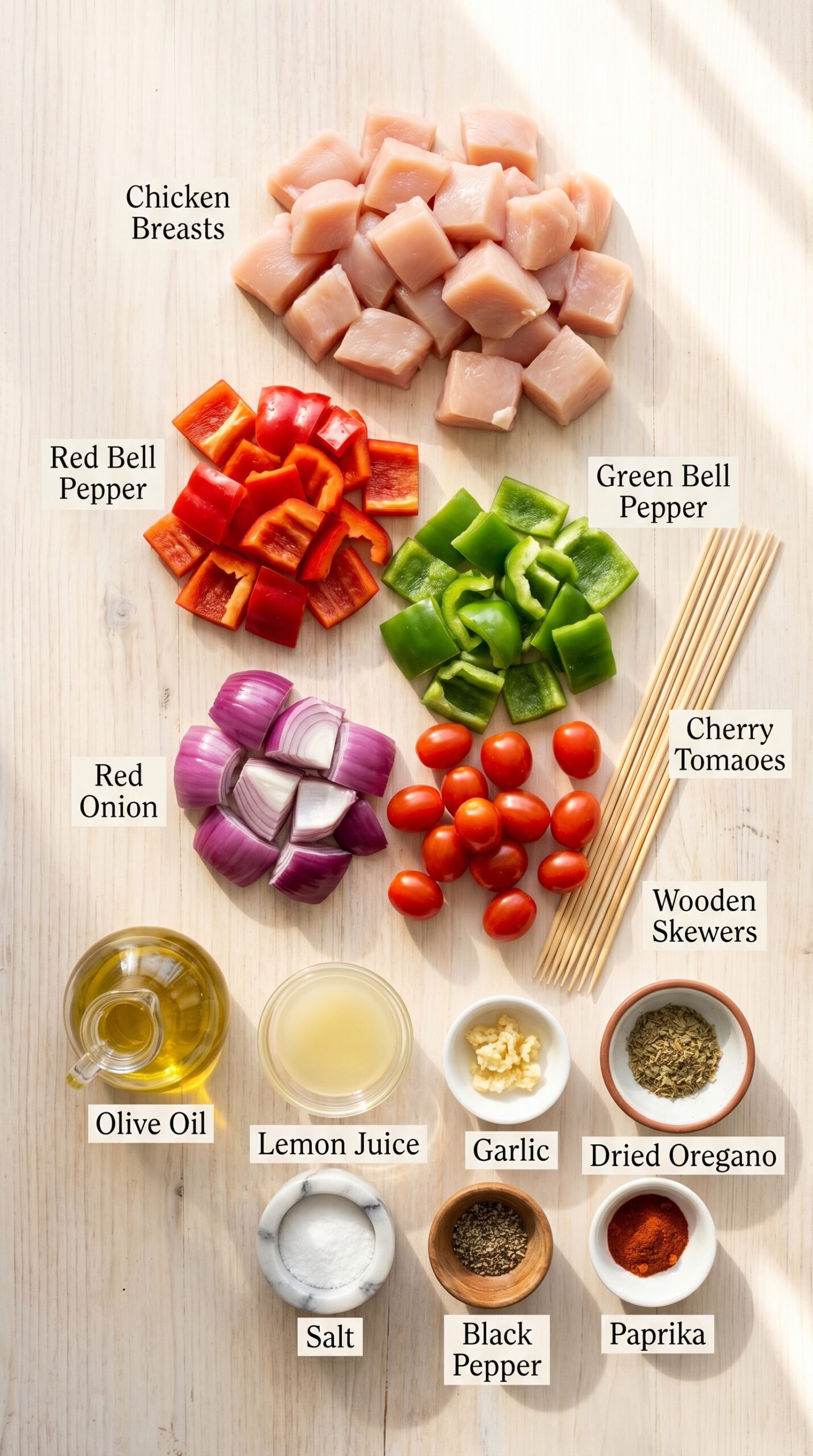
5) Ingredients for Grilled Chicken Kabobs Recipe: Easy Summer BBQ Perfection
Boneless, skinless chicken breasts: Chicken breast works well because it cuts neatly into cubes and absorbs marinade quickly. Use it after trimming any tough bits. If the pieces are too small, they dry out; if they are too large, the vegetables may overcook while the center finishes.
Red bell pepper: Red pepper brings sweetness and color. Add it in sturdy chunks so it can soften while still holding its shape. If cut too thin, it can collapse or slip off the skewer.
Green bell pepper: Green pepper adds a fresher, slightly sharper flavor that balances the sweetness of the red pepper and tomatoes. It should be cut close to the chicken size so every bite feels balanced.
Red onion: Red onion turns sweeter as it grills and gives the kabobs a savory backbone. Use thick chunks rather than thin slices because thin onion burns before the chicken finishes.
Cherry tomatoes: Cherry tomatoes blister quickly and add juicy acidity. Keep them whole so they hold together on the grill. If they split, that is fine, but if they are crushed before grilling, they can fall apart.
Wooden skewers: Wooden skewers need a 30-minute soak before grilling. This helps reduce scorching over medium-high heat. Metal skewers can be used, but they conduct heat faster, so handle them carefully.
Olive oil: Olive oil helps the seasoning cling to the chicken and supports browning. It also reduces surface dryness on lean chicken breast. Use it in the marinade before the chicken goes into the refrigerator.
Lemon juice: Lemon juice brings brightness and helps the marinade taste fresh. It should be balanced with oil, not used alone. Too much acid or too much time in acid can change the chicken texture.
Garlic: Minced garlic spreads through the marinade and gives the chicken savory depth. Mince it finely so one bite does not get a harsh chunk while another gets none.
Dried oregano: Oregano gives the kabobs a warm, herbaceous flavor that stands up to grilling. It blooms in the oil and lemon juice while the chicken marinates.
Salt: Salt is essential because it seasons the chicken before cooking. Adding it only after grilling leaves the inside bland. The marinade time helps the salt do its work.
Black pepper: Black pepper adds gentle heat and a savory edge. It works best in the marinade because the flavor spreads across every piece of chicken.
Paprika: Paprika adds mild warmth and helps the chicken take on a richer grilled color. It is especially useful with chicken breast, which can otherwise look pale if the grill is not hot enough.
- Chicken breast vs chicken thighs: Chicken breast is lean and clean-tasting, but it needs careful timing. Thighs are more forgiving, but they change the texture and cook a little differently.
- Lemon juice vs lime juice: Lemon gives a bright classic flavor, while lime can create grilled chicken kabobs with lime for a sharper, more citrus-forward variation.
- Wooden skewers vs metal skewers: Wooden skewers need soaking and are easy to serve; metal skewers heat faster and can help cook from the inside, but they require careful handling.
- Tight skewers vs spaced skewers: Tight skewers steam and cook unevenly, while spaced skewers allow heat to circulate for better char and juicier chicken.
6) How to Make Grilled Chicken Kabobs Recipe: Easy Summer BBQ Perfection
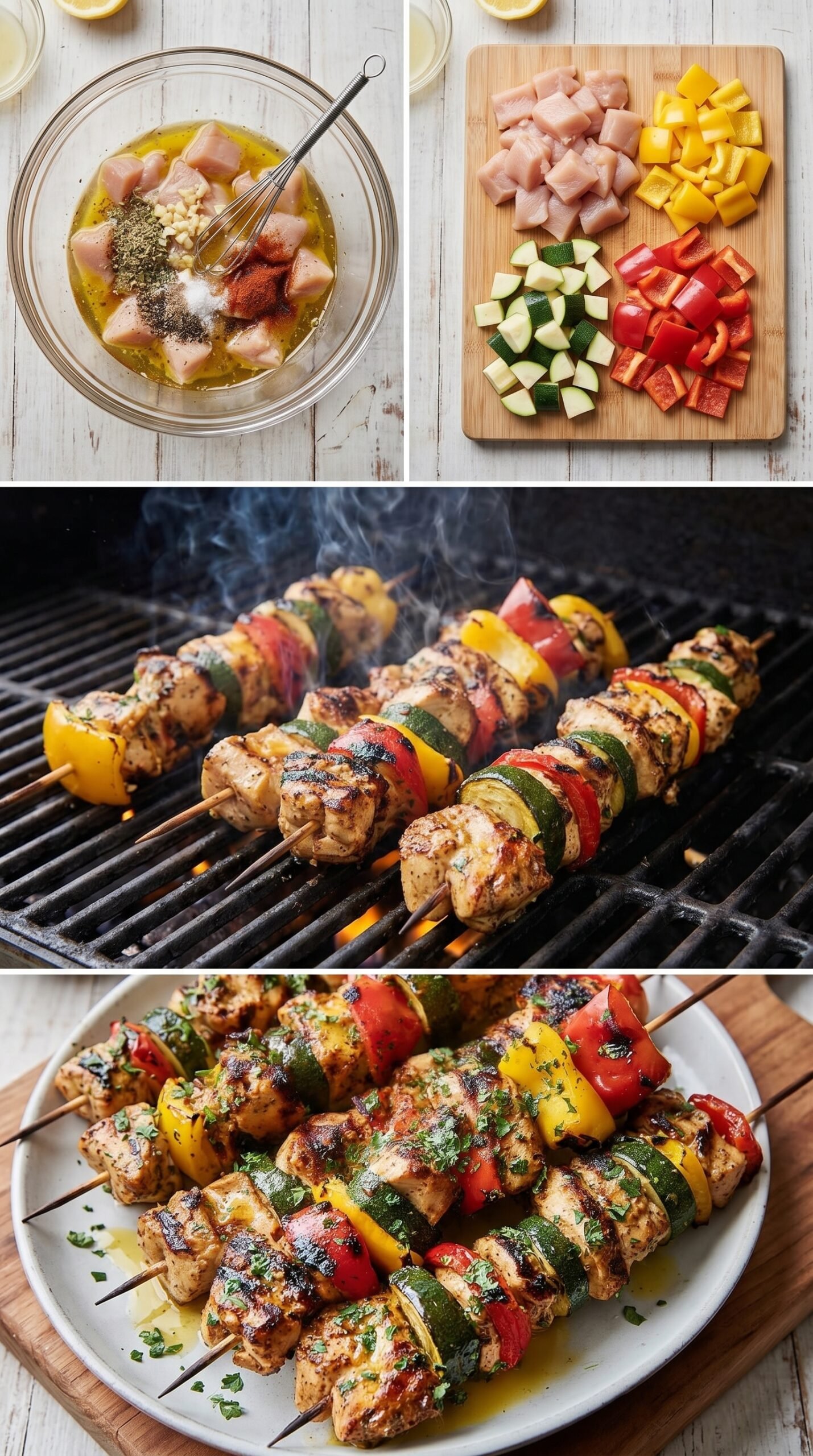
Step 1: Whisk the olive oil, lemon juice, minced garlic, oregano, salt, black pepper, and paprika in a large bowl. The marinade should smell bright, garlicky, and herbaceous before the chicken goes in. If the oil and lemon look slightly separated, that is fine; the goal is even seasoning, not a thick sauce.
Step 2: Add the cubed chicken and toss until every piece is coated. Cover the bowl and refrigerate for at least 2 hours, or up to 8 hours. This is where flavor develops. Do not leave the chicken sitting at room temperature, and do not stretch the marinade time too far because the acid can affect the texture.
Step 3: Cut the vegetables into similar 1-inch chunks. The pieces should be large enough to stay on the skewers but not so large that they remain raw after the chicken is done. This is one of the most practical answers to how to make chicken kabobs with vegetables that cook evenly.
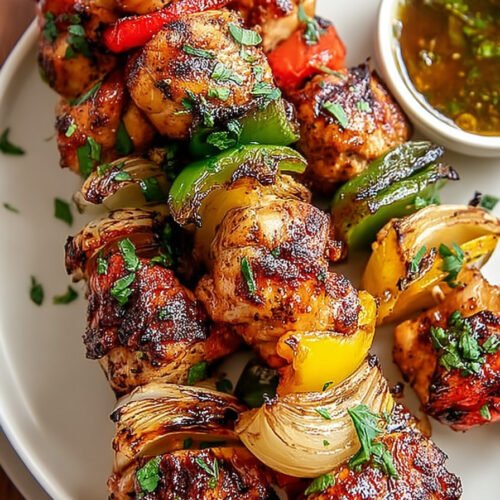
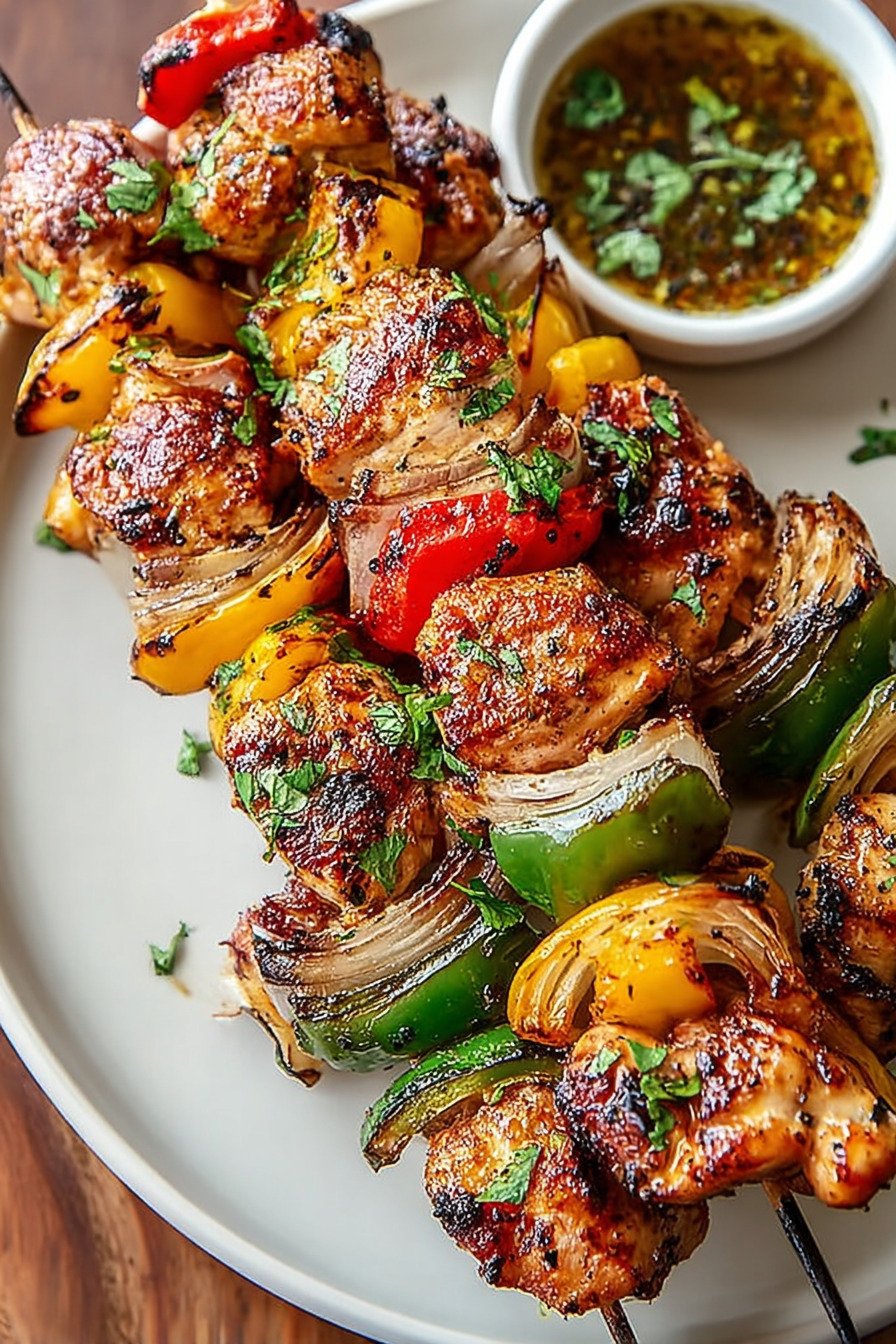
Step 4: Thread the marinated chicken and vegetables onto soaked skewers, alternating colors as you go. Leave small spaces between the pieces. Those gaps look minor, but they help the heat reach the sides of the chicken and vegetables instead of trapping steam.
Step 5: Heat the grill to medium-high, around 400-450°F. Clean and oil the grates before adding the skewers. This helps prevent sticking and gives the chicken a better chance to brown without tearing when you turn it.
Step 6: Grill the kabobs for 12-15 minutes, turning every 3-4 minutes. Watch for light char on the vegetables and firm, opaque chicken. The stopping point is 165°F in the thickest chicken piece. Pull them off once they reach that point so the lean chicken stays juicy.
7) Recipe Card: Grilled Chicken Kabobs Recipe: Easy Summer BBQ Perfection
Grilled Chicken Kabobs Recipe: Easy Summer BBQ Perfection
Ingredients
For the chicken kabobs
- 2 lbs boneless, skinless chicken breasts, cut into 1-inch cubes so they cook evenly on the grill
- 1 large red bell pepper, cut into chunks for sweetness, color, and sturdy skewer texture
- 1 large green bell pepper, cut into chunks for fresh flavor and grill-friendly bite
- 1 medium red onion, cut into chunks thick enough to stay on the skewers
- 1 pint cherry tomatoes, kept whole so they blister without collapsing too quickly
- 8-10 wooden skewers, soaked in water for 30 minutes to reduce scorching
For the marinade
- 1/4 cup olive oil to help carry seasoning and keep the chicken moist
- 3 tablespoons lemon juice for brightness and tenderizing balance
- 2 cloves garlic, minced finely so the flavor spreads through the marinade
- 1 teaspoon dried oregano for an herbaceous grilled flavor
- 1 teaspoon salt to season the chicken before it hits the grill
- 1/2 teaspoon black pepper for gentle heat and savory depth
- 1/2 teaspoon paprika for color, mild warmth, and smoky-looking edges
Instructions
- Whisk the olive oil, lemon juice, minced garlic, dried oregano, salt, black pepper, and paprika in a large bowl until the marinade smells bright, garlicky, and herbaceous.
- Add the cubed chicken to the marinade and toss until every piece is coated. Cover and refrigerate for at least 2 hours, or up to 8 hours, so the seasoning can penetrate without making the chicken mushy.
- Cut the bell peppers and red onion into similar 1-inch pieces. Keep the vegetables large enough to stay on the skewers but small enough to soften before the chicken dries out.
- Thread the marinated chicken, bell peppers, red onion, and cherry tomatoes onto the soaked skewers, alternating colors for even distribution. Leave small gaps between pieces so heat can circulate instead of steaming the kabobs.
- Heat the grill to medium-high, about 400-450°F. Clean and oil the grates well so the chicken releases cleanly and develops light char instead of tearing.
- Place the kabobs on the grill and cook for 12-15 minutes, turning every 3-4 minutes. The chicken is done when the thickest piece reaches 165°F internally and the vegetables are tender with lightly charred edges.
8) Tips for Making Grilled Chicken Kabobs Recipe: Easy Summer BBQ Perfection
Cutting matters more than most cooks think. Aim for chicken cubes that are close to the same size, then cut the peppers and onion to match. When the pieces are consistent, the grill heat works evenly across the skewer. That single step prevents the annoying mix of dry chicken, raw onion, and collapsed tomatoes.
Do not pack the skewers like a display tray. Colorful grilled chicken kabobs with vegetables look great when full, but they cook better with breathing room. A small gap between pieces lets hot air move around the chicken and helps the vegetables char instead of sweat.
Use medium-high heat, not the hottest possible fire. Too much heat burns the outside before the chicken reaches 165°F. Too little heat dries the kabobs slowly and leaves them without char. Around 400-450°F gives you browning, grill marks, and enough control to turn the skewers without panic.
If you are making campfire chicken kabobs, use the same doneness rules but pay closer attention to hot spots. Campfire heat is less even than a grill, so rotate the skewers more often and keep them over glowing coals rather than tall flames.
9) Common Mistakes & Fixes
Problem: The chicken is dry. Cause: The pieces were too small, cooked too long, or stayed on the grill after reaching 165°F. Fix: Cut 1-inch cubes, use an instant-read thermometer, and remove the kabobs as soon as the thickest piece is done.
Problem: The vegetables are burned but the chicken is not done. Cause: The grill was too hot, or the vegetable pieces were too small. Fix: Keep the grill around medium-high heat and cut peppers and onions into sturdy chunks that can handle 12-15 minutes of cooking.
Problem: The kabobs taste bland. Cause: The chicken did not marinate long enough, or the salt was not evenly distributed. Fix: Whisk the marinade thoroughly, coat every chicken piece, and give it at least 2 hours in the refrigerator.
Problem: The chicken sticks to the grill. Cause: The grates were dirty, dry, or not hot enough when the skewers went down. Fix: Preheat the grill, clean the grates, oil them carefully, and let the chicken release naturally before turning.
Problem: The skewers scorch too much. Cause: The wooden skewers were not soaked long enough or were exposed to direct flame. Fix: Soak wooden skewers for 30 minutes and position them over steady heat rather than flare-ups.
10) How to Tell Grilled Chicken Kabobs Are Perfect
Perfect grilled chicken kabobs should look lightly charred in spots but not blackened across the entire surface. The chicken should be opaque all the way through, firm to the touch, and juicy when cut. The safest and most accurate sign is an internal temperature of 165°F in the thickest chicken cube.
The vegetables should be tender but still recognizable. Bell peppers should have softened edges and a slight snap in the thicker parts. Red onion should look glossy and lightly charred. Cherry tomatoes should be blistered, not completely collapsed into the grill.
The aroma should be smoky, garlicky, and citrusy from the lemon and oregano marinade. If the kabobs smell burnt before the chicken is done, the heat is too high. If they smell mostly steamed and wet, the skewers may be too crowded or the grill may not be hot enough.
Failure signs are easy to spot: rubbery chicken, pale surfaces, watery vegetables, or dry edges around very small chicken pieces. A well-made skewer has juicy chicken, tender vegetables, light char marks, and seasoning that tastes present but not sharp.
11) Professional Secrets Behind Better Grilled Chicken Kabobs Recipe: Easy Summer BBQ Perfection
The first professional habit is seasoning early. Lean chicken breast does not have much fat, so flavor needs help before cooking. Salt in the marinade gives the chicken a head start, while olive oil helps carry garlic, oregano, paprika, and pepper across the surface.
The second secret is controlling contact. Kabobs cook from the grill heat, the hot air around the food, and the contact points on the grates. If every piece is smashed together, the heat cannot reach the sides. Spacing creates better browning and a cleaner grilled flavor.
The third secret is turning with purpose. Turning every 3-4 minutes lets each side get heat without burning. Constant flipping prevents browning, but ignoring the skewers causes one side to overcook. A steady rhythm gives the chicken time to develop color while staying moist inside.
The final secret is resting your confidence on temperature, not guesswork. A thermometer protects the texture. Once the chicken reaches 165°F, the job is done. Leaving it on the grill “just in case” is how juicy chicken becomes dry chicken.
12) Best Dishes or Pairings to Serve With Grilled Chicken Kabobs Recipe: Easy Summer BBQ Perfection
These grilled chicken kabobs work well with sides that catch the lemony garlic juices without competing with the smoky vegetables. Rice pilaf, couscous, warm pita, grilled corn, or roasted potatoes make the meal feel complete. For something lighter, serve the skewers with cucumber tomato salad, chopped romaine, or a simple lemon-dressed slaw.
For a healthy chicken kabob meal, pair the skewers with quinoa, fresh herbs, and a yogurt-style sauce. The cool sauce balances the char and makes the chicken feel more refreshing on hot days. If you want a grilled meat skewers meal for a larger cookout, serve these alongside beef or shrimp skewers, but keep each protein on separate skewers so every type can cook to its proper doneness.
For a backyard dinner, I like adding something creamy and something crisp. A creamy potato salad or tzatziki-style dip gives contrast, while crisp vegetables or a green salad keep the plate from feeling heavy. The kabobs already carry the main flavor, so the sides should support them rather than bury them.
13) Making Grilled Chicken Kabobs Recipe: Easy Summer BBQ Perfection Ahead of Time
You can make this recipe easier on yourself by preparing the marinade and cutting the chicken ahead of time. The chicken can marinate for at least 2 hours and up to 8 hours in the refrigerator. That window is useful because it gives the seasoning time to work without letting the lemon juice push the texture too far.
The vegetables can be cut several hours ahead and stored separately in the refrigerator. Keep tomatoes whole and avoid salting the vegetables early because salt pulls out moisture. If the vegetables release too much liquid before grilling, they will steam faster and may not char as well.
You can thread the skewers shortly before grilling. If you assemble them too far ahead, the vegetables may soften where they touch the marinade. For the cleanest texture, marinate the chicken separately, prep the vegetables separately, then thread the skewers when the grill is heating.
14) Storing Leftover Grilled Chicken Kabobs Recipe: Easy Summer BBQ Perfection
Remove leftover chicken and vegetables from the skewers before storing. This makes them easier to chill quickly and reheat evenly. Place the leftovers in an airtight container and refrigerate for up to 3 days. The vegetables will soften as they sit, but the flavor stays useful for bowls, wraps, salads, and quick lunches.
Reheat gently to protect the chicken. A covered skillet over low heat works well because it warms the chicken without blasting it dry. You can add a tiny splash of water to create light steam, but do not overdo it or the vegetables will turn watery. A microwave also works in short bursts, especially if you cover the leftovers loosely.
Freezing is possible, but the vegetables will lose some structure after thawing. If you plan to freeze leftovers, freeze mostly the chicken and use the softer vegetables later in rice bowls or wraps rather than expecting them to taste freshly grilled.
15) FAQ (Real Cooking Questions)
Can I use chicken thighs instead of chicken breasts? Yes, but the texture and timing may change slightly. Chicken thighs are more forgiving because they contain more fat, but the original method is designed for boneless, skinless chicken breasts cut into 1-inch cubes.
How long should chicken kabobs marinate? Marinate the chicken for at least 2 hours and up to 8 hours. Two hours gives noticeable flavor, while 8 hours gives deeper seasoning. Going much longer can let the lemon juice affect the chicken texture.
How do I know the chicken is safe to eat? Use an instant-read thermometer and check the thickest chicken cube. The chicken is done when it reaches 165°F internally. Color alone is not reliable because grill marks can appear before the center is fully cooked.
Can I make grilled chicken kabobs with lime instead of lemon? Yes, lime juice can replace lemon juice as a variation. It gives the kabobs a sharper citrus flavor and works especially well if you plan to serve them with rice, tortillas, avocado, or a cilantro-style sauce.
What is the best way to make campfire chicken kabobs? Use soaked wooden skewers and cook over steady glowing coals rather than tall flames. Turn the skewers often because campfire heat has hot spots. Always check that the chicken reaches 165°F before serving.
Why are my vegetables done before my chicken? The vegetable pieces may be too small, the chicken pieces may be too large, or the grill may be too hot. Cut everything close to 1 inch and use medium-high heat so the chicken and vegetables finish together.
16) Save This Grilled Chicken Kabobs Recipe: Easy Summer BBQ Perfection Recipe
If this Grilled Chicken Kabobs Recipe: Easy Summer BBQ Perfection helped you solve dry chicken, uneven vegetables, or bland skewers, save it for your next summer grill night. The key reminder is: marinate long enough, cut evenly, and leave small gaps so the kabobs char instead of steam.
17) Conclusion
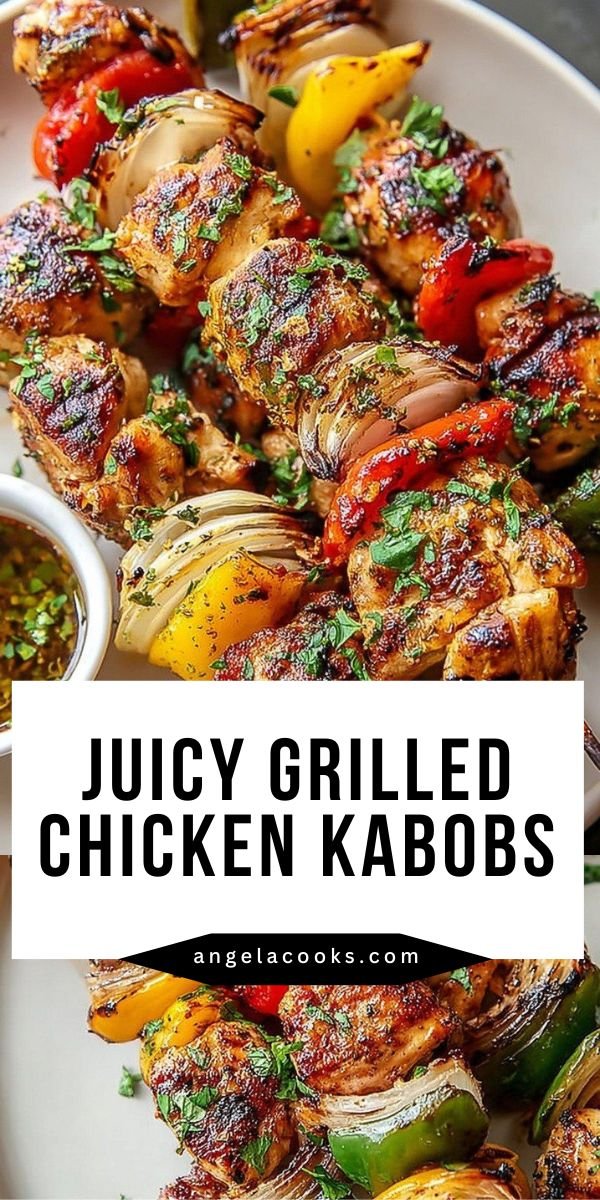
Grilled chicken kabobs look simple, but the small details decide whether they turn out juicy or disappointing. Once you understand the role of marinade time, even cutting, skewer spacing, clean grates, and the 165°F doneness point, the recipe becomes much easier to control. The chicken stays tender, the peppers and onions pick up real char, and the tomatoes soften without disappearing.
That is the real confidence behind this method. You are not just hoping the skewers work; you are reading the signs as they cook. When the grill is hot, the pieces are spaced, and the chicken comes off at the right temperature, grilled chicken kabobs become the kind of summer dinner that feels relaxed because the technique is doing its job.
18) Nutrition
Serving Size 1 portion Calories 315 Sugar 4 g Sodium 520 mg Fat 13 g Saturated Fat 2 g Carbohydrates 8 g Fiber 2 g Protein 39 g Cholesterol 110 mg




Leave a Comment